Fleet managers deal with a lot of challenges, but vehicle breakdowns stand out as one of the most frustrating. These disruptions don’t just impact deliveries—they lead to higher repair costs, unhappy clients, and damaged reputations. And let’s not forget, managing endless streams of vehicle data without the right tools only adds to the stress. Too much information can feel like no information at all.
Fleet vehicle monitoring systems offer a clear way to solve such challenges. These systems use telematics to track and analyze key data like engine health, battery levels, and even vehicle location. With real-time updates, managers can catch problems early and plan maintenance before it’s too late.
Want to cut downtime, save costs, and keep operations running like clockwork? Just keep on scrolling to see how it works.
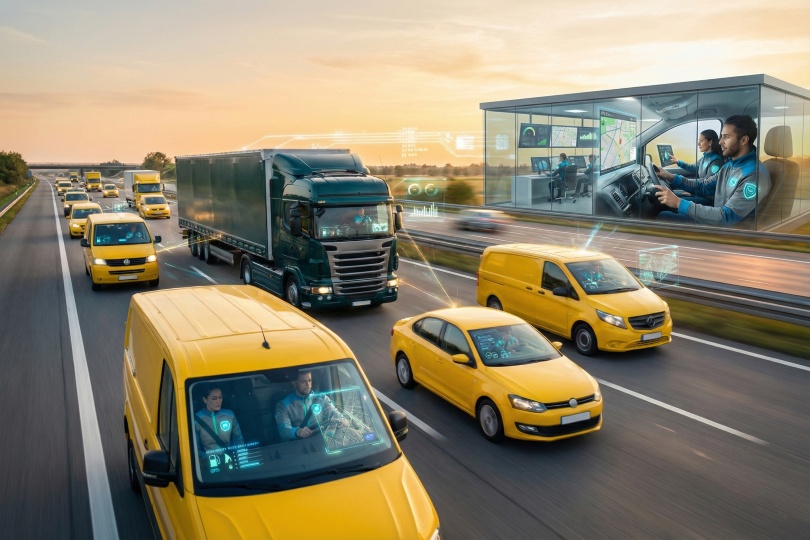
Key Takeaways
- Telematics merges telecommunications and informatics to monitor vehicle location and performance in real-time.
- Route optimization and behavior monitoring cut fuel expenses by 10% to 15%.
- Safety software reduces collisions significantly by tracking driver habits and providing instant alerts.
- Predictive sensors detect mechanical issues early to reduce vehicle downtime by 25%.
- Automation simplifies tax reporting and safety compliance, removing hours of manual paperwork.
- AI and IoT integration will drive the market value to over $202.5 billion by 2032.
What is Telematics?
Telematics blends telecommunications and informatics to monitor vehicles with high accuracy. Informatics involves computer science and data processing, while telecommunications handles the transfer of information over long distances. By merging these two fields, the technology tracks where a vehicle travels and how it performs at any given moment. This digital connection changes a standard vehicle into a smart asset that sends a constant stream of information back to a central office.
A fleet functions as a single network when using this technology. Think of the system as a central hub where different software tools “talk” to one another. It collects details ranging from engine temperature to driver habits and stores them in a secure database. This shared pool of information gives managers a complete view of their operations, moving beyond simple oversight toward a data-driven strategy. The global telematics market reflects this rapid adoption, with a valuation expected to reach $57.7 billion by 2026.
How the Technology Works
A functional telematics setup requires specific hardware and software components working in unison. The process begins with a GPS tracking device installed in the vehicle or asset. This device connects to an engine interface to read diagnostic codes and a SIM card to transmit information. An accelerometer inside the unit detects physical movement, such as sudden stops or sharp turns.
Installation methods cater to different needs and vehicle types. Managers choose from three primary options:
- Plug-in units connect directly to a vehicle’s cigarette lighter or power port. These offer a quick setup but remain visible to drivers.
- Hardwired devices attach directly to the vehicle’s battery and power supply. Technicians often hide these units under the dashboard to prevent tampering.
- Battery-operated units function independently with their own power source or solar chargers. Such devices work well for non-motorized assets like trailers or shipping containers and can last for months on a single charge.
Once active, the device gathers performance data like speed, location, and fuel levels. It sends this information through GPRS, 4G, or 5G cellular networks. A data center receives the transmission, processes the raw numbers, and displays them on a website or mobile app. This flow allows managers to view their entire fleet’s status on a single screen in real time.
MORE ON AUTOMOTIVE INNOVATION
V2X Communication Technology for Connected Roads
Major Benefits for Fleet Operations
Turning raw data into clear insights helps businesses operate with more precision. When managers see the full picture, they can make changes that immediately impact the bottom line.
● Lower Fuel Expenses
Fuel remains a significant expense for any fleet. Telematics software identifies habits that waste gas, such as long idling times or aggressive driving. For example, a large vehicle idling for hours can burn several gallons of diesel fuel. By using GPS route optimization, companies can reduce fuel costs by 10% to 15%. Systems suggest the most direct paths, avoiding traffic jams and road closures to save miles.
● Real-Time Visibility
Knowing the exact location of every truck or trailer allows for faster reactions to problems. If a vehicle breaks down or meets with an accident, managers send assistance to the right spot without delay. This transparency also eliminates fuel-card fraud by matching the vehicle’s GPS location with the time and place of a fuel purchase. It’s pretty evident, as reports show that 39% of drivers admit to intentional misuse of company fuel cards, a problem that telematics directly addresses.
● Enhanced Driver Safety
Safety software tracks instances of speeding, harsh braking, and seatbelt use. Managers use these safety scores to coach drivers on better road habits. These programs prove effective, with some fleets reporting 80% fewer collisions in their first year of use. Furthermore, in-cab alerts warn drivers about unsafe behavior the moment it happens, helping them correct it before an incident occurs.
● Improved Customer Service
Customers today expect transparency. Real-time tracking provides accurate delivery estimates and automatic updates via SMS or email. When a business provides reliable arrival times, it builds a stronger reputation and wins customer loyalty.
Shifting to Predictive Maintenance
Modern fleets are moving away from reactive repairs and toward predictive maintenance. This strategy uses data to fix a vehicle before it fails.
● Preventing Breakdowns
Sensors constantly monitor the health of the engine and brakes. These tools detect minor issues, such as a slight rise in engine temperature or early brake wear, long before they become expensive failures. This early warning system prevents the nightmare of a vehicle breaking down in the middle of a delivery.
● Automated Reminders
Instead of following a rigid calendar, maintenance is performed based on actual vehicle usage. The software generates automatic reminders for oil changes, tire rotations, and brake inspections. This ensures that high-mileage vehicles get the attention they need while preventing unnecessary service for vehicles that have been sitting idle.
● Maximizing Uptime
Predictive maintenance can reduce vehicle downtime by as much as 25%. Keeping trucks on the road instead of in the repair shop ensures the business continues to generate revenue. Well-maintained vehicles also last longer, which saves money on vehicle replacement costs over time.
● Optimizing Service Performance
Fixing a vehicle before it breaks is only half the battle. The service department must be efficient enough to handle the volume. Chris Collins Inc. specializes in training service managers and technicians to streamline these processes. Through consistent systems, departments can turn these data-driven repairs into steady, reliable income. If you want to see how your service drive can better handle predictive maintenance demands, explore the Signature Coaching Group to build a more accountable team.
Compliance and Administration
Administrative tasks often overwhelm fleet managers, but telematics automates much of this burden. Digital records are more accurate than manual logs and much harder to lose.
● Automatic Logging: The system tracks Hours of Service (HOS) to ensure drivers take their mandated rest periods. This reduces fatigue and keeps the company compliant with federal safety laws.
● Tax and Payroll Efficiency: Software calculates the distance driven in different states to automate International Fuel Tax Association (IFTA) reports. It also simplifies payroll by recording exact driving times, which helps prevent 8 hours or more of manual entry per week.
● Sustainability Goals: Many organizations use data to report on their carbon footprint. By reducing idle time and optimizing routes, fleets lower their emissions and meet green credentials.
Also Read: Strategic Finance Tips for Auto Dealership Growth
Necessary Skills and Qualifications
Managing a high-tech fleet requires more than just basic mechanical knowledge. Personnel must adapt to a more analytical environment.
● Data Literacy: Managers must be able to look at spreadsheets or charts and identify a trend. For instance, they need to spot if a specific vehicle is suddenly using more fuel, which could signal a hidden mechanical problem.
● Tech Savvy: Success depends on being comfortable with cloud software and mobile communication tools. Coordinating with drivers through apps ensures information moves quickly and accurately.
● Coaching and Communication: Data is only useful if it changes behavior. Managers need to explain safety reports to drivers in a way that encourages improvement rather than just pointing out mistakes.
● Regulatory Knowledge: Understanding transportation laws is vital. While the system collects data, the manager must know how to use that data to satisfy audits or legal requirements.
The Future of Telematics
The industry is growing rapidly and is projected to reach a value of $202.5 billion by 2032. This growth is driven by new technologies that make the systems even more capable.
Artificial Intelligence (AI) will soon handle the heavy lifting of route planning. AI can analyze years of traffic data to predict the best path before the driver even starts the engine. It will also make predictive maintenance even more accurate, guessing when a part might fail with near-perfect precision.
Sustainability will remain a major focus. As companies face pressure to reduce their environmental impact, they will rely on telematics to squeeze every bit of efficiency out of their fuel tanks. The Internet of Things (IoT) will further expand this by connecting more devices, from cargo sensors to warehouse tools, into one massive, efficient network.
Frequently Asked Questions (FAQs)
Real-time data feeds provide managers with instant visibility into vehicle locations and performance metrics. Fleet supervisors use such insights to streamline dispatching and reduce downtime through proactive maintenance alerts. Efficient operational workflows guarantee that vehicles remain productive and service schedules stay on track.
Telematics software identifies excessive engine idling and prompts drivers to shut off engines during long stops. Real-time monitoring discourages aggressive driving habits like speeding and rapid acceleration that waste high volumes of gas. Moreover, smart route planning minimizes total mileage and bypasses heavy traffic areas where fuel consumption typically spikes.
GPS tracking provides visibility into the exact status of every asset within a mobile workforce. Such precise data collection helps managers streamline operations by identifying underutilized vehicles and redundant travel patterns. Automated reporting replaces manual logs, giving administrators more time to focus on strategic growth and service quality.
Sensors detect unsafe behaviors like speeding, hard braking, and seatbelt neglect to protect operators and the public. Managers review performance scorecards to provide coaching for high-risk operators based on factual driving data. Furthermore, in-cab alerts notify drivers of errors immediately to help prevent collisions and promote better habits on the road.
Bottom Line
There you have it! Fleet vehicle monitoring systems are changing the way businesses manage their operations, making it easier to save money, improve efficiency, and keep everything running smoothly. If this overview helped you understand their potential, feel free to share it with someone who might benefit from it too. Your support helps us bring more helpful content to more readers like you.
Achieving and exceeding your goals is possible when you have the right systems in place. With Service Drive Revolution OnDemand, you’ll gain access to the proven systems that have made thousands of SERVICE MANAGERS IRREPLACEABLE. Start transforming your department today!
Need help updating your playbook? Let us know how we can support your team’s growth.
Book a 15-minute strategy session with our team. We’ll explore how to unlock your dealership’s real value.