Communication silos in a dealership often feel like invisible walls between sales, service, and finance. Information gets trapped within specific teams, which slows down every process and frustrates customers. When one department operates without knowing what the others are doing, the business loses its rhythm and misses out on shared talent and resources. This lack of connection creates a competitive rather than collaborative environment, making it harder for everyone to reach the same finish line.
Breaking down dealership communication silos starts with a unified vision that shifts focus from “my department” to “our organization”. Aligning every employee with common objectives encourages teams to support each other instead of protecting their own turf. Not to mention how leadership support and open dialogue can transform these separate units into a single, cohesive engine. Read on to see how simple shifts in leadership and daily habits can turn your dealership into a high-performing team. Let’s get started!
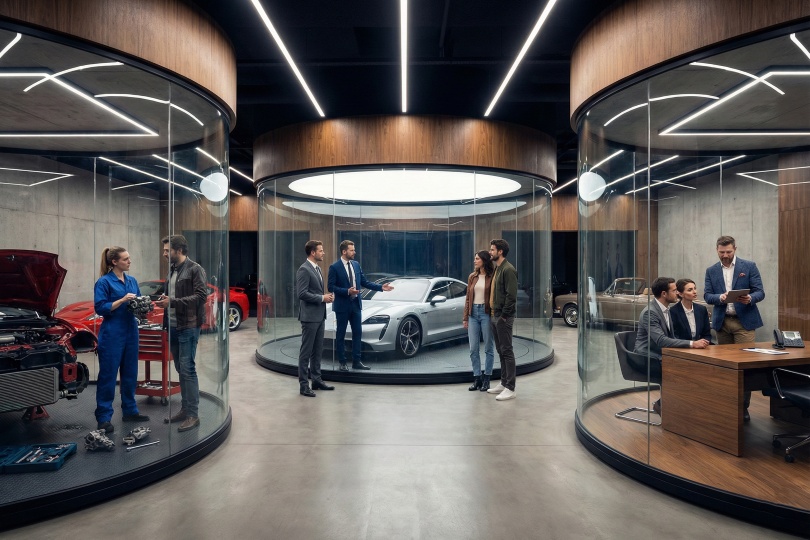
Key Takeaways
- Weak leadership, rigid business structures, blurry roles, and physical office barriers create isolated, unproductive silos.
- Establishing a shared vision and aligning departmental goals boosts teamwork, revenue, and overall company alignment.
- Joint training and cross-department projects help employees understand other roles and build stronger professional relationships.
- Open workspace layouts and shared technology like CRM dashboards remove friction and encourage natural communication.
- Linking pay plans and specific incentives to collaborative, company-wide success naturally motivates team cooperation.
- Eliminating silos requires leaders to track metrics, gather continuous feedback, and consistently model unified behavior.
What Causes Silos in a Dealership?
Before fixing the problem, it helps to grasp why “walls” go up between teams. Silos in business act as separations in human resources. Certain employees or entire departments stop sharing resources like information, funds, or talent. Such an environment slows down production and prevents growth by making the workplace feel too competitive. Asana’s Anatomy of Work Index reveals that employees lose 58% of their day to work coordination instead of the jobs they were hired to do.
● Leadership Gaps
Leaders are the core of operations. Managers handle people, resources, and processes while setting an example for staff. If those at the top show shortcomings in their abilities, entire departments feel the impact. Managers help establish the tone of how a business operates and reflect its values. Problems occur when leadership methods, goals, and expectations do not align. Divergent leadership causes confusion and leaves teams stuck without clear guidance. The impact on retention is severe. In fact, Gallup found that 50% of employees leave their jobs to get away from their manager.
● Business Structure
The way a dealership organizes itself can actually promote a silo mentality. Many organizations follow a “ladder” pattern with senior managers at the top. While this setup has benefits, its biggest flaw is creating silos that hold a business back. If departments or positions are built around individual effort instead of teamwork, the business unintentionally discourages collaboration. Employees might start to believe they are on their own for projects. Some might even try to grab resources before others or prevent coworkers from getting what they need.
● Unclear Roles
Collaboration is much easier when teams have a thorough grasp of their role. When expectations stay blurry, work often gets duplicated. Instructions might go ignored because nobody is sure who is responsible for what. This general confusion keeps teams from reaching daily goals. Clear roles require constant communication between management and staff through briefings or meetings.
● Physical Barriers
Workspaces impact how often people talk. If the office layout keeps departments tucked away in separate corners, interaction stays low. Walls and cubicles act as physical versions of the mental silos that stop info from flowing. When employees cannot see or easily reach their colleagues in other departments, they remain isolated.
Also Read: Auto Dealership Consolidation Trends Challenge Dealers
Step 1: Create a Shared Vision and Common Goals
To break down silos, everyone needs to be on the same “winning team”. Unity starts when management shifts from a “my department” mindset to an “our organization” focus.
● Define the Big Picture
Creating a shared vision defines the purpose and long-term targets of the dealership. This mission acts as a reference point for every single team. When everyone knows the ultimate destination, they are more likely to work together to get there. A clear mission helps employees see that they might be in different lanes, but they are all driving toward the same finish line.
● Align Objectives
Departmental goals should never conflict with each other. Instead, specific division targets must reflect the overall goals of the company. When people across the company have the same objectives, communication naturally improves. Shared responsibility means everyone is looking out for obstacles that might get in the way of the mission. Research from LSA Global shows that highly aligned companies grow revenue 58% faster and are 72% more profitable than unaligned peers. Such specific alignment guarantees that a win for one department is seen as a win for the whole dealership.
● Constant Reminders
Executives must state common objectives frequently to make them part of the culture. Regular updates and reminders keep staff focused on the dealership’s long-term success. Transparency and open dialogue help build a cohesive work environment. Leaders need to embody the company values to serve as a real-world example for everyone else.
Also Read: Dealership Finance Moves for Bigger Bottom Lines
Step 2: Change How Teams Interact
Bridge-building requires changing how employees see their coworkers in other departments. It is about moving from isolation to interconnectivity.
● “Walk a Mile” Strategy
Educate employees on how problems in one area impact the rest of the business. Developing a protocol that lets staff look at issues from another department’s point of view creates flexibility. Instead of saying “you need to do this,” focus on “why this is needed” and how it affects the entire dealership engine. Such an approach helps team members appreciate the roles of their colleagues.
● Cross-Department Projects
Assigning tasks that require joint effort is a practical way to encourage collaboration. For example, a project to improve customer satisfaction should involve Sales, Finance, and Service teams together. Working on a shared task allows departments to swap resources, information, and knowledge. These interactions lead to better results and build stronger professional relationships.
● Joint Training
Host professional development classes where people from different departments learn at the same time. Since training costs usually fit within the budget already, combining required learning with silo-breaking practices makes sense. Training together promotes a sense of unity and shared growth. Want to bring your service teams together under one unified strategy? Implement Service Drive Revolution: On-Demand Training to get your departments in sync and build a stronger, more accountable team. Team-building exercises calling for participation across various departments further build better rapport among the staff.
MORE ON AUTOMOTIVE INNOVATION
Car Marketing: Modern Digital Strategies for Sellers
Step 3: Use the Right Tools and Environment
Technology and workspace design can make communication feel natural instead of forced. The goal is to eliminate resistance to sharing info.
● Collaboration Software
Streamline communication by using the right digital tools. Virtual meeting software, instant messaging, and cloud-based document sharing make it easier for employees to work together effortlessly. These platforms allow people to communicate even if they are in different departments or locations. Using these tools helps break down barriers and makes the work environment more cohesive.
● CRM Dashboards
Your dealership likely already has a powerful tool in its CRM (Customer Relationship Management) software. CRM dashboards let the entire company see sales data and progress toward goals in real-time. When everyone has access to the same quality info, they can work more efficiently toward common objectives. That level of transparency helps different teams like sales, operations, and finance make better-informed decisions.
● Open Workspaces
Restructure the dealership’s layout to encourage face-to-face interaction. An open layout lets employees see and talk to each other more easily. If a full remodel is not possible, try providing shared spaces where people from different teams can congregate. Breakrooms or shared lounges help employees build connections that might not happen at their desks.
Step 4: Motivate and Reward Teamwork
People are more likely to cooperate when they feel encouraged and rewarded for it. Motivation often means inspiring someone to do a task rather than just dictating it to them.
● Update Pay Plans
Evaluate compensation to ensure it supports the unified vision. If pay is designed only to meet siloed departmental goals, employees will not buy into the bigger picture. Compensation should reflect the goals that everyone is working to accomplish. People are much more likely to communicate and cooperate when their take-home pay is linked to team success.
● Incentivize Referrals
Offer specific rewards to motivate employees to engage with other departments. You could reward those who refer potential job candidates to other divisions or those who contribute to a successful joint project. Incentives push staff to go beyond their primary responsibilities and think about the dealership’s overall health. Positive reinforcement from leaders also encourages employees to perform at higher levels.
● Celebrate Together
Getting through challenges as a team deserves a real celebration. Successes can be marked with catered lunches, team outings, or excursions. Publicly recognizing efforts through employee spotlights or a “wall of gratitude” helps build unity. Celebrating together reinforces the idea that the team can solve the next challenge collectively.
Step 5: Monitor and Adjust
Breaking silos is a continuous process that needs constant attention. It is not a one-time fix but a shift in how the business operates.
● Ask for Feedback
Regularly gather thoughts from both managers and employees about communication. Use meetings or briefings to listen to their concerns and suggestions. Feedback helps leadership identify if any departments still feel isolated or ignored. Honest communication between management and labor is necessary for long-term improvement.
● Watch the Metrics
Track key data points related to the dealership’s goals to see if collaboration is paying off. Better-informed decisions and improved teamwork should eventually show up in increased sales and better customer service. Monitoring progress allows you to make adjustments as needed to keep the business growing.
● Lead by Example
Managers must stay patient and keep driving bridge-building efforts until they become second nature. Leadership buy-in means showing enthusiasm for team solutions and providing support during problem-solving. CFOs and finance teams can play a special role here because they often see the “macro view” of the entire dealership. When leaders commit to the process, the rest of the team follows suit. For leaders needing a proven framework to increase profits and boost customer retention, Chris Collins’ Signature Coaching Group offers the accountability coaching necessary to stop being reactive and start being proactive.
Frequently Asked Questions (FAQs)
Isolated departments create costly delays when sales, finance, and service teams fail to share necessary customer information. The resulting inefficiency frustrates buyers and directly reduces overall profitability.
Teams working together across departments solve customer problems faster by pooling their specialized knowledge. A unified approach directly increases both customer satisfaction scores and repeat business.
Managers break down barriers by leading short interdepartmental meetings where staff share daily targets. Executives align the entire staff by tying a portion of employee compensation to overarching dealership goals rather than isolated department metrics.
Bottom Line
Now that’s a wrap! Transforming a fractured workplace into a unified force requires more than just new software. It demands a cultural shift that prioritizes collective victory over departmental isolation. When leadership champions transparency and aligns every team member with a singular mission, the walls of dealership communication silos begin to crumble, clearing the path for innovation and a superior customer experience. Choosing to celebrate shared successes and incentivizing cross-departmental support turns separate units into a cohesive engine driving toward the same finish line. If these ideas resonate with you, consider sharing this with others who might benefit. Let’s create a better working environment together where cooperation is the way to go.
Achieving and exceeding your goals is possible when you have the right systems in place. With Service Drive Revolution OnDemand, you’ll gain access to the proven systems that have made thousands of SERVICE MANAGERS IRREPLACEABLE. Start transforming your department today!
Need help updating your playbook? Let us know how we can support your team’s growth.
Book a 15-minute strategy session with our team. We’ll explore how to unlock your dealership’s real value.