
Marketing in the car industry used to be pretty straightforward—flashy ads, big-budget TV spots, and sleek displays at auto shows. But things have changed. Customers are no longer easily influenced by horsepower or slick paint jobs. They are doing research on the Internet, anticipating customization, and seeking brands they can rely on. For automotive companies, sticking to old strategies just doesn’t cut it anymore.
The solution? A smarter, more connected approach. Automakers are now using digital tools, social media, and data-driven insights to reach customers where they are—on their screens. They are changing their emphasis to the sale of experiences, relationship building, and even to sustainability. It’s not just about cars anymore. It’s about values, convenience, and trust. Keep reading to see how the industry is adapting and why these changes matter for both brands and buyers.
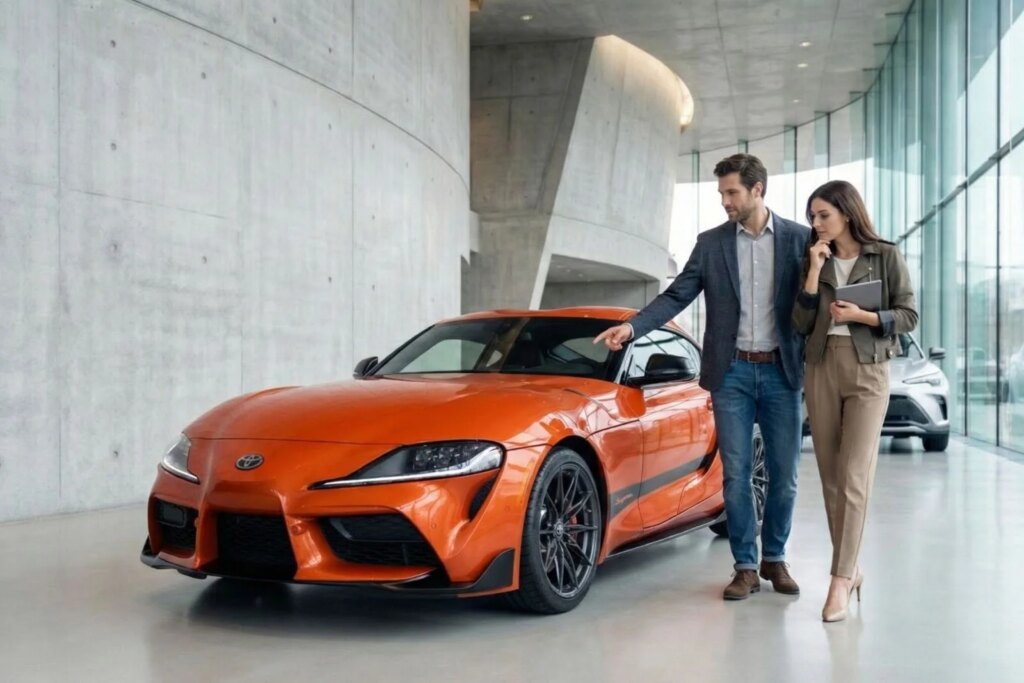
alt: consumer preferences in the car market 2025
Who Is the “Value-Seeking” Consumer?
It is easy to assume that a “value seeker” is someone with a tight budget, perhaps a student or an entry-level worker. The data tells a much different story. Four in 10 Americans surveyed are now identified as value seekers. This group isn’t defined by low income. In fact, 23% of consumers earning $200,000 or more qualify as value seekers, and nearly 3 in 10 are young families with six-figure incomes. The generational split is also surprising. You might think financial pressure hits the youngest the hardest, yet 49% of Gen X and 43% of Boomers engage in value-seeking behaviors, compared to slightly lower percentages for Millennials and Gen Z. This is a mindset that crosses every demographic line.
These shoppers are actively changing their daily habits to make room for big purchases. They are scrutinized spenders. To save money, value seekers intend to spend 40% to 50% less on discretionary categories like entertainment and personal care. Their behavior at home proves they are serious about cutting costs: almost two-thirds (65%) are cooking more meals at home, and over half are switching to cheaper grocery store brands. They are trimming the fat from their daily budgets to afford the essentials, which now includes reliable transportation. They are not just looking for a deal. Rather, they are looking for financial survival and smart allocation of their resources.
The Affordability Problem: Why Prices Matter
The primary driver of this behavioral shift is simple: cars have become incredibly expensive. The math just doesn’t work for many households anymore, and it is forcing buyers to make difficult choices.
A. Sticker Shock
The baseline cost of entering the new car market has reached historic highs. For the first time, the average transaction price for a new vehicle broke through the $50,000 threshold, sitting at $50,080 in September 2025. When shoppers see these numbers, they hesitate. It creates a psychological barrier. Even consumers who earn a good living look at that sticker price and question if a new vehicle is a wise financial move.
B. Monthly Payment Reality vs. Expectation
There is a massive disconnect between what people expect to pay and what the market demands. A typical monthly payment now exceeds $750. However, reality hasn’t caught up with consumer hope. 75% of new vehicle intenders still expect to pay less than $600 per month. When a shopper walks in expecting a $500 bill and leaves facing an $800 one, satisfaction drops. This gap creates frustration and drives them to look for alternatives.
C. Loan Struggles
To make these high prices fit into a monthly budget, buyers are stretching themselves thin. The statistics are alarming. The share of new car buyers taking on monthly payments of $1,000 or more reached a near all-time high of 19.1%. To manage this, people are signing up for longer loans. 22.4% of new vehicle loans are now 84 months or longer. That is seven years of debt for a depreciating asset. Furthermore, the days of easy credit are gone. In fact, 0% APR promotions account for just 0.9% of new loans, the lowest in two decades.
MORE ON AUTOMOTIVE INNOVATION
Extended-Range EVs and the Future of Driving
The Shift to Used Cars and Keeping Cars Longer
Because new cars are pricing people out, the “value seeker” is turning to the used market. It is a logical pivot. If the new car creates financial stress, the used car represents financial freedom.
A. Used Car Advantage
The data shows a clear preference here. Value seekers are more than twice as likely to buy a previously owned vehicle compared to non-value seekers. While used prices are still high—the average used-vehicle price was around $25,393 in August 2025—it is still half the price of a new one. The monthly savings are undeniable. Used-vehicle buyers paid an average of $559 per month compared with $756 for new vehicles. That nearly $200 difference is often the deciding factor for families trying to balance a budget.
B. Keeping Old Cars Running
A large number of Americans are not even making a purchase. Instead, they are repairing what they have. In 2025, the average age of a light vehicle in the United States increased to 12.8 years. This creates a massive opportunity for service centers. Consumers want to squeeze every mile out of their current asset. They view maintenance as a better investment than a new car payment.
Also Read: Auto Dealership Consolidation Trends Shape the Future
C. Fewer Cheap Options
One reason buyers are forced into the used market is that automakers have stopped making cheap cars. Sales of small and compact cars dropped from 2.5 million units in 2010 to just 1.7 million units expected this year. Brands focused on expensive SUVs and trucks to maximize profit. Sales of light trucks are expected to reach 13.1 million units this year, while passenger cars will only hit 2.7 million. The entry-level rung of the ladder is missing, leaving value seekers with nowhere to go but the used lot.
Strategic Insight: The Relationship Pivot
This shift toward keeping cars longer forces dealerships to rethink their strategy. When a customer decides to keep their car for 12 years instead of 3, the sales department loses a transaction, but the service department gains a decade of opportunity.
In a recent discussion, industry expert Chris Collins argues that retention relies on breaking down the silos between sales and service. He criticizes the antiquated design of many dealerships—specifically the isolated “waiting room” with a single TV.
Watch: Chris Collins on The Relationship-Based Model & Dealership Design
Collins suggests that instead of hiding service customers away, dealers should integrate waiting areas into the showroom. This encourages customers to browse new models while they wait, sparking conversations and sales naturally. It turns a “maintenance visit” into a relationship-building opportunity. If you want to survive the dip in sales, you have to design your physical space and your culture around the long-term service customer.
Ready for more? Book a 15-minute strategy session today and find out how to unlock the real value of your dealership.
What Buyers Want: It Is Not Just About Price
Here is the twist: Value seekers aren’t just “price buyers.” They will pay more if they feel they are getting more.
A. Price vs. Value
When it comes to marketing in the car industry, price and value are linked. But they are not the same thing. Most consumers’ perception of value comes from factors other than price, such as convenience, performance, and experience. If a brand offers a seamless experience, people perceive the value as higher, even if the cost is the same. Price perceptions can predict 60-90% of value perceptions, but that remaining chunk is where brands win or lose.
B. The MVP Brand (More-Value-for-the-Price)
Brands that understand this are winning. We call them MVP brands: More-Value-for-the-Price. MVP brands are capturing an increasing share of the new vehicle market because they deliver on quality and reliability. Quality is the top driver of value for these brands. Consumers surveyed say they intend to buy more from these MVP brands than from their lower-value competitors.
C. Loyalty is Dead
You cannot count on repeat business anymore. The market is too competitive, and buyers are too discerning. According to Deloitte’s 2025 Global Automotive Consumer Study, more than half of US respondents (54%) plan to switch brands for their next vehicle. Loyalty is up for grabs. If a manufacturer or dealership fails to prove their value today, the customer will walk away tomorrow.
How Marketing Is Changing to Fit Needs
To catch this moving target, the automotive industry has to change how it talks to people. It is no longer enough to run a TV ad showing a car driving on a winding road.
A. Selling an Experience
It is not all about the transaction. People are no longer looking at car purchase as a necessity but as an experience. They want emotional fulfillment. Brands like Mercedes-Benz and BMW have done this for years, emphasizing luxury and status to position the vehicle as part of an elevated lifestyle. Physical spaces matter too when it comes to marketing in the car industry. Dealerships are becoming lifestyle hubs, similar to how Tesla transformed showrooms into destinations where you learn about the future rather than just haggle over price.
B. Digital Innovation
The “Amazon Effect” is real. Consumers want buying a car to be as easy as buying a book. With more than 70% of buyers conducting research online, brands must meet them there. This means virtual car configurators, online financing, and online test drives are now integral to the journey. We are moving toward a world where mobile maintenance and repair services will no longer be optional—consumers will expect service in their driveway.
C. Building Trust
In a post-pandemic world, trust is the most valuable currency. Consumers want to feel assured they are buying from a brand that understands their needs. Honest communication is the only way to build this inside marketing in the car industry. Consumers appreciate it when brands acknowledge shortcomings, such as recalls or delays. When a brand is transparent, it fosters loyalty.
D. Sustainability
Value today also means values. Sustainability is an essential pillar for marketing in the car industry. Drivers want to align with companies that care about the planet. Brands like Ford and VW are investing heavily in electric mobility. It is not just about the engine. It is about the materials. Tesla emphasizes sustainable materials in production, appealing to a growing base that wants their purchase to support a cleaner future.
Also Read: Car Marketing: Online Strategies That Boost Car Sales
Bottom Line
To wrap up, it’s now clear that marketing in the car industry is no longer about just selling vehicles. Now, it’s about creating connections, building trust, and delivering meaningful experiences. With the landscape shifting toward greater digitalization and consumer-focused strategies, automakers can differentiate themselves by understanding what customers really appreciate. If this resonated with you, share it with others who might find it helpful. Together, we can keep the conversation going and inspire smarter, more effective marketing approaches. Follow us for more!
Achieving and exceeding your goals is possible when you have the right systems in place. With Service Drive Revolution OnDemand, you’ll gain access to the proven systems that have made thousands of SERVICE MANAGERS IRREPLACEABLE. Start transforming your department today!
Need help updating your playbook? Let us know how we can support your team’s growth.
Book a 15-minute strategy session with our team. We’ll explore how to unlock your dealership’s real value.