Dealership service departments often face the same frustrations year after year. Customers complain about wait times. Advisors feel overwhelmed. Technicians struggle with efficiency. Managers work harder but see little improvement.
The common response is to blame people.
In Service Drive Revolution #344, the discussion makes one thing clear: most Fixed Ops problems are not people problems—they are system problems. When the system is broken, even great employees struggle to succeed.
Why Good People Fail in Bad Fixed Ops Systems
SERVICE MANAGERS often believe the solution is hiring better advisors or technicians. While talent matters, it cannot overcome a poorly designed operation.
Bad systems create:
- Missed opportunities
- Inconsistent customer experiences
- High unapplied labor
- Advisor burnout
- Technician frustration
When employees operate inside broken processes, effort increases but results do not. Over time, good people either burn out or leave.
Strong Fixed Ops systems protect employees from chaos and give them a clear path to success.
Making It Easy for Customers Drives Retention
A major theme of SDR #344 is the idea of reducing friction.
Customers return to places where doing business feels easy. When scheduling is confusing, wait times are unpredictable, or approvals take too long, customers look elsewhere—even if they like the advisor.
Service departments that focus on convenience:
- Retain more customers
- Increase lifetime value
- Improve CSI naturally
Sales and customer experience are not opposites. When systems are designed correctly, profitability and retention grow together.
This principle is central to strong Fixed Ops leadership, which you can explore further at
Fixed Ops Leadership Lessons Service Managers Can Use in 2026.

Quick Lube Isn’t the Problem—The Setup Is
Quick lube operations often get blamed for poor profitability. In reality, the issue is how they are structured.
Common quick lube mistakes include:
- Isolating it as a standalone department
- Assigning the least experienced staff to the highest customer volume
- Skipping inspections
- Creating peaks and valleys in workload
When quick lube is integrated into the main shop flow, supported by experienced technicians, and connected to proper inspections, it becomes a powerful retention and traffic driver.
Customers who come in for oil changes eventually need tires, alignments, brakes, and repairs. Losing them to independents breaks the customer lifecycle.
The Real Competition Is Everywhere Customers Can Go
A critical mindset shift discussed in SDR #344 is how dealerships define competition.
The real competition is not the dealership across town. It’s anywhere the customer could choose to service their vehicle.
When service departments ignore quick-service competitors:
- Customers form new habits elsewhere
- Relationships weaken
- Future vehicle sales are put at risk
SERVICE ADVISORS play a critical role in the customer lifecycle. Strong relationships built in service often influence future purchase decisions.
That’s why SERVICE MANAGERS must view retention as a strategic priority, not just an operational metric. For deeper leadership insight, read
Intentional Goal Setting for Service Managers in Fixed Ops.
Why Tribal Knowledge Holds Dealerships Back
Many SERVICE MANAGERS were trained by the managers before them. That creates a cycle where outdated processes get repeated without being questioned.
This “next person up” approach leads to:
- Old dispatch methods
- Inefficient scheduling
- Poor shop flow
- Resistance to change
Without outside perspective or formal training, managers often double down on systems that no longer work.
Modern Fixed Ops success requires intentional design—not inherited habits.
Systems First, People Second
The most important takeaway from SDR #344 is simple:
Build the system first. Then put the right people into it.
When systems are clear:
- Advisors know what “good” looks like
- Technicians understand expectations
- Customers feel informed and respected
- Managers regain control
When systems are unclear, no amount of motivation will fix the problem.
Final Thoughts: Fix the System and Everything Improves
TDealership service departments don’t fail because people don’t care. They fail because the system makes success difficult.
Strong Fixed Ops systems:
- Reduce stress
- Increase efficiency
- Improve retention
- Drive profitability
For SERVICE MANAGERS and SERVICE ADVISORS, the path forward is not working harder. It’s working inside better-designed systems.
Fix the system—and the people will thrive.
FULL VIDEO TRANSCRIPT
Super Bowl Fever and the Seahawks
Welcome to the big show. Today, I’m going to answer a really good question from a viewer. I’m also going to play you a call that sounds like AI; I want your opinion on that. Then, I’ll talk a little bit about the greatest sport in the world: football and the NFL. That and much more is coming up right now on Service Drive Revolution. As we sit here right now, my Seattle Seahawks are going to the Super Bowl literally the day after they beat the Rams. I woke up and had to check the news because I was afraid it was a dream, but they are. I am throwing the biggest Super Bowl party here at the library. My cousins are flying in, and it’s going to be a huge thing. I’m not going to the stadium because I’ve been before and I don’t like it.
The Best Seat in the House
I would much prefer to have a party. The best seat in the house is watching on TV. Believe it or not, when you’re at the game watching the commercials and halftime, you’re just sitting there. There are so many breaks and dead time; you’re there forever. The security is nuts, and you have to walk a mile. If your dream is to go, by all means, go and have fun. But I’ve checked it off the list. I want an environment where I can control the room and actually watch the commercials. You can’t see them in the stadium. I’m also alone today. Nobody has seen Adam since the Bears lost to the Rams a couple of weeks ago. He was at Soldier Field in 20-degree weather. It was so cold it basically hurt your feelings. He’s understandably brokenhearted.
Leadership Lessons from the Field
I was hoping it would be the Bears and the Seahawks, but it didn’t end up that way. It was the Rams, and we had to beat them. I believe the Seahawks are going to beat the Patriots. I’m not a fair-weather fan; I was born into this. There’s been a lifetime of misery, but this will be the fourth time we’ve gone to the Super Bowl in 20 years. Our coach is incredible, offering so many lessons in leadership. I also want to mention our other channel, “Books That Changed My Life,” on our Syndicate X library channel on YouTube. We just did an episode with Johnny Knoxville, and we have more great ones coming up. We’re taking the show to New York soon. The premise is talking about books that actually changed someone’s life and the lessons they learned during specific moments in time.
The Rise of AI Marketing Bots
I know people often ask for a reading list, and that show introduces me to books I would have never heard of otherwise. The Johnny Knoxville episode was especially popular. We also have our hotline at 8333-ask-SDR. Sometimes people call with real questions, but lately, we’ve been getting calls from what I believe are AI bots. They are very clever. There are programs now where you can input a name, and it tells you everything about a person—how they’re motivated, their vulnerabilities, and their “buttons” for marketing. It’s interesting that someone is using AI to take something I did and use it for a pitch. I’ve had two recently. One was a plug for a customer service book, and this latest one is a plug for software using a video I made 20 years ago.
“Pet the Dog” vs. “Playing Fetch”
The caller mentions a video called “Pet the Dog” and pitches their software, even stating the price. It’s good marketing, but I want you to hear what people are using AI for. Let’s listen to the call. The voice says: “How are you? Thank you for sending me ‘Pet the Dog.’ It changed how I looked at this job. I’ve built everything around that mindset. I found an app that’s a total game changer. It records calls, lets me text customers, and tags parts on order. It keeps everything organized so nothing falls through the cracks. It even auto-texts customers if they message while I’m with someone. It took me from just ‘petting the dog’ to ‘playing fetch with the dog.’ Management hasn’t moved forward with it yet, but I want your take on whether a separate work app is the future.”
Psychological Manipulation in Sales
If that is AI, they are using psychological techniques that most humans don’t use, which is why AI is dangerous. Humans are easy to manipulate. The script compliments me specifically and then attributes that success to the product. Everybody likes a compliment. Then they use a “takeaway” technique, saying their imaginary dealership wouldn’t implement it. It’s very clever. Let’s move to a real question from a viewer named Brian. He asked his manager about removing friction to make it easier for customers to say “yes.” The manager told him he needed to think about customer retention instead. Brian thinks they are the same thing. He also asked why managers keep quick-lube services that lose money and why they don’t try to be competitive with the Jiffy Lube down the street.
Tribal Knowledge and Management Training
To understand why managers do what they do, we have to realize our industry often lets them down. Most training goes to the front end of the dealership. Service managers are usually trained by whoever they worked for previously; it’s tribal knowledge handed down. Often, the person fired is replaced by someone they trained, which perpetuates the same broken ideas. We are mimetic; we copy what we see. It’s rare for someone to experience 20 different dealerships or get professional training to understand systems. Many stores still run 100-year-old dispatch systems and just try to work harder without considering a better way. Brian is already ahead because he realizes that making it easy for customers to buy actually creates retention. If you provide value, customers want to come back.
The Purpose of a Healthy Quick Lube
Quick lubes are not bad; the way we run them is bad. I would want a healthy quick lube because local independents are the real competition, not the dealership 20 miles away. A customer is 17 times more likely to buy their next car where they service it. This is the “Circle of Life.” Sales sells the car, and service builds the relationship so we can hand them back to sales later. Any leakage to outside shops hurts that cycle. A timely, effortless oil change should be the goal—ideally under 45 minutes. We fail when we set up the quick lube as an independent department with the least talented advisors and technicians. You end up with your least experienced people touching the most customers and missing massive opportunities.
Lateral Support Groups and Career Paths
Manufacturers promote quick lubes for JD Power scores and customer perception, often sacrificing profitability. However, you can have both. In our system, we use lateral support groups. We put quick lube techs in the shop next to a team leader who is compensated based on the group’s performance. In our model, each advisor has their own quick lube tech. This also solves the high turnover rate. Many kids leave the industry because they feel stuck in a “quick lube hole” with no future. By putting them in the main shop, they interact with veteran techs and see a career path. I would price oil changes aggressively to drive traffic, because those customers eventually need tires, alignments, and long-term repairs.
Systems Over People
My advice to future managers is to figure out systems and then plug the right people into them. If you put good people into bad systems, they get burned out. Good people are destroyed by broken processes every day. You want a feedback loop where you take information from customers and your team to constantly improve. The way we make appointments and dispatch work is often ancient, and the customer suffers for it. I hope this inspires you to look at things differently. If I missed anything, call back—and try to sound like AI when you do! Go Seahawks. We’ll be having a huge party at the library, so if you’re in LA, let us know. See you next time on Service Drive Revolution.
Final Outro
Thanks so much for watching this episode of Service Drive Revolution. We’re uploading new stuff every day, so make sure you subscribe and click the bell icon so you don’t miss out. If you have a question you’d like us to answer on the show, call 833-ASK-SDR, and we’ll answer your question on the show. That’s 833-ASK-SDR. For special deals on our books and training, head over to offers.chriscollinsinc.com. I’m Chris Collins, and I’ll see you in the next video.
🔗 Related Resources
- Intentional Goal Setting for Service Managers in Fixed Ops
- Fixed Ops Leadership Lessons Service Managers Can Use in 2026
- How Service Managers Can Set Goals That Actually Stick in 2026
Feel free to explore the linked articles above for deeper insights into each strategy. If you have any further questions or need additional resources, don’t hesitate to ask!
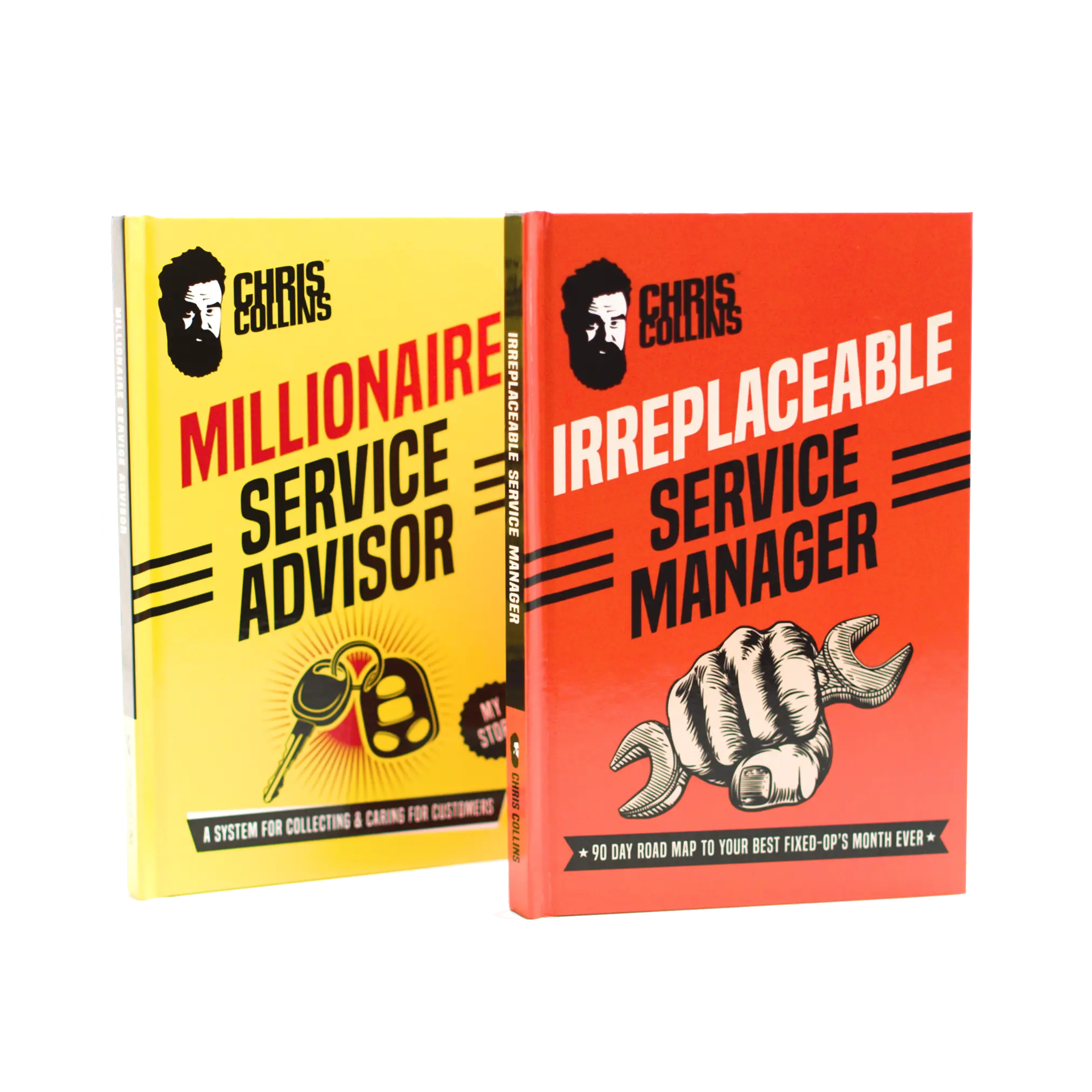
Achieving and exceeding your goals is possible when you have the right systems in place. With Service Drive Revolution OnDemand, you’ll gain access to the proven systems that have made thousands of SERVICE MANAGERS IRREPLACEABLE. Start transforming your department today!
Need help updating your playbook? Let us know how we can support your team’s growth.
Book a 15-minute strategy session with our team. We’ll explore how to unlock your dealership’s real value.