Handling difficult customers in Fixed Ops is one of the most stressful parts of the job for service advisors and service managers. Yet, most customer conflicts don’t start because a customer is “difficult.” They start because something in the process broke down.
As discussed in Service Drive Revolution #343, the real issue is rarely the customer’s personality. Instead, it’s how the dealership communicates, sets expectations, and controls the service narrative.
For SERVICE MANAGERS who want stronger retention, better CSI, and fewer escalations, mastering how to handle difficult customers is no longer optional.
Most “Difficult Customers” Are a System Failure
One of the biggest mindset shifts for service leaders is understanding this simple truth:
Difficult customers are usually a symptom—not the cause.
Customers don’t wake up planning to argue with a service department. They react when expectations are unclear, updates are missing, or trust erodes during the visit.
In Fixed Ops, perception becomes reality. When communication breaks down, frustration fills the gap.
That’s why handling difficult customers in Fixed Ops starts long before a customer raises their voice.
Why Being “Right” Makes Things Worse
Many service advisors struggle with difficult customers because they try to win the argument.
That approach almost always backfires.
When a customer feels wrong, dismissed, or corrected, the conflict escalates. Even if the advisor is technically correct, the customer feels like they lost—and people don’t return to places where they feel defeated.
Instead of trying to be right, successful service managers coach their teams to focus on:
- Listening first
- Understanding the customer’s experience
- Defusing emotion before offering solutions
When emotion is high, logic doesn’t land. Handling difficult customers requires patience before problem-solving.

Absorbing Tension Is a Leadership Skill
In SDR #343, the conversation highlights an uncomfortable truth:
Sometimes, the only way to fix a situation is to absorb the frustration.
That means:
- Letting the customer vent
- Not interrupting
- Not defending every detail
- Showing empathy before explaining
This doesn’t mean accepting blame unfairly. It means lowering the emotional temperature so resolution becomes possible.
SERVICE MANAGERS who model this behavior set the standard for their entire department. Teams follow what leadership tolerates and demonstrates.
For more on how leadership behavior shapes Fixed Ops performance, read Intentional Goal Setting for Service Managers in Fixed Ops.
You Can’t Fix What You Don’t Trace Back
Once a difficult customer situation is resolved, the real work begins.
Top-performing Fixed Ops leaders don’t stop at the apology. They ask:
- Where did this breakdown start?
- Was it during write-up?
- Was an update missed?
- Was pricing unclear?
- Did expectations change without explanation?
Handling difficult customers in Fixed Ops isn’t just about calming them down. It’s about tracing the issue back to its origin and fixing the system so it doesn’t happen again.
Without that step, the same problems repeat.
Control the Narrative Inside the Service Department
One overlooked contributor to customer conflict is internal negativity.
When advisors complain about customers at the counter or in the shop, that energy carries into the next interaction. Customers can feel it immediately.
Strong service managers:
- Shut down negative “water cooler” talk
- Redirect conversations toward solutions
- Reinforce professionalism during slow periods
Every internal conversation shapes how customers are treated externally.
This is why systems must come before people. Without structure, even good advisors drift.
To understand how operational discipline impacts profitability and customer experience, read Unapplied Labor in Fixed Ops: What Service Managers Must Fix Now.
Handling Difficult Customers Starts With Intention
The biggest takeaway from SDR #343 is simple but powerful:
Your intention determines the outcome.
When advisors approach customers with the intention to:
- Learn
- Understand
- Help
conflict becomes rare.
When the intention is to:
- Correct
- Defend
- Win
conflict becomes inevitable.
Customers remember how they were treated long after they forget what they paid. Read
Intentional Goal Setting for Service Managers in Fixed Ops.
Why This Matters More Than Ever in Fixed Ops
The bar for customer service is low across most industries. That creates opportunity.
Service departments that communicate clearly, listen patiently, and manage emotion effectively stand out immediately. They retain customers while competitors lose them to independents.
Handling difficult customers in Fixed Ops isn’t about talent. It’s about systems, leadership, and intention.
Final Thoughts: Difficult Customers Become Loyal Customers
Handled correctly, upset customers often become the most loyal ones.
They remember who listened, they remember who cared, they remember who didn’t argue.
For SERVICE MANAGERS and SERVICE ADVISORS, the goal isn’t to eliminate difficult customers—it’s to build processes that prevent frustration and skills that turn tension into trust.
That’s how Fixed Ops wins long-term.
FULL VIDEO TRANSCRIPT
Welcome to Service Drive Revolution
Welcome to the big show. Today, we are going to talk about how you handle difficult customers, like these two characters right here, Hogi and Adam. The worst customers—difficult customers. Just joking! Who, me? Maybe. That and much more coming up right now on Service Drive Revolution.
Family and Logistics
I’m going to need to get a private jet. I think that’s a good idea for a lot of reasons, but what’s what are yours? My parents keep going to the hospital. Oh, yeah. It’s like now it’s like every week and I’m in LA and they’re in Washington and like they’re on their way to the hospital and like it, you know, in the middle of the night there’s no way I can get there. Yeah. I don’t know what to do. I got to move him down here or something. Yeah. It’s crazy. It’s happening more and more. Yeah. It’s uh it’s funny. My my parents moved to Oklahoma with us from Kansas City uh a few years ago and um so they’re they’re getting ready to move uh or they did move again and kind of in between they’re they’re staying with us for a little bit.
The Sauna and the Guitar
And so I just moved him this this last weekend and uh so the very first night there, they’re like uh um well, one, they want the temperature to be uh just above the Sahara Desert. like they I don’t know what all medications they’re on, but like uh the the room they’re in. I go in there and there’s just a like space heaters like and it’s a sauna in there. I’m like, “Oh, man.” My 17-year-old got an electric guitar not too long ago and uh and so she’s uh practicing a lot. the
So, I go into the sauna with them to check on them and see if they’re kind of getting settled in, which is their room, which is their room, And they’re like, “Uh, so Avery got a guitar.” you’re thinking better than a violin. Hey, you can’t have it 103 and quiet. You’re going to have to pick. How could we get Avery to play drums?
Band Practice Memories
My mom deserves a medal for that. listening to me play drums, dude. Mine too, for sure. Just like hitting trash cans over and over. Saxophone. You played saxophone? Yeah, saxophone squeaked in the beginning for sure. And then uh did fairly decent. Then the guitar thing. And then she would actually allow us to play um like the band practice was downstairs in the basement and it was loud and sometimes we did it till midnight 1:00 a.m. And uh dude man I I’m surprised cuz it was an unfinished basement.
She’d like she’d go like you are shaking the whole house. I’m like well we could have stopped. She goes no you could be doing other things right now. That’s fine. I’m like all right. Yeah. So tell every keep keep practicing. Okay. Keep practicing. Yeah. My mom was the same. She uh she let us have band practice at my house and at the time I didn’t get it but you know later she told me like well I just knew where you were. Yep. That’s what it came down to. Yep.
Regional Challenges
Cuz nobody else spirits would let us practice. I know. I know. One time we moved practice to our garage and we had people stopping and then calling the cops, so we had to go back underground. So Oh, yeah. Probably weren’t that good.
Yeah, the cop thing is funny, too. It’s really funny. Yeah, I’m going to need to figure something out. I the problem is I can’t get them to move down here because they they’re not in the part of Washington that’s liberal and they they think Los Angeles is like Oh, they’re gonna have to dye their hair blue.
They just can’t even imagine. Adam appreciates that. I Yeah. Are you going to dye your hair blue, Adam? Well, it’s You guys were guys were saying stuff earlier, but you do realize that I used to bleach my hair in the rock band that I was in. So, I I played around with that, but uh I grew up since then. Yeah.
Regional Perspectives and Politics
No, but I just mean politically they don’t they don’t agree with Los Angeles. Yeah, I could see that. That’d be good. Yeah. I mean, I understand it, too. But I mean, I’m here. I mean, Illinois is uh ends up things are going so bad the building’s worth less than I paid for it. Yeah. You can’t just escape. Oh, you got to ride it out. Yeah, it’s like a 10ear cycle. Yeah. Feels a lot longer. Feels a lot longer. Illinois is just getting worse, too. Just more taxes.
Come to Oklahoma. Dodge tornadoes. I know. We were talking about that earlier. Yeah, I guess everything else is okay. You got basements. No basements. See, I’m out. Where am I supposed to put my guitars? Avery’s wrong. Not if it’s 103. The uh the two girl dads, which by default are Swifties. I don’t know why you keep saying that. Well, I maybe maybe at some point you’ll come around.
Leadership Lessons from Taylor Swift
Oh, the at the boot camp the other day. Um, one of the guys was saying that he watched that because of the show, this the Taylor Swift documentary. Yeah, it’s good. Yeah. He was like, “Yeah.” He goes, “I didn’t expect it to be that good, but it was good.” Yeah. Yeah. I I will agree with that. I was Well, you watched it, too, right? Yeah. I I three out of the six episodes. Yeah. But didn’t you mess it up at first? You were watching the concert. Yes. And you were like, “What are they talking about?” I was so upset. But see, like the problem with that is I was watching it for like at least the first 10 minutes. So, I should have figured that out in the first 10 minutes that I was not watching the right segment.
First Impressions and Missed Cues
Oh, you’re I guarantee anybody if you watch it for two minutes and you’re not hooked. Yeah, cool. It’s all cool. Sorry I wasted your time. Yeah, because it gets you right away. Like she it it’s that good. Uh Roger was like, “I don’t have Disney Plus.” And then I like how we try to strategize for at least 10 minutes. How he could try to watch it through Disney Plus and try to tell him like, “Hey man, there’s probably a free 30-day trial, you know.” Yeah. You can get it. It’s out there. He could have just said he wasn’t interested. He didn’t have to lead us on like that.
Oh, it is. It is great though. Like it it it really is. Especially if like uh um like me going into it was because you had already talked about the leadership aspects of it. And if you’re going into it through that lens, Yeah. it’s way easier to accept than Yeah.
Connecting with the Audience
Oh, you’re just blown away by her by her ability to orate. I mean, in I am leader in the uh leadership book that that I wrote, I talk a lot about, you know, to be a good leader, you got to be able to orate and give a speech and create a narrative and all that. She just like she believes in what she’s doing, anything. Yeah. And she is doing it like there’s just no compromise. There is no compromise on anything. Yeah. She’s not unsure about anything. Yeah. I think what I what I thoroughly enjoyed on it was from the leadership aspect ensuring that she connects with her employees or you know the artists and then she also wants to have an intentionability to connect with her audience with all of the other swifties.
So clients would ever translate in any business is that ultimate connection with uh any customer whether they’re happy or fr you’re frustrated really quite frankly I thought that was actually pretty interesting how she cultivates that environment. So that was Yeah, I hate to admit it, but um there’s a there’s a part in there too where she gives everybody a check for a million bucks and it’s like what is it like a crew of 179 or Yeah, it’s like a little under 200. She So it’s almost $200 million.
Priorities and the Mission
She gives everybody on the crew, so the dancers, the truck drivers, everybody working on the tour a check for a million dollars. And if you just think about her priorities for a second, right, is her priority isn’t to make the most amount of money. Her priority is to put on a show that is special and different. And she’s willing to share the money with the people that are helping her do that. She wants to reward them for the sacrifices toward the the mission. Yeah. Right.
And it’s I mean there’s that Seattle Seahawks uh saying that is uh mission over BS, right? Mo and she’s the epitome of that. Everything is about the mission. Everything is about making that thing the best that it can be. And when people come into her concert, it’s an escape from reality. She she wants to have people leave there feeling more of a community and better than when she got them. And I mean it it’s it’s akin to a a you know a Pentecostal revival.
Creating a Massive Impact
It is something very special. But those things don’t happen by accident. It’s really hard to do that. And most people wouldn’t understand this, but it’s harder to do it with that many people in a big stadium because you’re so far away from everybody. It’s not like, you know, if if we had somebody in here in the library do a little acoustic show, you can talk to everybody. You can make eye contact. You can shake everybody’s hand coming in, right? Like, say, for example, we go and speak to a 20 group meeting.
Like, you can go meet everybody and and listen to them and talk. No. when you got 70,000 or 100,000 people in a stadium, they’re spe like everybody’s, you know, and still to be able to create this environment and this feeling where they feel special and they feel included is um it’s a feat that not I don’t think too many people could pull off.
Yeah. And then, you know, I just I just think about, well, we struggle with like having a shift meeting or getting our adviserss to do this or that or, you know, um it’s a great example like it doesn’t I mean I I’m I could name one Taylor Swift song and I think is there a song called 1979? I know that’s an album. Uh maybe not. So, I don’t even think I can name a Taylor Swift song. Yeah. But um yeah, I can I respect her as a business person and a leader. Yeah. And I always had this um I always had this opinion of her that she had an external locus of control because all of her songs were about it was the guy’s fault, it was the guy’s fault.
Accountability and Discipline
And I felt like she was teaching all of these girls to be victims in a way. And she was like, but that’s that’s her marketing. She understands her audience and she understands how to get to them. But when you watch her behind the scenes, is it it is exactly the opposite of that. She is very much accountable. She has really high self-esteem and boundaries and doesn’t accept very disciplined. Yeah. Very disciplined and works like is always working. I wouldn’t enjoy a life like that where everywhere I went people knew who I was. is I never had any privacy. Like you always like my my best friend has bodyguards.
Like when you have bodyguards, you never have any privacy. People are always around you, right? Like I wouldn’t enjoy that. I don’t like that. Like I I don’t want to be famous for that reason. Like I don’t want to be recognized everywhere I go. I don’t want people to think I’m different than them cuz that’s always awkward for me cuz I’m not I’m not any I’m a clown like everybody else. But she’s she’s carrying that like she she navigates all that with with a lot of class and poise and she’s concerned about her fans and giving back and the value that she provides. Yeah.
Commitment and Intentionality
And the fact that she gave those million-dollar checks just shows you how committed she is to the outcome. It isn’t about just how much money can she make. Yeah. Yeah. I I one thing that stuck out is I remember that uh kind of some articles when she handed out those truck those uh checks to the truck drivers., I thought that was like even to go to that extent, not the immediate but the extent of hauling everything of the equipment, I thought that was really cool, you know, coming from the the truck side of the things I thought I was like wow that’s really cool. not a lot of people on that kind of platform.
Like how many other uh big stage, you know, um tours of of bands and groups and maybe they do, it doesn’t hit the wire or whatever. But I thought that was pretty cool. And uh yeah, I mean again, like you said, like everything intentional in that whole connection. It’s she wrote them all handwritten cards like sealed them first. Taking that time. That is so cool.
Intentionality and Details
Well, the the thing I thought about with the the million-dollar checks was uh and it going out to everybody, what that told me is if she wrote all of them a million-dollar check, she expected a lot from all of them. So, you talk about intentionality like all the way down to the person unloading the truck to driving the truck to the um how they were putting it together, how they were taking it apart, how it was getting. Yeah. You know, all of it was curated. And then uh Chris brought this up the other day and I hadn’t u hadn’t thought about it, but like her uh her having her shift meeting where she brought the dancers and everything together before the show.
Like that’s a training video for a shift meeting. Yeah. Like she’s telling us a a story. we’re, you know, called to a higher purpose to go do what we’re going to do and and um you know, bringing these people together, letting them escape uh real life for three hours and like I mean just on and on and on and on and then the different people had to participate in that and and then tell their story and like it is u you know it’s not an accident.
Groundbreaking Success
Yeah, it’s not an accident that it’s the biggest grossing tour. And it’s rare that you get to see something that that is that uh groundbreaking that breaks that many records that you can see what happens in in the back rooms. Yeah. Like that you have access to to really like even to the point where they talk about how they’ worked on it for two years before they even announced it. You just you know I think a lot of times when you’re a fan you experience something but you have no idea the work that goes into something.
You know and so to be able to understand that is inspiring for us and what we do because you know customers come in they come in the drive and they uh they’re nervous or whatever it is but we have the ability to make them feel comfortable we have the ability to build trust we we have the ability to make it an experience that when they need some sort of maintenance or repair, they instantly think of us,
To the point of when I was an adviser, one of the things that I that I was always really proud of is my customers would ask me before they bought their next vehicle what to get, Like I was the the point person because I had that trust. They were key throwers, right? Like it was like whatever it needs, Chris. But that that didn’t happen by accident. Like also like all of the times like it’s easy when when when you’re writing up a customer that has a new car, it’s easy not to go over the inspection sheet.
Controlling the Perception
But for me, I wanted to go over the inspection sheets when they didn’t need anything because then when they did, it wasn’t like this is the first time they’re hearing about something. They’ve had three or four when they didn’t need anything. Right. Yeah. And so you know the you you control customers perception and that documentary is a really good insight into how magic is created and the work that goes into it, you know, to create a perception, an outcome.
Seeing Outcomes First
You talk about controlling the narrative like uh it it’s something that uh you know from the outside looking in. One one unique thing we get to do over and over and over again. You talk about like being able to kind of peek behind the curtain when you’re watching that documentary. Um one of the the things uh with our job is um kind of a unique perspective is before we ever go to the store, we’re looking at just data. We don’t we don’t get to see the store. We don’t get to see what it looks like, but we see financials, we see the numbers, like things like that. Um, and then you go to the store and you’ve seen the outcomes first. You haven’t you haven’t seen the thing, right?
Reading the Label from the Outside
And um it’s uh it’s it’s always kind of uh fascinating to me. um when you when you do it in that order and then you get to go to the store and and uh and see it, you uh you kind of um piece some things together that otherwise you might not see.
Like over the years, I’ve heard you use the saying, you can’t read the label of the pickle jar you’re in. Right. Well, I don’t say pickle, but yeah. Oh, somebody added that part. Is that an Oklahoma thing? Yeah, it’s an Oklahoma thing for sure. I mean, I like pickles, but yeah. Um Well, what about peaches? I I don’t know. I know we don’t taste brake fluid. So, but what I was saying was there’s no there’s What sucks about this is there’s probably some legal ramifications is somebody listening to this will go take brake fluid. Now, but we are not advising for the record. There’s nothing that’s better at closing a brake fluid exchange than if you if you say so. This tastes like uh this tastes like rotten eggs.
Narrative and Department Culture
Oh, but like the the narrative thing is important cuz uh from the outside looking in um it’s amazing how many uh managers are are more of a manager than a leader in that way cuz uh it’s not even on their radar to control the narrative of their department. So much to an extent that they will uh how many managers when I’m when I’m in store, how often I have to talk about this blows me away. But they’ll they’ll there’ll be that that negative water cooler talk, you know, where people are talking and and your adviserss, if there’s no customers on the drive, the top thing I hear advisers talk about are customers.
No, not sorry. It’s okay. and they uh and it’s you know and obviously they’re talking about uh ne you know talking about negative customers or they’re talking about the latest thing the the manufacturer did or corporate did or whatever but like water cooler talk is typically negative and and I’ll watch managers jump right in the middle of that and participate in it and then uh an adviser is going to leave that conversation and go out and greet a customer an adi a tech that walked up to check on a is going to leave that conversation and go back and and diagnose a really difficult problem like uh controlling the narrative.
Positivity and Performance
There’s so many little things, but every straight conversation should come back to positivity and performance. Yep. Like and um and just putting that little tool in your toolbox uh as a leader um it’s a it’s amazing. There’s a lot of things with leadership and culture and and things that it’s a it’s a journey, not a destination. Like you’re having to constantly work on it. And some of those things like take time and it’s hard. But if you uh if you’re more intentional about your narrative, it’s amazing the results you can you can see with that just in a short amount of time. Like a lot of times um we’re we’re breeding that type of chaos in our in our teams and and in our department so we don’t even realize it. Yeah.
Johnny Knoxville and the Syndicate X
Did you guys see the Johnny Knoxville got picked up by a bunch of press? No. Vanity Fair like a bunch of yesterday. Really? Oh wow. So, if you don’t if you don’t subscribe to the Syndicate X Library channel and a little series on there we do called Books That Changed My Life, the Johnny Knoxville one, uh, was doing pretty good. It was great. It was great. I didn’t know it got picked up. Yeah.
It was in my It was in my uh feed, my news feed when I lay in bed and read the news. Awesome. Awesome. Kind of funny. Yeah. He had a lot of concussions. Yeah. Man, all I can think about is uh some of the little tricks that they used to play and previously growing up and uh remember that $100 bill on our walk over here that I thought I was real and I grabbed it was fake. So, probably some blooper out there.
Well, that’s hilarious. He was super excited for bill. I didn’t know. You didn’t tell me it was fake. Well, I didn’t have a chance. Yeah. I was like, “Man, hogy, I’m going to buy lunch today.” Well, I go and spend it. And they were like, “No, I didn’t get that far, but I took it out and I went to actually like look at it and very faintly it just says copy.” Yes. And it’s like a prop. Should have known. Yeah. You’re on video somewhere for sure. Oh, for sure. He’s going to show up on a TikTok. Difficult customers.
The Symptom vs. The Cause
We were asked to talk about how to handle difficult customers.
I mean, whenever I I hear that, the first thing I think is most customers aren’t difficult. It’s probably us. Yeah. It’s not the customer first of all, right? That’s a what did we do to the customer to make them feel that that way? But um like anything, I think the the difficult customer thing is the symptom and the cause is us and the way in the way we approach it.
And so, you know, the thing that I’ve found, and there’s on our on demand, we have a video about put them on ice and how to kind of handle difficult customers in in that way.
Intention of Learning vs. Being Right
But I think the f the first thing that that I do if I’m in that situation is I come to the party with an intention of learning and fixing things, not an intention of being right.
And most of the time when somebody’s saying like, “How do I handle difficult customers?”
The reason why the customer is perceived as difficult is because the intention on our end was to be right or to correct the customer or to fight the customer or to stand up for something that doesn’t matter or whatever it is. But the the key to not being in that situation most of the time is having uh an approach of learning and understanding versus being right. Yeah.
The Path to Making Friends
And I mean it’s it’s okay to lose in the path to making friends.
It’s very rare that you can win. Like if you have to win that means that somebody lost and most of the time anybody who loses doesn’t want to be in that situation again and they don’t they don’t want to lose. People don’t want to lose and so if it’s an end somewhere we have to be right then that means they have to be wrong and people don’t like to be wrong.
The Magic Trick: Making Them Right
And so the magic trick in that is to make the customer right even if they are wrong. Yeah. I mean that’s the magic trick is to is to change your approach and the the intended outcome and just letting you know just listening and understanding and uh trying to help them through it in the most humble empathetic way that you can and then learning from it. And then then doing something that you know most people don’t do is trace the mistake back to birth like where did this where did this go side where did we lose control where did we lose perception and then try to figure out how to fix that going forward but not being right with the customer.
I mean I can’t think and I’m you know I don’t know I can’t think of a time where I was called up to help with a difficult customer situation and I didn’t fix it. And the way that I fixed it was by listening and not arguing. That’s it. Let them call me names. Look, I don’t care. Like, it doesn’t matter. Um, they’re upset. And, you know, when people get to that point there, the only way that you’re going to uh eliminate the tension is to absorb it. You got to absorb it, You got to take the abuse, You have to take the pain away.
And if you know people are having a bad day or you know some people are just a little crazy, maybe they didn’t have the best childhood. I don’t know. You just run into all kinds. Could be a number of reasons.
Validating the Aggressive Customer
Most of the time the people who are the most aggressive and most angry are the ones that need a hug the most. It’s just how it is. That’s human nature. um they’re acting out and they feel, you know, not even consciously, just unconsciously, they feel like they’re not understood, they’re not accepted for some reason. And so, you got to make them feel accepted. You got to make them feel validated. You make them feel understood.
That eliminates it 100% of the time. Yeah. Um I mean, I can’t think of a of a time where I got involved and I mean, it happened to me a lot because I was good at it. They would give me, you know, I would get the the problem customers. Yeah. Where I didn’t And they always end up being your best customers, too. Yeah. Yeah. You always end up flipping them. Um or or people that are taking your your approach to it. Like there’s a lot of, you know, it’s get it’s getting more and more rare to come across that. But they’re they’re out there. People that understand that concept you’re talking about, they’re not afraid to take that. They’re they’re willing. They’re almost excited for for that challenge.
Pressure Points and the Loyalty of Upset Customers
And they know that if you flip that type of customer, um sometimes they’re the most loyal customers. But yeah, when when we were um when we were doing truck um whenever we do those classes, uh we started off and and we start some of those classes off with uh you know figuring out what are their biggest pressure points and pain points and pain points and we kind of make a list and upset customers always always came up and um and it’s it’s kind of interesting like uh it it is hard when you’re dealing with customers all the time like um to to kind of buy into the fear of all customers are crazy and like and things like that, you know.
Yeah. And and uh one of the questions um I’d ask them is uh like there’s that old saying uh you know the customer is always right. And uh and when you’re in that setting and you ask them if the customer is always right, they know it’s a trick question. I’m like, do you guys, you know, do you guys believe that?
Managing Irrational and Emotional Situations
They’ll kind of like look around the room, you know, and and some of them will be like, you know, no way. And then some will be like, well, you know, the thing is I think I think no way. But it doesn’t matter. Nope. That’s it. So I I was I always say like I think the saying should be uh the customers is all is always right because that’s what you’re left to deal with. Yeah. It doesn’t matter. It doesn’t it doesn’t matter.
And so like once you under, you know, once you arrive at that point, um then then what do we you know then what do we do? and uh and and so I think if you if you can start from that place and then if you’re dealing with an upset customer, just remember um kind kind of where you’re at. If if someone is in a in a place at the moment where they’re super irrational or they’re super emotional, you can’t have a a rational conversation with an irrational person. It’s not going to work out.
Timing the Solution
You’re not going to have a a super uh uh uh unemotional conversation with a really emotional person. And and so if you understand that thing too, I think a lot of mistake advisers make um and it comes from that place of wanting to be right or wanting to show the customer that they’re wrong or or or whatever.
A lot of times an adviser has a perfectly good solution to an upset customer’s problem, but instead of uh when they’re pissed, instead of taking a step back for a second and just listening and and let them vent a little bit like you were saying, um they start immediately trying to give them the solution and tell them, you know, about it or whatever.
And uh and even though a lot of times with an upset customer, if if you’re offering them the solution in the heat of that moment while they’re still really emotional and really irrational, you may be offering a perfectly acceptable resolution, uh but they’re not having it right now. Like if you got one that that we let get to this point, however we let that happen, um it’s too late. You just got to Yeah.
Now you now you’re where you’re at and it doesn’t matter if they’re right or wrong. You just got to listen and uh and kind of, you know, um let it cool off a little bit, right? Yeah. And I Oh, go ahead. Oh, I was going to say I got written down here like life is not fair. Yeah. Right. So, it’s like it’s But I also think of it it’s on both sides whether I’m the one that’s getting yelled at by an upset customer and I’m wanting to be right.
Accepting That Life’s Not Fair
Like if I’ve always been an impatient person my entire life and trying to work on that, right? But when when an upset customer and I’ve done well for the most part in my life with in customer service where I’d empathize and try to educate, but in my my younger days, it was always trying to like prove the point.
And I’ve witnessed so many people trying to prove the point. And it’s like, well, no, but you don’t understand. You just don’t understand. It’s like, well, okay, life’s not fair. It’s not fair for them in whatever the case of, you know, what their issue is or concern is. And it’s not fair in my side either to try to be like it is what it is. But it’s also like you’re put in a position or you’ve accepted the role of taking some of the the blunt of that and just understanding in a way like you’re try to understand making an attempt what whatever is going on in their world.
You’re trying to absorb that and then just let it roll off, right? And then that’s where it’s like, okay, life’s not fair. Life’s not fair. is a lot of people take that and say, “Well, they want to throw it back at the customer, right?” Well, life’s not fair. This is the way we do it. You’re going to wait or you’re going to do this or whatever it is. But it’s also accepting that life’s not fair.
Practicing Patience and Absorbing Tension
You’re going to absorb it and and kind of get to that because I think, not to preach, but in today’s society, it’s like everybody gets that quick dopamine hit. Tell us why blue hair is wrong, too. I want Yeah. Right. Like knows how he practices patience. He goes to Portillos and gets that beef dip and then it just sits there and he doesn’t eat it. Oh, it’s a practice. There’s one time that they they dipped it too much. There is a thing for that. Yeah. That’s everything. See, like you had it started with the uh the sandwich. Dip it too much. No. No. Yeah. A light dip. Nobody needs their sandwich dipped in.
See, the best thing is when you get the combo from Portillos, it has a Italian beef. Dip it. Like it doesn’t even have to sit too long for it to be bad. It’s already so fast. Thing is that bread is so hard. That’s the That’s what they’re doing. That bread’s like 4 days old. Is it guys? How dare you? We are getting Portillos now. Only thing I like Only thing I like at Portillos is the garbage salad. Yep. It’s pretty good. You sound like the wife. Yep. That’s all she gets. And my mom garbage salad. There you go. Thank you, ladies. Yeah. um got off track. Life’s not fair. It’s a good It’s a good enough, you know, way to put it. It’s not. And we don’t need to win. No. When we win, that means somebody lost. Mhm.
Proactive Systems and the Service Bar
And if the customer loses, we lose in the end. Yeah. There’s no reason to be right. We got to absorb it and uh have better systems. By the time it gets to that point, it’s too late. Yeah. You got to you got to avoid that point. Yeah. I think it’s about them. It’s not about us. And the bar is so low now with customer service. It’s so low. Like I go into places all the time. There’s nobody even to help you anymore. Yeah.
Like you’re on hold forever. It’s It’s just nuts. Yep. Well, I like the example you were using uh one of the boot camps that we had this week, right? Um you were talking about how we went to a barbecue restaurant. you’re not worried about are they going to order or charge you for two baked potatoes or whatever. I think that’s a really good analogy. And like we go into these not only is the bar low and for service, but we go to these places and in our industry, we walk in the door and we drop off our vehicles or whatever it is.
Intentionality and the Bill
We’re always like, “Oh, what’s what’s the bill going to be like today?” and no one lets you know and it’s at the end of like hey everything’s fixed but sign on the dotted line or whatever it is or we just bill you send you an invoice but it’s like we don’t you know it the intentionality upfront and knowing like hey I’m not going to have that it doesn’t happen but I mean yeah again also just hello you know thank you for being here yeah yeah there is a thing with the psychology of the customer right where uh you got to understand it just uh talk about it not being fair.
Um, in in our industry, like it’s it’s uh that part of it’s not fair. Like there’s a little voice inside the customer’s head when they go to a car dealership, when they go to the automotive shop that like uh you know, they’re afraid they’re going to sell me something uh I don’t need or like whatever the thing is. At a minimum, it’s like a industrywide standard joke that it’s like going to the dentist. So, if that that’s like the thing, um yeah, we we we know what it’s like. We know where their their mind must be. And so, um yeah, if you’re if you’re thinking about those things, like we’re going to have to do a better job.
The “First and 25” Challenge
If we know that’s the thing, it’s not fair. we’re going to have to do a better job cuz like to to your point I do I use that example a lot where I got to approach customer service in the car business with more intentionality because of that psychology because in the rest of the retail world like a restaurant um they don’t necessarily have to deal with that psychology like I didn’t Nobody goes into an Italian restaurant they’re going to charge oh my god this is like going to the dentist you’re hungry and you’re excited.
Yeah, Um, no, that is that’s a great point. Like, uh, if you’re understanding that, um, then you know, you’re going to have to, uh, you know, you’re going to have to do more, right? Like, uh, I was talking to one adviser explaining that to him and we had been talking about football and he’s like, “Oh, so when I get the ball, it’s it’s first and 25. I never get first and 10.” I’m like, “That’s exactly right.” Like, it’s it’s not fair. When I get the ball, it’s uh second and one.
The Value of Problem Solving
I don’t know. That’s so negative. I don’t know. It was his take on it. But I think it drives home the point either way you look at it that uh it it’s it’s not fair. But like if you embrace it, it’s um there’s a version of this that’s really fun where when you solve a person’s problem.
I mean business is about an exchange of value and there’s a lot of value for the person that can solve people’s problems and then all of a sudden you know this thing doesn’t become so uh stressful. the the more often you understand these concepts and you can flip these customers, um like you just you go into the day with more composure, more confidence, and uh just so happens when you understand how to easily flip an upset customer, you uh you don’t have as many of them anymore and you make more friends.
Diffusing Conflict Through Absorption
But it starts with your intention. Yeah.
Are your intention can’t to to be to be right or Yeah. Um, and you probably are better off not thinking even if the customer is going crazy to think, “Oh, this customer is crazy.” Yeah. Just absorb it. Think like how okay, how can I diffuse this? And just, you know, an apology and listening are the the easiest ways it works. Like, yeah, sometimes you sit there for 20 minutes and they don’t stop and they’re spitting and like, oh, yeah, it is what it is. like, you know, it’s what it’s it’s why we’re here. It’s what we do. It’s a temporary it’s temporary pain, It’s like going to the gym. Yeah. It’s temporary pain for a long-term relationship is what it is. It’s good. Thanks everybody. We’ll see you next time on Service Drive Revolution.
Final Outro
Thanks so much for watching this episode of Service Drive Revolution. We’re uploading new stuff every day, so make sure you subscribe and click the bell icon so you don’t miss out. If you have a question you’d like us to answer on the show, call 833-ASK-SDR, and we’ll answer your question on the show. That’s 833-ASK-SDR. For special deals on our books and training, head over to offers.chriscollinsinc.com. I’m Chris Collins, and I’ll see you in the next video.
🔗 Related Resources
- Intentional Goal Setting for Service Managers in Fixed Ops
- Unapplied Labor in Fixed Ops: What SERVICE MANAGERS Must Fix Now
- How Service Managers Can Set Goals That Actually Stick in 2026
Feel free to explore the linked articles above for deeper insights into each strategy. If you have any further questions or need additional resources, don’t hesitate to ask!
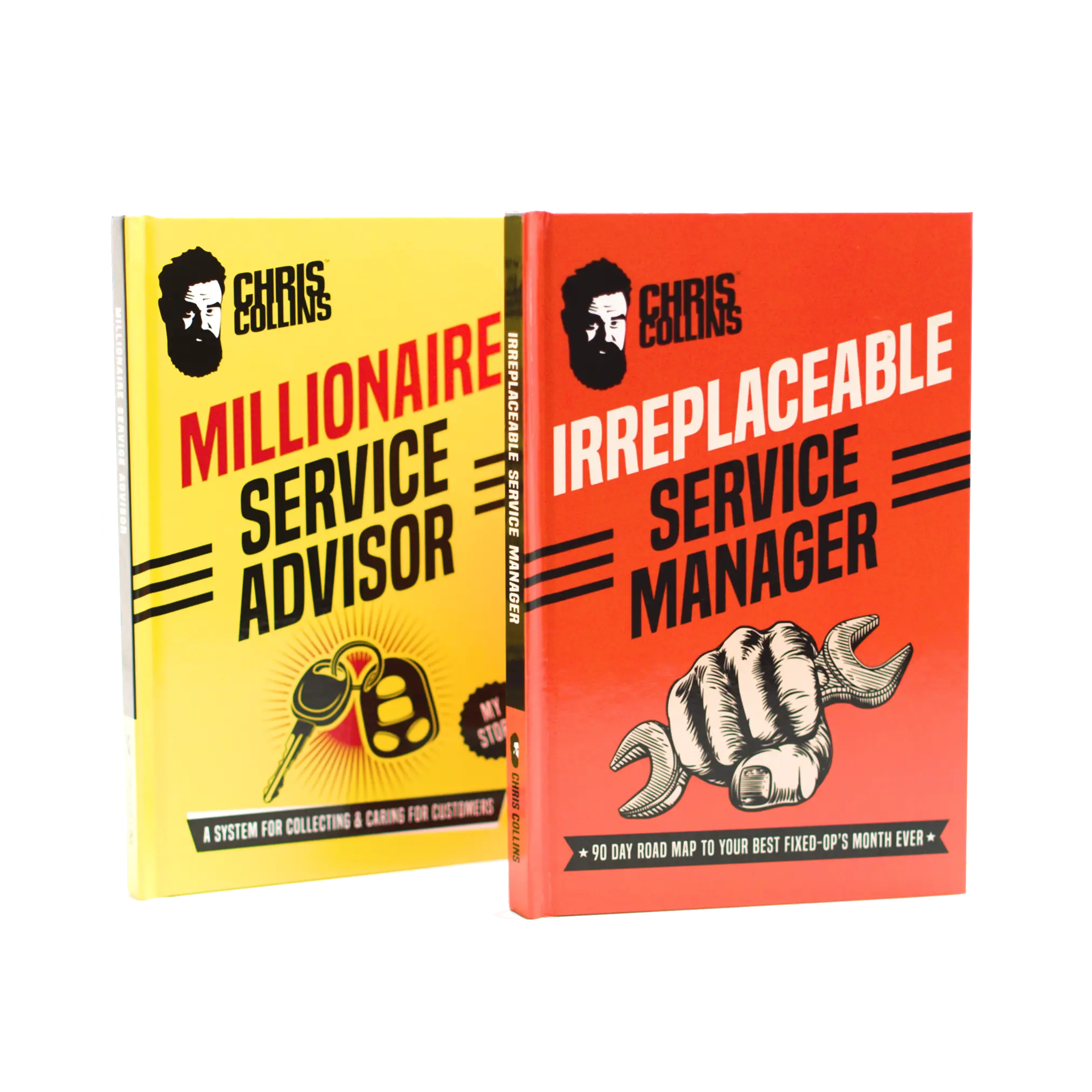
Achieving and exceeding your goals is possible when you have the right systems in place. With Service Drive Revolution OnDemand, you’ll gain access to the proven systems that have made thousands of SERVICE MANAGERS IRREPLACEABLE. Start transforming your department today!
Need help updating your playbook? Let us know how we can support your team’s growth.
Book a 15-minute strategy session with our team. We’ll explore how to unlock your dealership’s real value.