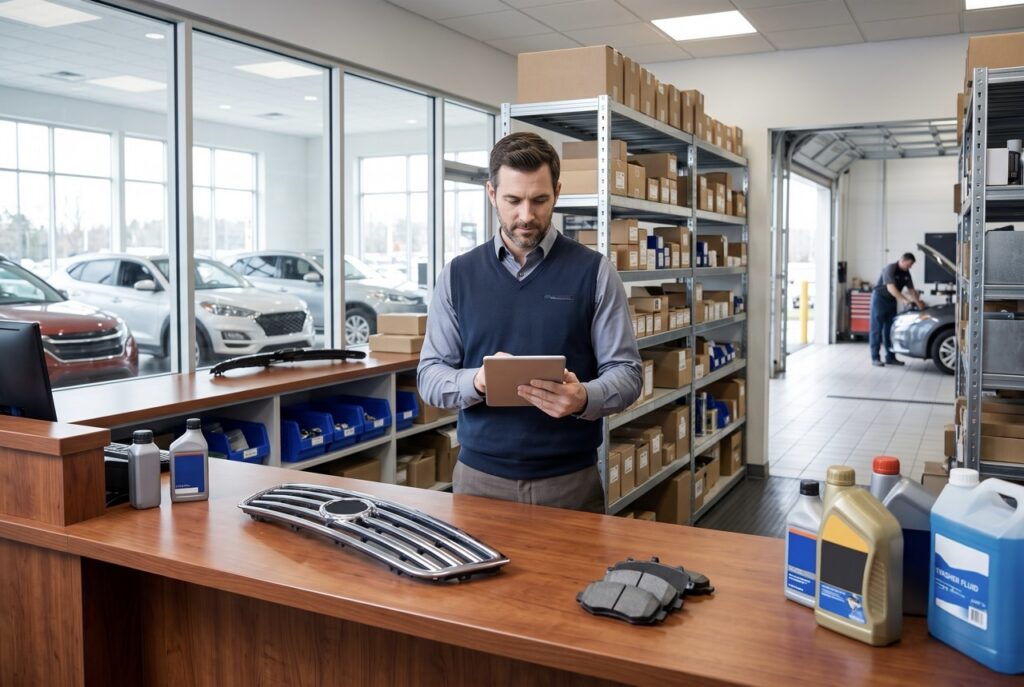
Running a successful dealership comes with so many moving pieces, and one overlooked area can throw the whole operation off track. Sounds pretty harsh, didn’t it? But it’s the reality for most dealers. A missing part, long wait times, or disorganized inventory can directly equate to frustrated customers and lost revenue. When the parts department falls short, both sales and service feel it—and so does your bottom line.
This is where a skilled parts manager shines the most. They are the ones who handle inventory management, organize orders with vendors, and provide leadership to the parts team. These professionals know how to streamline workflows, maintain accurate stock levels, and resolve issues quickly, giving your dealership a reliable edge.
Ready to boost efficiency and improve margins? Today, we will break down what a parts manager really does, the skills that set top performers apart, and the KPIs dealers should track to drive results. Keep reading for expert strategies you can immediately use to strengthen your parts operation. Let’s begin!
Key Takeaways
- Dealership parts managers oversee stock control, order processing, warehouse layouts, and daily administrative tasks.
- Successful management requires team leadership, clear customer communication, and strong supplier negotiation skills.
- Modern departments rely on digital tracking, sales forecasting, and factory compliance to maintain inventory.
- Performance metrics focus on inventory turnover rates, low obsolescence percentages, and healthy profit margins.
- Candidates need practical automotive experience combined with basic education and ongoing professional training.
- United States salaries average $63,299 annually, though geographic location and experience heavily influence earnings.
Core Job Responsibilities
A look at the daily operations shows that the responsibilities of this position span from initial parts acquisition to final counter sales.
● Stock Control
Keeping an optimal supply of vehicle components prevents repair delays. Balancing these levels guarantees that the shop never runs out of necessary items while avoiding tying up cash in overstock.
● Order Management
Securing inventory requires regular coordination with approved suppliers, monitoring shipments, and confirming arrivals. Every incoming item undergoes quality checks to verify it is accurate and free of damage.
● Daily Workflow Maintenance
Administrative tasks keep the department organized. Daily duties involve tracking uncollected customer orders, logging missed sales opportunities, making price adjustments, and maintaining manufacturer databases.
● Organization
Arranging the warehouse layout keeps operations efficient. Assigning specific bin locations minimizes wait times and maximizes overall shop speed.
Essential Leadership and Professional Skills
Guiding a parts department requires blending strong staff oversight with excellent communication across diverse groups of people.
● Team Supervision
Managers handle hiring, scheduling, and training parts assistants, along with warehouse personnel. That is why a cooperative workplace culture must be honed to improve daily output and reduce employee turnover. Clear job expectations can further help teams consistently meet performance goals.
● Customer Relations
Clear communication bridges the gap between complex components and clients. Assisting repair technicians and retail customers at the counter requires explaining technical details in an easy-to-understand way.
● Supplier Coordination and Negotiation
Commercial success depends heavily on vendor relationships. And so, partnering with external suppliers allows departments to secure lower wholesale prices, more favorable payment terms, and faster shipping options.
● Administrative Organization
Establishing structured filing systems for returns, warranty claims, and defective goods keeps daily paperwork accurate. Maintaining clean digital records prevents billing errors and speeds up factory credit processing. Bear in mind that a reliable administration prevents financial losses during annual audits.
Modern Inventory Management Strategies
Deploying smart tracking systems helps parts departments stay competitive with online sellers and large automotive retail chains.
● Using Technology
Software tools track fast-moving components and identify items dropping in value over time. Work smart, not hard, as they say. And digital platforms embody that by removing guesswork from ordering schedules and highlighting early signs of slowing demand. With data reporting, parts managers can now simply adjust stock profiles based on actual utilization.
● Forecasting and Seasonality
Studying past sales reports allows departments to predict upcoming market needs before weather shifts occur. Stocking winter tires, heavy-duty batteries, or specialized cooling components early prevents seasonal shortages. Smart forecasting simply aligns shelf stock with local driver habits.
● Navigating Factory Guidelines
Staying compliant with manufacturer rules protects the dealership from penalties and ensures full return credit. Managers track minimum order quantities and monitor return windows closely to earn factory loyalty rewards. Following distributor mandates secures better placement for scarce components.
● Handling Extra Stock
Moving stagnant components through virtual dealer networks prevents total financial loss on aging stock. Working directly with specialized parts brokers provides an outlet for items collecting dust on warehouse shelves. Strategic liquidation is very important here as it frees up capital for high-velocity inventory.
Key Performance Indicators (KPIs) for Success
Monitoring specific operational metrics allows management to measure efficiency and identify areas needing operational adjustments.
● Inventory Turnover Rate
Measuring how quickly stock sells and refills over a month shows how well capital performs. High turnover rates mean money flows smoothly rather than sitting idle in physical shelf inventory. This metric accurately guides monthly purchasing budgets.
● Obsolescence Percentage
Tracking aging or unsellable stock helps minimize wasted warehouse space. Keeping obsolescence low ensures active inventory dominates the storage shelves. Teams must review these reports weekly to clear dead stock quickly.
● Profit Margins
Comparing wholesale acquisition costs to retail prices maximizes department revenue. Adjust price matrix levels to make sure that small components cover their handling costs while keeping bulk orders competitive. Balanced margins support the financial health of the business.
● Order Accuracy and Metrics
Monitoring special order fulfillment, off-shelf fill rates, and parts-to-labor ratios provides a clear view of helper efficiency. High accuracy keeps repair bays moving and shortens vehicle delivery times. Low error rates directly lower return shipping fees.
Career Requirements and Pathways
Entering this professional field combines foundational education with extensive practical knowledge of the automotive field.
● Education and Background
Most dealerships look for a high school diploma or a General Educational Development (GED) as the basic baseline. Employers favor candidates with certificates from technical schools or hands-on dealership experience over advanced academic degrees.
● Prior Industry Experience
Practical automotive knowledge provides a steep advantage. Having a background as a mechanic, service technician, or salesperson delivers the necessary technical component insights.
● Importance of Ongoing Training
Continuous professional development helps managers adapt to changing e-commerce trends. Attending regular workshops teaches advanced stocking formulas, such as calculating Best Stocking Levels (BSL) and Best Reorder Points (BRP), that reduce operating costs. Automotive fixed operations consulting expert Chris “Bulldog” Collins places a high priority on this ongoing education, highlighting how structural training in specialized formulas directly helps automotive personnel eliminate inefficiencies and improve shop-wide accountability.
How Much Does a Dealership Parts Manager Make?
Compensation in this field depends heavily on geographic location, individual experience, and overall department sales volumes. According to data from ZipRecruiter, the average annual pay for a Dealership Parts Manager in the United States is $63,299. This salary translates to an hourly wage of approximately $30.43, which equals roughly $1,217 per week or $5,274 per month.
The national compensation scale shows a wide spread between entry positions and veteran managers. Salaries can peak at $111,000 annually, while the lowest listings drop to around $30,000 per year. Currently, the middle earnings range sits between $50,000 at the 25th percentile and $72,000 at the 75th percentile. Top earners in the 90th percentile make up to $95,500 across the country. This $22,000 variance within the core pay bracket demonstrates that professionals have significant opportunities to grow their income as they improve their technical skills, choose higher-paying regions, or accumulate years of service.
Top 10 Highest Paying Cities for Parts Manager Jobs
Geographic location significantly affects earning potential in the automotive management field. Here are the top 10 cities in the United States with average salaries well above the national median.
| City | Annual Salary | Monthly Pay | Weekly Pay | Hourly Wage |
| Napa, CA | $82,348 | $6,862 | $1,583 | $39.59 |
| Nome, AK | $78,522 | $6,543 | $1,510 | $37.75 |
| Nantucket, MA | $77,888 | $6,490 | $1,497 | $37.45 |
| Berkeley, CA | $77,506 | $6,458 | $1,490 | $37.26 |
| Mill Valley, CA | $76,495 | $6,374 | $1,471 | $36.78 |
| Sitka, AK | $76,255 | $6,354 | $1,466 | $36.66 |
| South San Francisco, CA | $76,065 | $6,338 | $1,462 | $36.57 |
| Holdrege, NE | $75,824 | $6,318 | $1,458 | $36.45 |
| Fremont, CA | $75,012 | $6,251 | $1,442 | $36.06 |
| San Francisco, CA | $74,577 | $6,214 | $1,434 | $35.85 |
Napa, California, ranks at the top of this list, with an average annual salary of $82,348. This leading figure outpaces the national average by $19,049, representing a 30.1% increase for managers operating in that area. Nome, Alaska follows closely in the second slot with an annual average of $78,522, while Nantucket, Massachusetts holds the third position at $77,888 per year. Nantucket beats the national baseline by $14,589, a 23.0% financial gain.
Earning differences among these ten leading municipalities remain narrow, showing only a 9% variation between Napa, California, and San Francisco, California. This tight distribution suggests that simply moving between high-paying cities offers limited salary advancement on its own. Job seekers should analyze the local cost of living alongside these wage statistics when deciding where to apply for their next parts management position. Finding a community with moderate housing expenses and high local wages offers the best path to achieving long-term personal financial security.
Frequently Asked Questions (FAQs)
A parts manager oversees the inventory, ordering, and sales of automotive or machinery parts to keep the service department and customers supplied. They also lead the parts department team, negotiate with vendors, and ensure the warehouse remains organized and profitable.
A parts manager’s performance is primarily measured by the department’s financial profitability and the efficiency of inventory turnover. Dealership leadership also evaluates them on customer satisfaction scores and how effectively they minimize stagnant or obsolete stock.
Critical key performance indicators include inventory turnover rate and fill rate, which measure how often parts are immediately available. Managers must also monitor the obsolescence percentage and the department’s total gross profit dollars.
Bottom Line
Without a doubt, the parts manager holds a pivotal position in the dealership, ensuring seamless operations across inventory management, vendor coordination, and staff leadership. Mastering daily responsibilities and essential skills not only guarantees a well-run parts department but also strengthens the dealership’s overall performance. Don’t forget to monitor key performance indicators (KPIs) as well to optimize processes and deliver top-tier service. Whether you’re looking to hire or become a parts manager, understanding this role is a smart step toward boosting efficiency and customer satisfaction. If you gained useful insights from this guide, share it with colleagues or team members. Explore more interesting topics here!
Achieving and exceeding your goals is possible when you have the right systems in place. With Service Drive Revolution OnDemand, you’ll gain access to the proven systems that have made thousands of SERVICE MANAGERS IRREPLACEABLE. Start transforming your department today!
Need help updating your playbook? Let us know how we can support your team’s growth.
Book a 15-minute strategy session with our team. We’ll explore how to unlock your dealership’s real value.