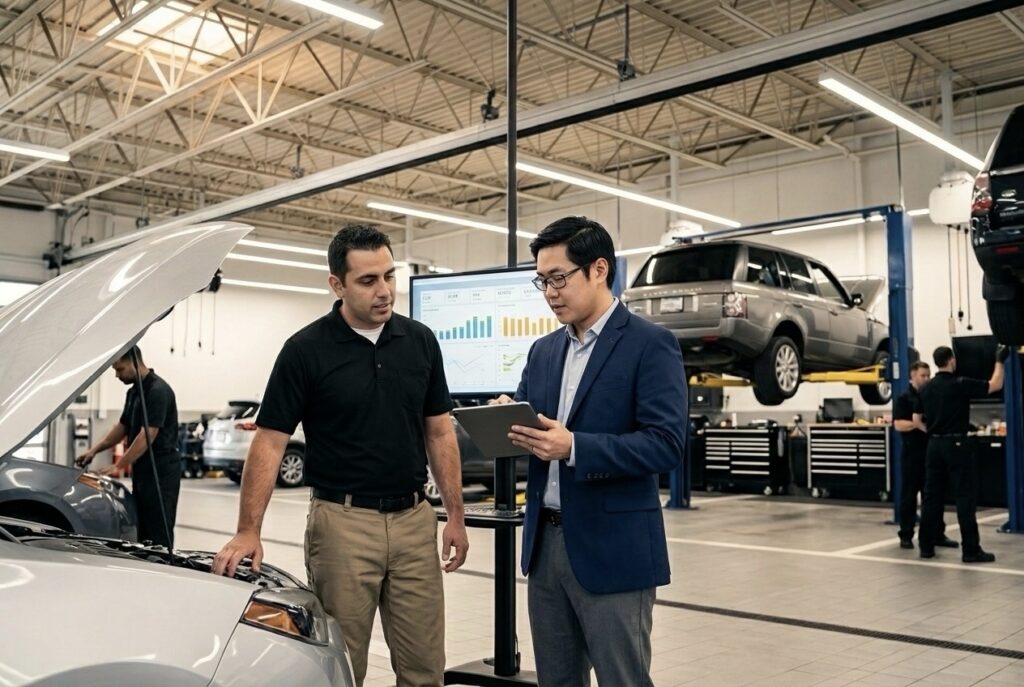
Empty bays and falling labor hours often signal more than just a slow week. Many dealerships face persistent underperformance that drags down morale and erodes the bottom line. Without a clear process, problems go unaddressed until they reach a breaking point, leaving everyone feeling frustrated. That lack of structure puts a heavy burden on the business, making it difficult to keep your best technicians engaged or your customers satisfied.
Fixing these issues requires a systematic look at why vehicles are stalled. A service manager must identify bottlenecks in parts sourcing or better stop the habit of mismatching skill levels with specific repair orders. Shifting focus from simply shouting for more hours to analyzing root causes, such as equipment failures or training gaps, is what truly creates a more efficient workflow. You need to understand that real progress happens when data-driven changes meet honest coaching conversations.
Ready to know more? Stay with us as we give you the full framework your managers can use to boost productivity and protect the future of the dealership.
Key Takeaways
- Managers spot underperformance by tracking flagged hours, comeback rates, customer scores, and attendance patterns.
- Service departments calculate metrics such as technician productivity, labor efficiency, and bay utilization to assess financial health.
- Workflow bottlenecks, flaws in flat-rate pay, and poor communication silently drain daily output and reduce overall production.
- Leaders must correct poor performance using private meetings and a structured disciplinary process.
- Dealerships can retain top talent by offering hybrid pay, organizing workspaces, upgrading to digital inspections, and funding mentors.
Spot the Warning Signs of an Underperforming Shop
If you want to keep your dealership profitable, you need constant vigilance for early indicators of trouble. Better watch out for the following signs.
● Low Flagged Hours vs. Clock Hours
Tracking how many hours of work a technician actually completes and bills, compared with the total hours spent at the shop, provides an immediate health check. When flat-rate workers consistently bill fewer hours than their logged attendance, operational drag is usually present. This gap signals that skilled labor is being wasted, whether due to poor dispatching or slow work paces. In fact, mechanics often spend only 25% to 35% of their shifts on actual wrench time, losing the rest of the day to inefficiencies.
● High Repeat Repairs (Comeback Rate)
Monitoring how often vehicles return to the shop because the fix was not done the first time correctly safeguards your reputation. A high comeback rate drains your profits through unbillable diagnostic time and warranty disputes. More importantly, it destroys consumer trust and strains the service lane.
● Low Customer Scores
Keeping an eye on poor reviews or low feedback ratings given to advisors or technicians helps isolate systemic communication failures. Consistent dips in customer satisfaction indexes usually point to a lack of clear explanation during write-ups. Drivers remember how they were treated far longer than the mechanical repair itself.
● Attendance Problems
Documenting chronic tardiness or unexcused absences reveals when team members are disengaged or overwhelmed. Missing team members force others to absorb heavier workloads, which disrupts scheduling coverage and delays vehicle handovers. Thankfully, objectively tracking time-punch data can already highlight these patterns before they derail your weekly goals.
● Invisible Drop in Team Enthusiasm
Watching out for a team that completes mechanical tasks perfectly but ignores the customer experience prevents costly customer churn. This subtle type of underperformance leaves drivers feeling processed like numbers rather than cared for. Mechanical precision is simply the baseline expectation. But remember, warm, proactive communication is what builds long-term loyalty.
Metrics and Formulas Every Manager Needs
Relying solely on top-line monthly revenue can mask deep operational flaws hiding inside individual service bays.
● Technician Productivity
Figuring out how much billed work a person creates compared to their available time requires a standard operational calculation. This metric answers whether the shop is capitalizing on the hours it pays for. Use the following formula to track this baseline:
Technician Productivity % = Billed HoursClocked Hours 100
● Labor Efficiency
Measuring how quickly a mechanic completes a specific task relative to standard labor guide times highlights individual technical speed. High efficiency shows excellent mechanical proficiency, though it can still be undermined by shop delays. Calculate this metric using the standard equation:
Labor Efficiency % = Billed HoursActual Hours Spent on Repairs 100
● Service Absorption
Checking whether revenue from the parts and service departments covers the building’s total operating costs determines financial resilience. The average dealership service absorption rate currently stands at 68.1%, but top-performing shops aim for the NADA target of 115% to ensure stability. Lower percentages mean the business structurally depends on vehicle sales to survive.
● Bay Utilization
Tracking how often repair stalls are actively being used versus sitting empty reveals hidden physical capacity. Scheduling gaps, part delivery delays, and slow approvals often leave bays idle. Monitoring this utilization hour by hour allows service managers to optimize daily workflow scheduling.
Uncover the Real Reasons Behind Low Numbers
Low production figures rarely stem from a simple lack of effort on the shop floor. Take a closer look at the following reasons behind these low numbers.
● Daily Bottlenecks and Lost Time
Mechanics lose valuable billable minutes walking back and forth to find shared tools, wait for parts, or ask advisors for clarification. Wasting just fifteen minutes per repair order quickly adds up to hours of lost revenue each week across the entire team. These small daily leaks silently drain shop output.
● Flaws of Flat-Rate Pay
Relying strictly on a pay-per-job system can cause workers to rush or lose money during slow weeks or long digital diagnoses. Modern electrical issues demand hours of scanning and isolation, yet standard manuals often pay minimal diagnostic time. This financial volatility breeds stress and naturally drives up comeback rates.
● Handoff Mistakes Between Departments
Broken communication when parts arrive but the shop floor isn’t notified, or when advisors write confusing instructions on job cards, stalls production. Verbal instructions frequently lead to rework, confusion, or severe workshop delays.
● Sink or Swim Mentality
Forcing newer technicians to figure things out on their own because veteran mechanics lose money when they stop to help them destroys team longevity. Apprentices left without guidance make costly mechanical errors and eventually exit the trade entirely. True progress requires removing the financial penalty for assisting.
What is the Right Way to Talk About Bad Performance
Addressing shop productivity issues requires a structured approach that balances accountability with support.
● Private, Fact-Based Meetings
Lead conversations with clear data trends rather than anger or personal feelings to establish a constructive tone. Point out specific historical percentages to show the technician that the conversation is professional, not a personal grudge. This open framing will let you uncover hidden technical barriers or personal issues affecting performance.
● A Four-Step Correction Process
Moving carefully from friendly reminders to official actions can protect the business and give the worker a fair shot:
- Step 1 (Verbal Warning): A private talk with an internal record and a clear goal establishes a timeline for immediate improvement.
- Step 2 (Written Warning): A formal written warning, with details of human resources involvement, outlines the problem and the consequences if it persists.
- Step 3 (Performance Improvement Plan): A structured plan teaches missing skills and tracks targets through regular check-ins.
- Step 4 (Termination): Defensible termination is the outcome if no progress is made after all available help has been provided.
Action Plans to Upgrade the Shop and Retain Top Talent
Transforming an underperforming facility requires structural upgrades to optimize the work environment. Here’s what you can do…
● Switch to Better Pay Options
Creating hybrid pay plans, such as a steady base salary plus bonuses for meeting goals, helps keep stress low. This balanced structure guarantees peace of mind during seasonal slowdowns or intense warranty diagnostics. Preserving production incentives while eliminating paycheck anxiety will keep high-tier talent in your bays.
● Organize the Shop Floor to Save Minutes
Set up centralized supply stations and deliver parts directly to mechanics to make sure that they never leave their bays. Dedicated parts delivery runners will keep technicians focused entirely on turning wrenches. Proactive, recurring tool reviews prevent unexpected infrastructure breakdowns before they cause delays.
● Use a Smart Dispatch System
Assigning easy maintenance to beginners and advanced engine diagnostics to master technicians ensures nobody’s time is wasted. Such systematic alignment will keep premium labor focused on high-rate mechanical work rather than routine oil changes. Proper job routing eliminates bay bottlenecks instantly.
● Upgrade to Digital Inspections
Having mechanics take pictures and videos of issues lets customers understand and approve fixes much faster. Transparent inspection reports dramatically increase repair authorization rates in the service lane. Faster approvals mean vehicles spend less time sitting idle on lifts.
● Paying for Dedicated Mentors
Appointing a shop trainer who is paid based on the whole group’s success can motivate them to teach younger workers. Basing a foreman’s bonus on total workshop production removes the financial penalty of coaching apprentices. Doesn’t it sound like hitting two birds with one stone? Structured guidance accelerates beginner development, boosts overall efficiency, and lowers comeback rates.
● Implement Fixed Operations Coaching
Internal managers sometimes stand too close to daily operations to see structural flaws. Bringing in outside expertise from Chris Collins Inc. can help dealerships audit existing processes and implement structured frameworks. They evaluate workflow systems and train service managers, advisors, and automotive technicians to optimize fixed operations, turning the service drive into a primary revenue center rather than depending solely on new vehicle sales.
Frequently Asked Questions (FAQs)
A service manager oversees the daily operations of the repair shop while managing technician schedules and workflow. They also maintain high customer satisfaction standards and track financial performance to hit profitability goals.
You can increase productivity by dispatching the right jobs to technicians based on their specific skill levels. Providing modern diagnostic tools and continuous training also minimizes downtime and speeds up repair times.
Improving labor efficiency requires reducing dead time through organized parts management so technicians never wait for components. You should also optimize your service writers’ scheduling to keep bay spaces consistently filled throughout the day.
Bottom Line
Stop settling for stagnant growth and start driving your team toward excellence through the strategic oversight of an elite service manager. The moment you eliminate operational friction and replace reactive habits with systematic coaching, the result will surely be a high-output bay where top-tier talent actually wants to work. So go ahead and start transforming your shop culture today to turn underperformance into your greatest competitive advantage.
Found these insights helpful? If so, be sure to share it with your industry peers so we can keep the conversation going. Follow us to stay updated on our newest uploads!
Achieving and exceeding your goals is possible when you have the right systems in place. With Service Drive Revolution OnDemand, you’ll gain access to the proven systems that have made thousands of SERVICE MANAGERS IRREPLACEABLE. Start transforming your department today!
Need help updating your playbook? Let us know how we can support your team’s growth.
Book a 15-minute strategy session with our team. We’ll explore how to unlock your dealership’s real value.