Too often, dealerships see missed opportunities in the service lane. Service advisors might have strong technical knowledge but still struggle to build trust, communicate value, or confidently present additional services to customers. Now that very gap can lead to stalled service sales and untapped revenue potential.
The good thing is that you can turn things around with a high-performance approach. What you need here is proper training that focuses on product knowledge, communication skills, and a mindset that puts customers first. With these fundamentals in place, advisors can then offer additional products and services with ease, driving results for the whole team.
Read on for step-by-step strategies that will make service sales second nature for your advisors. You’ll see exactly how to coach your team, encourage a precision-driven attitude, and create a top-notch service process. Let’s get straight into it!

Key Takeaways
- Exact preparation and continuous performance reviews sharpen team skills in top-tier service departments.
- Deep product knowledge and ethical customer care build lasting trust and client loyalty.
- Active listening paired with neutral, confident language reduces customer stress during repair discussions.
- Visual evidence, such as photos and unbiased presentations of all findings, establishes complete transparency.
- Grouping repairs by urgency and pre-scheduling future visits prevent decision paralysis and secure retention.
- Tracking approval rates alongside regular feedback sessions guarantees steady operational growth.
Adopt a High-Performance Mindset
Success in the service lane essentially begins with a mental shift toward elite standards of operation. What do we mean by that…
Precision and Preparation
Most top-tier teams follow excellent processes for how a service department should function. These teams do not leave anything to chance. Instead, every movement is calculated, and every tool is ready before the car even arrives. Service advisors must mirror this level of precision in every client interaction. This means having all paperwork ready, understanding the vehicle’s history, and being mentally prepared to provide a seamless experience from the moment the wheels hit the drive.
Continuous Evaluation
Exceptional performance requires a commitment to constant improvement through regular assessment. Dealership leadership should regularly review current training methods to identify specific performance gaps. By spotting these weaknesses early, you can implement targeted coaching to sharpen the team’s skills. High-performance cultures thrive on feedback and the desire to be better today than they were yesterday.
Need a little help? Dealerships looking to bridge these gaps systematically can partner with specialized training firms like Chris Collins Inc., which provides targeted coaching and structured frameworks to help service department staff improve operational efficiency and hold teams accountable.
Step 1: Build Base Knowledge and Trust
Establishing a solid foundation of expertise and human connection is the next logical move.
● Deep Product Literacy
Confidence is born from competence. Service advisors must go beyond surface-level knowledge and learn the intricate details of every component and maintenance service offered. When an advisor understands exactly how a specific repair resolves a customer’s complaint, they present that solution with natural authority. This deep literacy allows the advisor to answer “why” a service is needed without hesitation, immediately reassuring the vehicle owner.
● Personalized Relationships
Clients want to feel like more than just a repair order number. Reviewing car histories before a visit allows an advisor to greet the owner by name and reference past concerns. Discovering the vehicle’s primary goals—whether it is keeping it for 10 years, maintaining high resale value, or ensuring family safety—shifts the narrative. The interaction now moves from a basic sales transaction to a personalized service designed to meet their specific life needs.
● Ethical Customer Care
Long-term profitability is built on a foundation of integrity. Prioritizing the client’s well-being over a quick credit card transaction builds the kind of lifelong loyalty that sustains a dealership through lean times. When you treat every vehicle as if it belonged to a family member, customers notice. This ethical approach creates a “trusted advisor” status that is far more valuable than any single high-dollar invoice.
Step 2: Refine Communication Strategies
Clear communication bridges the gap between technical expertise and customer understanding.
● Active Listening Habits
Effective communication starts with silence and focus. Advisors must be trained to validate the customer’s primary reason for the visit before they mention any additional maintenance needs. By acknowledging the client’s main concern first, you show respect for their priorities. Such a simple act of validation can open the door for a more productive conversation about other necessary services later in the process.
● Neutral Language Swaps
The words chosen during a presentation can either create defensive walls or build bridges of understanding. Replacing alarmist terms like “problem” or “failure” with objective words like “finding” or “observation” lowers the customer’s stress level. Using objective data makes people feel properly informed rather than pressured. It turns a stressful repair into a manageable decision based on facts.
● Confident Phrasing
Hesitation often leads to customer doubt. Eliminating weak phrases such as “you might want to consider” or “maybe we should look at” is vital for professional delivery. Instead, use clear, direct sentences that accurately convey the urgency of the repair or maintenance task. Direct language signals that you are an expert who stands behind the recommendations provided.
● Active Practice
Mastery of communication requires consistent repetition outside of live customer interactions. Conduct brief, 15-minute weekly role-play sessions to help the team refine their delivery. These sessions allow advisors to practice new scripts and handle common objections in a safe environment. The goal is to make every presentation sound conversational and natural rather than robotic or rehearsed.
Step 3: Present Extra Services with Transparency
Visual evidence and fair pricing strategies help eliminate the mystery often associated with auto repairs.
● Visual Verification
Many customers have a natural skepticism regarding auto repairs that they cannot see. Using digital tools such as video inspections and detailed health reports provides the transparency needed to overcome this hurdle. When a client sees a video of their own worn brake pads or a leaking seal, they feel much more comfortable approving the work. Visual evidence acts as a silent salesperson that never loses credibility. Data doesn’t lie: over 64% of customers say they want photo or video documentation for their inspections.
● Unbiased Presentations
A common mistake is for an advisor to prejudge what a client can afford. It is essential to remember that your household budget is not the customer’s household budget. Advisors should present every necessary repair and maintenance item found on the technician’s checklist without exception. It is the customer’s responsibility to decide what to approve, while the advisor’s job is simply to ensure the client is fully informed about the vehicle’s condition.
● Daily Cost Breakdown
Effectively addressing client concerns leads to a professional and confident conclusion of the service visit.
Step 4: Overcome Hesitation and Close Professionally
Effectively addressing client concerns leads to a professional and confident conclusion of the service visit.
● Tiered Choice Framework
Providing a wall of information can lead to “decision paralysis.” To avoid this, group all findings into tiers based on urgency. Critical safety issues should be in the first tier, while items that need to be monitored can be placed in a second or third tier. This framework allows the customer to prioritize their spending while still understanding the total health of their vehicle.
● Empathetic Resistance Handling
When a customer pushes back on price or timing, it is rarely a personal attack. Address these objections by first validating their concerns. Show them the physically worn parts, or offer clear written options they can take home. Providing empathy and tangible proof reduces the friction often encountered during the closing process and helps maintain the relationship.
● Assumptive Closing Logic
Confidence is contagious during the final stages of a service presentation. Use phrasing like “All I need is your go-ahead to start these services for you” to signal total confidence in the recommendation. This approach suggests that the repair is the logical and best path forward. It removes the awkwardness of the “ask” and moves straight into the solution.
● Schedule Future Visits
The service cycle does not end when the car leaves the lot. Secure the next maintenance appointment right at the time of vehicle delivery while the customer is already focused on their car’s health. Pre-scheduling ensures the vehicle stays on a proper maintenance schedule and increases the likelihood that the customer will return to your dealership rather than a competitor. In fact, digital appointment scheduling systems reduce no-show rates by 15% to 18% on average compared to manual phone confirmations.
Step 5: Monitor Department Metrics for Success
Long-term growth is only possible when you measure what truly matters in your daily operations.
● Track True Performance Indicators
Looking beyond the average repair order (RO) amount is necessary for a complete picture of health. Management should measure service approval percentages, follow-up success rates, and customer retention numbers. These metrics reveal how well the team is building trust and communicating value, rather than just how much money they collect in a single day.
● Consistent Feedback Channels
Growth happens when there is a dedicated space for reflection and correction. Establishing regular peer reviews and manager check-ins creates an environment where wins are celebrated, and mistakes become learning opportunities. When the team knows their performance is being monitored and supported, they remain engaged and motivated to maintain high standards of service.
Frequently Asked Questions (FAQs)
Customer trust transforms one-time drivers into lifelong clients who accept repair recommendations without skepticism. When drivers feel safe, they approve necessary work quickly and spend more over the lifespan of their vehicles.
Advisors can increase sales by showing customers the physical wear on old parts alongside clear digital inspection photos. Framing the new part as a safety preventative measure allows the client to make an informed, pressure-free buying decision.
Active listening combined with the “good-better-best” tiering method works best because it gives customers control over their budget. Moreover, explaining the mechanical consequences of delaying a fix helps drivers prioritize urgency without feeling cornered by a pitch.
Advisors recommend extras by grouping them naturally with the vehicle’s primary reason for the visit. They can use manufacturer-backed maintenance schedules to present these add-ons as routine care rather than unexpected financial burdens.
Bottom Line
Driving strong service sales comes down to building a team that combines product knowledge with confident, customer-focused communication. When service advisors approach every customer interaction with precision and a genuine intent to help, they open the door to consistent sales growth. So go ahead and train your staff using real-world scenarios and practical communication strategies so they can confidently recommend parts and services customers truly need, ensuring every visit adds value. Found these insights helpful? Please share this article with your industry peers so we can keep the conversation rolling. Follow us for more!
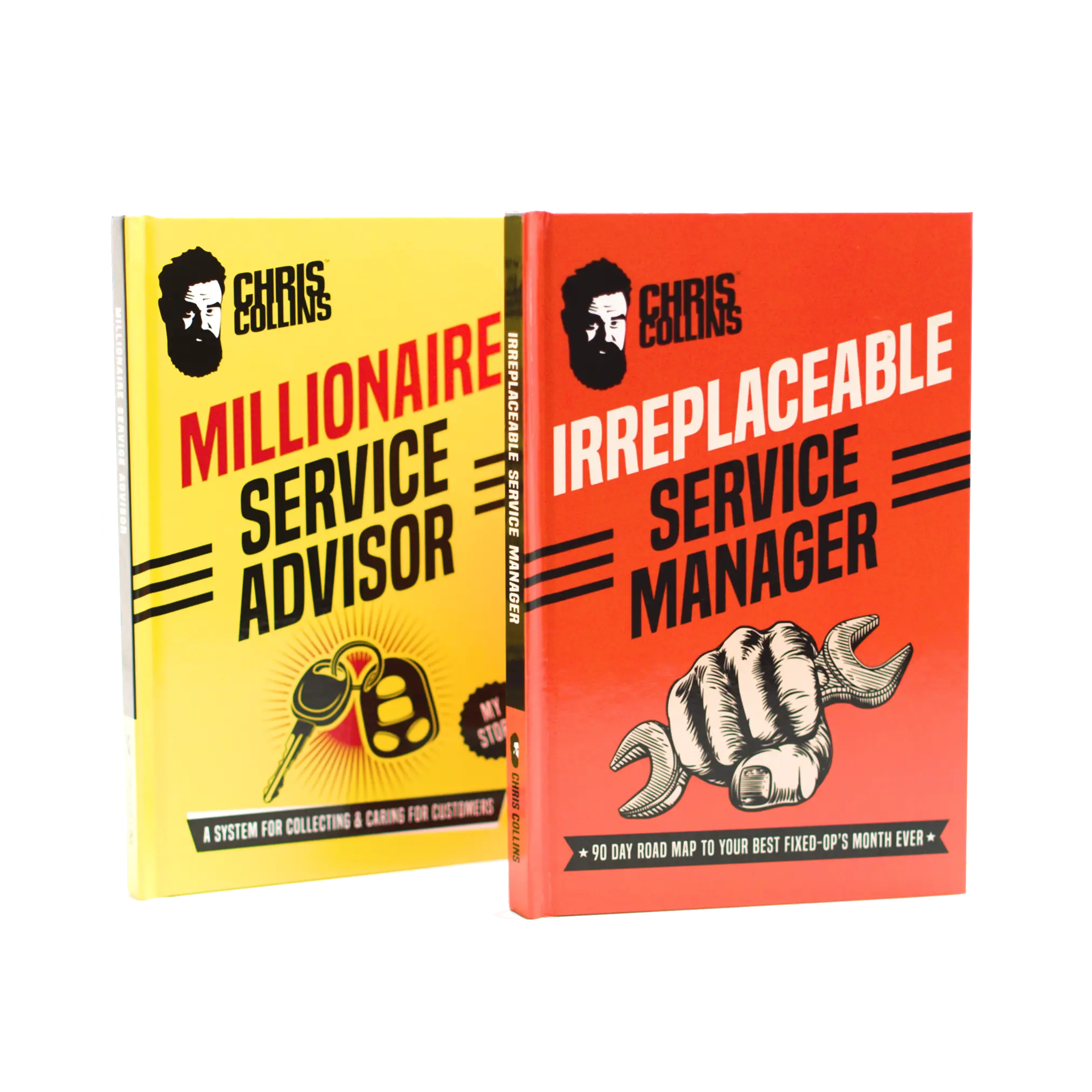
Achieving and exceeding your goals is possible when you have the right systems in place. With Service Drive Revolution OnDemand, you’ll gain access to the proven systems that have made thousands of SERVICE MANAGERS IRREPLACEABLE. Start transforming your department today!
Need help updating your playbook? Let us know how we can support your team’s growth.
Book a 15-minute strategy session with our team. We’ll explore how to unlock your dealership’s real value.