The moment a customer drops their keys at your service desk, doubt often lingers. Many worry about the repairs their vehicle needs and question the recommendations they receive. That level of uncertainty slows approvals and weakens trust. For sure, every dealer knows that a lack of customer repair confidence creates tough conversations and missed opportunities.
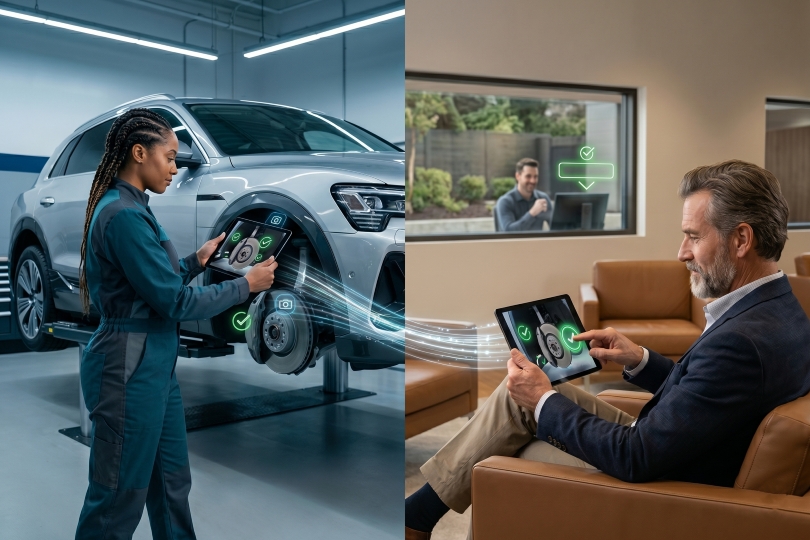
In such situations, transparency is something you can hold onto. When you show clear visuals and explain repair needs in simple terms, customers feel at ease and believe they’re getting honest advice. That is why setting clear expectations from the start and using tools like video walkarounds builds customer repair confidence and makes it easier for them to say yes to repairs. Today, we will guide you on turning skepticism into trust, making every interaction a win for your dealership and your customers.
Key Takeaways
- Video inspections build trust by providing visual proof, doubling customer approval rates compared to paper reports.
- Sending videos lets customers review needed repairs in a low-pressure setting, which drives higher authorization rates.
- Effective repair videos last 30 to 60 seconds and combine positive findings with clear visual evidence.
- Dealerships utilizing video communication experience significant revenue growth per repair order and higher customer satisfaction.
- Managers must tie video usage to technician pay and simplify daily workflows to overcome staff resistance.
Why Customers Struggle to Trust Repair Shops
A written report requires a customer to use their imagination. When an advisor says a belt is “frayed” or a gasket is “seeping,” the customer has to visualize a problem they may not understand. This mental gap is where skepticism grows. Video eliminates the need for imagination.
Seeing a technician point a flashlight at a cracked serpentine belt or showing the actual measurement of a tire’s tread depth against a wear bar provides undeniable proof. Video inspections build trust by offering a fly-on-the-wall perspective. The customer feels as though they are standing in the bay with the technician. Such a level of transparency removes the feeling of being “sold” and replaces it with a sense of being “informed.” When service advisors actively create a difference to connect with customers, trust grows naturally.
Data from recent automotive service studies highlight this reality. When customers receive a paper-only MPI, the approval rate for recommended work sits at approximately 24%. However, when that same inspection includes photo or video evidence, the approval rate jumps to 51%. Visual evidence more than doubles the likelihood of a customer saying “yes” to a repair. That isn’t a sales tactic. It is the natural result of a customer finally understanding the necessity of the work.
Increasing Repair Authorization Rates
Service advisors often struggle to articulate the urgency of a repair over the phone. Video MPIs act as a silent partner for the advisor, doing the heavy lifting of the “sell” before the conversation even begins.
Video increases authorization rates by addressing three specific customer needs:
- Confirmation of the Problem: The customer sees the leak, the tear, or the worn component.
- Education on the Impact: The technician can explain what happens if the part fails, moving the conversation from “cost” to “safety and reliability.”
- Validation of Value: When a customer sees the labor required to reach a specific component, they better understand the repair’s price.
When a video is texted directly to a customer’s phone, they can review it in a low-pressure environment. They can re-watch it, share it with a spouse, or look up the part online. By the time the service advisor follows up, the customer has already processed the visual proof. This turns the follow-up call from a defensive debate into a logistical conversation about when the work will be finished.
What Makes a High-Quality Video MPI
A video MPI does not need to be a high-budget production. In fact, customers often prefer a raw, authentic look because it feels more honest. However, to be an effective sales tool, it should follow a specific structure:
- Introduction: The technician should start by identifying the vehicle and confirming the primary reason for the visit. This builds immediate rapport.
- Compliment Sandwich: A great video shouldn’t just be a list of failures. Technicians should point out things that are in good condition first. “Your tires look great and your battery passed the test.” This shows the technician is being objective, not just looking for problems.
- Clear Visual Evidence: Use a flashlight to illuminate dark areas under the chassis. Use a tread depth gauge or brake micrometer in the shot so the customer sees the actual measurement.
- The “Why” and the “What”: Don’t just show a dirty cabin air filter; explain how it affects cabin air quality. Explain the “why” behind the recommendation.
- Professional Recommendation: The technician should end with a clear path forward. “Based on this leak, I recommend replacing this gasket today to prevent a larger engine issue down the road.”
Keeping the video between 30 and 60 seconds is the sweet spot. It is long enough to be thorough but short enough that a customer will watch the entire clip while at work or on the go.
Improving Revenue and Customer Confidence
Service managers constantly seek tips and tricks to increase sales and boost profits, and video MPIs deliver clear financial results. Industry analysis suggests that dealerships using video communication see an increase in average dollars per repair order (RO) of 35% to 60%. Such revenue growth comes from two sources: higher approval rates for primary items and a significant increase in the sale of preventive maintenance that customers usually decline.
Past the immediate revenue, video MPIs future-proof the dealership by building long-term customer confidence. Customer Satisfaction Index (CSI) scores climb significantly—often by 30 points or more—when visual evidence accompanies the inspection.
A massive demand gap exists in the industry right now. Research shows that over 60% of customers want photo or video documentation with their inspection, yet fewer than half actually receive it. Those dealerships that bridge the gap differentiate themselves from independent shops down the street and from competitors stuck in the “paper checklist” era.
Best Practices for Service Advisors
While the technician creates the content, the service advisor closes the deal. The way the video is presented is just as important as the video itself.
● Set Expectations Early
During the write-up, the advisor should tell the customer, “Our technician is going to perform a full digital inspection and text you a short video so you can see exactly what he sees.” This prepares the customer to look for the message.
● Review Before Sending
The advisor should watch the video first to ensure the technician’s tone is professional and the visual evidence is clear.
● Prompt Delivery
Timing is everything. The video should be sent as soon as the inspection is complete. If a customer is waiting in the lounge, they should receive the video before the advisor walks toward them.
● Professional Follow-up
After sending the video, wait a few minutes for the customer to watch it, then follow up. Use the video as the reference point: “As you saw in the video the technician sent, those rear brakes are reaching the limit.”
Overcoming Internal Hurdles
The primary obstacle to implementing video MPIs isn’t the technology. Actually, it’s the culture. Technicians may initially view recording videos as a burden or a waste of time.
To manage the cultural shift, leadership in the Service Drive must establish clear accountability. Automotive fixed operations consulting expert Chris “Bulldog” Collins notes that implementing consistent processes is essential to turning a struggling service department into a profitable operation. When managers set clear expectations, technicians adapt faster.
Now, what about the resistance? In that matter, the management must tie the activity to the result. When technicians realize that a 30-second video leads to more approved hours on their pay stub, the burden becomes a benefit. Providing tools that integrate the video recording directly into the existing workflow—rather than requiring a separate app or a complicated upload process—is required for long-term adoption.
Consistent tracking is needed. Service managers should monitor the “view rate” of videos. If videos are being sent but not watched, the issue might be how the links are being texted or how the advisors are setting the stage. If videos are being watched but work isn’t being approved, the issue might be the quality or clarity of the technician’s explanations.
Frequently Asked Questions (FAQs)
Showing customers real-time footage of a vehicle’s condition builds immediate trust by removing the mystery behind recommended repairs. Clear visual evidence reduces scepticism and empowers car owners to approve work, as they can see wear or damage for themselves.
A professional video features a clear walkaround of the vehicle, with a technician explaining the findings in simple language. Moreover, it must highlight healthy components alongside urgent issues, using a color-coded system to prioritize safety and maintenance needs.
Sending a direct link via text message allows customers to review footage at their convenience before a follow-up conversation. Advisors should call shortly after to answer questions and walk through recommendations while the visuals remain fresh in the customer’s mind.
Bottom Line
It’s a wrap! Boosting customer repair confidence all boils down to building lasting trust through clear visuals, honest communication, and transparent processes. When customers see real, straightforward assessments of their own vehicles, they feel informed and empowered to make decisions about their repairs. This approach is guaranteed to increase approval rates and turn one-time visitors into loyal service clients. If these strategies help you create more effective service experiences, consider sharing these insights with your team. Follow us for more!
Achieving and exceeding your goals is possible when you have the right systems in place. With Service Drive Revolution OnDemand, you’ll gain access to the proven systems that have made thousands of SERVICE MANAGERS IRREPLACEABLE. Start transforming your department today!
Need help updating your playbook? Let us know how we can support your team’s growth.
Book a 15-minute strategy session with our team. We’ll explore how to unlock your dealership’s real value.