Strong advisor training is the backbone of a dealership’s success, but it’s where many stumble. Too often, service advisors get thrown into the deep end, armed with theory but missing the practical tools to handle packed schedules, upset customers, and real-world curveballs. The gap between what advisors learn in a classroom and what actually happens on the service drive can leave both teams and customers frustrated.
Chris Collins saw this firsthand, working his way up from lot porter to top-performing service advisor in a chaotic dealership. Instead of relying on cookie-cutter scripts, he based his advisor training on what truly works: front-line experience and clear, organized systems. That’s what set his method apart—actionable points learned dealing face-to-face with customers, paired with process changes proven to keep both employees and clients on track.
Ready to see what makes an advisor training program not just different, but more effective? Stay with us as we break down Chris’s journey, share his core strategies, and show what happens when practical experience meets smart systems. Let’s begin!
Key Takeaways
- Frontline operational experience builds the accountability and authentic communication needed to succeed in sales.
- Overcoming personal biases against customer budgets maximizes sales opportunities and technician repair hours.
- Prioritizing personal connection over technical jargon puts clients at ease and establishes trust.
- Top service advisors build trust, present every inspection, and set clear communication timelines instead of relying on cold interrogations.
- Effective training requires practical service drive experience rather than generic, theoretical corporate sales scripts.
- Communication training fails if dealerships do not fix broken internal processes, disorganized scheduling, and technician shortages.
Chris Collins’ Journey
Every successful business training system starts with a real story of hard work, grit, and hands-on experience on the front lines of an industry.
Starting at the Bottom
Chris Collins began his automotive career working part-time in the wash pit and as a lot porter at a disorganized dealership. He spent his shifts washing vehicles, retrieving cars for clients, and managing keys in freezing, wet conditions. Despite the tough environment, his strong work ethic quickly helped him secure a promotion to full-time lot manager. Running the lot meant tracking down missing keys that technicians accidentally took home, which frequently left clients stranded during vehicle pickup. Managing his peers taught him early lessons about workplace accountability, changing his relationships because he needed staff to arrive on time and avoid losing keys.
Major Turning Point
His path shifted when his manager handed him a windshield repair kit. This tool allowed him to fix glass dings, earn commissions, and eventually learn how to write up repair orders with help from an experienced coworker. The early tool frequently cracked windshields due to its poor design, but a friendly body shop manager introduced him to a single-suction tool that utilized temperature changes to draw resin into the glass cracks. After getting onto the insurance company’s direct repair program lists, the volume of glass repairs skyrocketed, allowing the business to raise repair prices from $29.95 to $49.95 per vehicle. After pushing for advancement and being passed over multiple times by a manager who disliked his long hair, he finally earned a promotion to a full-time service advisor position by agreeing to a strict quota.
Facing the Chaotic Service Drive
As an advisor, Collins encountered a highly stressed environment where the dealership overbooked appointments on clipboards without setting specific times. This caused constant scheduling backups and left customers incredibly frustrated. The facility operated on a chaotic daily goal of 70 appointments written on a shared sheet, meaning that dozens of vehicles sat untouched by mid-afternoon. Coworkers hid in the back of the shop to avoid small repair orders or basic oil changes to protect their sales metrics. Advisors received zero formal tracking reports, forcing staff to secretly access computer systems after hours just to view individual performance rankings.
Rising to the Top
Rather than getting bogged down in complex technical automotive jargon, Collins focused on building authentic, friendly connections with his clients. He asked about their lives and jobs to put them at ease. This approach helped him quickly outperform his peers, eventually earning top rankings in customer satisfaction and sales categories. Within his first year, these communication methods produced substantial income, enabling him to secure a private apartment and upgrade his musical equipment. Coworkers accused him of avoiding basic maintenance tasks or stealing vehicle drop-offs, but internal audits revealed he actually processed more routine oil changes than anyone else in the building.
To hear the full foundational backstory of Chris’s journey, watch the latest Service Drive Revolution podcast episode. During the broadcast, he recounts his youth playing in a band in Seattle, his fast-paced rise through the dealership ranks, and the precise moment he recognized the stark performance gap between himself and his peers. The podcast details how those exact frontline experiences shaped his entire philosophy, setting up the exact behaviors that build a high-performing service drive.
What Separates Success from Failure
True operational excellence becomes obvious when analyzing the massive performance gap between a top performer and a struggling worker. By identifying these exact differences, service centers can pinpoint the precise habits that distinguish an excellent advisor from a failing one.
● Friendly Greetings vs. Cold Interrogations
- The Wrong Way: Walking out to a vehicle and immediately demanding to know if the customer has an appointment makes the interaction feel stiff and unwelcoming.
- The Right Way: Starting the conversation with a warm, personal greeting places the customer’s comfort ahead of administrative tasks.
● Building Connections over Technical Jargon
- The Wrong Way: Focusing strictly on vehicle problems or check engine lights builds zero rapport.
- The Right Way: Discussing local sports, jobs, or everyday topics builds trust before diving into repair needs. This approach is especially effective for advisors who lack deep mechanical backgrounds, as human connection prevents decision fatigue and puts anxious vehicle owners at ease.
● Trusting the Inspection Process
- The Wrong Way: Prejudging customers by assuming they cannot afford repairs prevents advisors from reporting vehicle issues.
- The Right Way: Reviewing every technician inspection thoroughly and calling the customer to explain necessary safety repairs without making assumptions. Technicians prefer working with advisors who aggressively explain inspections because it respects the mechanic’s time and increases flat-rate repair hours.
● Establishing Clear Communication Plans
- The Wrong Way: Letting vehicles sit without a clear schedule leaves customers in the dark and floods the shop with angry phone calls.
- The Right Way: Reaching out to customers early—even on weekends for towed vehicles—to establish repair budgets, explain timelines, and set expectations. Giving clients a proactive blueprint prevents constant status inquiries and forms a strong, reliable professional bond.
Why Frontline Experience and Organized Systems Matter
Operational success requires a deep understanding of human behavior and a refusal to rely on generic sales theories. True development needs the right blend of frontline knowledge with structured backend processes.
● Real Experience Beats Theory
Many standard training programs are created by sales theorists who simply overlay generic sales scripts onto the service drive. Collins proved that effective advisor training must come from actual frontline experience rather than abstract corporate ideas. Because his methods were born from real interactions on the garage floor, other advisors easily understood his points and quickly improved their own numbers. Traditional sales scripts that demand multiple closing attempts damage the delicate trust required during a vehicle emergency. Lasting improvement happens when advisors observe real-world execution, build genuine connections, and understand the daily realities of the service counter.
● Training Cannot Fix Broken Systems
Excellent communication skills alone cannot save a poorly run service department. Advisors frequently lose half of their workdays dealing with broken internal processes, such as washing cars themselves or chasing down parts. For a training program to deliver long-term success, a dealership must support its staff with structured systems. If an advisor spends hours fighting internal friction, performance will suffer regardless of how many sales techniques they know.
● Importance of Shop Capacity
A service department cannot thrive without an adequate number of automotive technicians. If a shop lacks the manpower to complete the work, advisors cannot successfully sell additional maintenance or guarantee on-time deliveries. True profitability requires a balanced blend of skilled frontline staff, organized scheduling, and a fully staffed garage.
Blueprint for Service Drive Optimization
Implementing structural enhancements requires clear execution across every segment of fixed operations. This comparative table outlines the precise adjustments required to move from an unstable system to an optimized business model:
| Operational Area | Disorganized Status Quo | Optimized Framework | Financial Impact |
| Scheduling Infrastructure | Overbooked paper clipboards with loose time windows cause massive morning bottlenecks. | Capacity-based digital booking balanced against available technician hours. | Minimizes client wait times, lowering active customer defection rates. |
| Frontline Client Intake | Immediate administrative interrogations focusing entirely on dashboard warning indicators. | Relationship-first greeting protocols, tracking client needs before mechanical discussions. | Elevates baseline customer satisfaction rankings swiftly. |
| Inspection Administration | Prejudging individual budgets results in skipped vehicle condition reviews. | Systemic presentation of complete digital vehicle inspections to every owner. | Expands hours sold per repair order while safeguarding passenger safety. |
| Workforce Allocation | Forcing skilled advisors to wash vehicles or search for inventory parts manually. | Dedicated support loops allowing front-line staff to remain focused on client care. | Increases sales capacity without expanding baseline administrative payroll. |
| Labor Production | Operating short-staffed bays, which creates multi-week repair backlogs. | Strategic technician recruitment paired with structured production workflows. | Boosts shop throughput, maximizing fixed operations absorption metrics. |
How to Maximize Profitability with Chris Collins Inc.
Today, vehicle sales face downward trends as consumers hold onto their cars for longer periods. Because cars continuously require maintenance, fixed operations—the service drive and repair departments—represent the most reliable source of income for a modern dealership. Optimizing this department drastically raises the total financial value of the business, improves manufacturer relationships, and expands borrowing power.
Chris Collins Inc. leverages this exact frontline philosophy to transform struggling service centers into highly profitable operations. Rather than teaching generic concepts, the company provides clear coaching tailored for service managers, advisors, and technicians. Dealerships can access these practical strategies through several specialized programs:
● Service Drive Revolution
Service Drive Revolution: On-Demand Training represents an online training platform focused on building clear staff accountability, balancing departments, and retaining clients. The system functions without long-term contracts or hidden fees, providing accessible strategies for any service-based business.
● Signature Coaching Group
Signature Coaching Group provides hands-on coaches who spend an entire week directly inside the dealership service drive to implement efficient systems and eliminate operational bottlenecks. This program helps leadership transition from reactive firefighting to proactive management.
● Comprehensive Educational Books
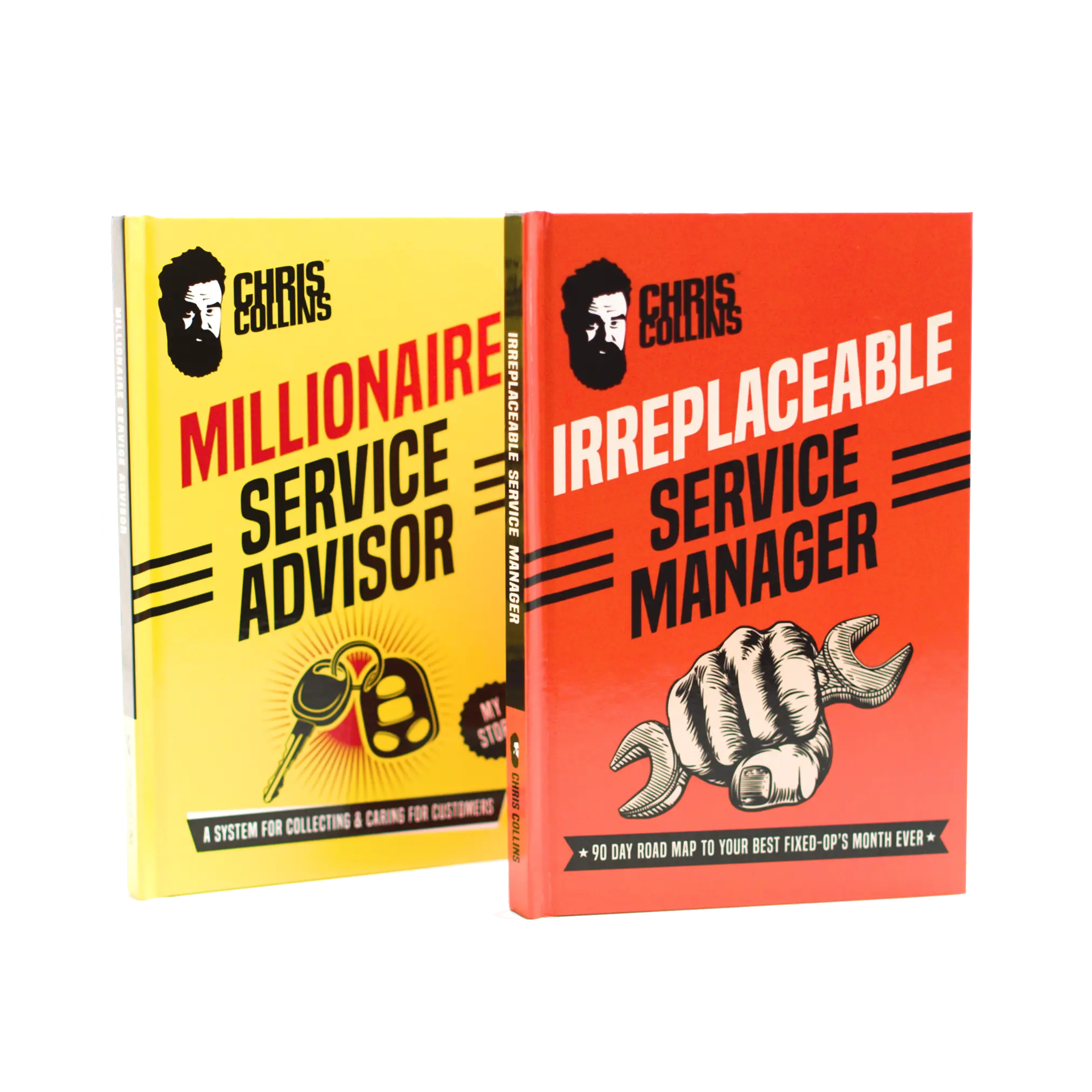
Comprehensive Educational Books offers direct, actionable guides, including The Irreplaceable Service Manager, Millionaire Service Advisor, and Gamification: Playing for Profits. These resources provide straight-shooting advice to maximize shop efficiency without complex corporate fluff.
For those dealerships that want to analyze operational performance, schedule an independent review by calling +1 (800) 230-5165 for a fifteen-minute opportunity evaluation. Take control over your fixed operations so you can build a sustainable, highly profitable model that thrives in any economic climate!
Frequently Asked Questions (FAQs)
Top service advisors abandon outdated, conventional methods that fail to deliver results. They focus on implementing consistent frameworks, building genuine customer relationships, and mastering structured sales processes. Automotive fixed operations consulting firms like Chris Collins Inc. provide this elite training through tailored online courses and immersive, on-site coaching.
A successful service advisor excels by pairing deep empathy and clear communication with solid technical knowledge. They build lasting trust by translating complex mechanical issues into transparent, easy-to-understand repair options for vehicle owners.
Dealerships can improve training by moving away from passive video modules and implementing regular, interactive role-playing sessions. Pairing new hires with high-performing mentors further guarantees consistent, real-world skill development on the service drive.
Hands-on training is essential because it builds real-time confidence and muscle memory during high-stress customer interactions. Simulating actual service drive scenarios prepares advisors to handle objections and fluid situations effectively.
Service advisors primarily need active listening skills to accurately capture customer concerns and translate them for technicians. They must also master time management and clear communication to balance tight repair schedules with customer updates.
Bottom Line
Chris Collins’s journey is proof that outstanding advisor training doesn’t come from just a theory. It’s built through real-world dealership experience and well-organized systems. His success came from taking practical action, making genuine connections with customers, and embracing the lessons earned on the front lines. If you want your team to deliver at their best, focus on blending hands-on expertise with dealership processes that eliminate chaos and empower advisors to thrive. Help us inspire more by sharing this article with your team or fellow dealers. Don’t forget to check out other automotive leadership articles here.
Achieving and exceeding your goals is possible when you have the right systems in place. With Service Drive Revolution OnDemand, you’ll gain access to the proven systems that have made thousands of SERVICE MANAGERS IRREPLACEABLE. Start transforming your department today!
Need help updating your playbook? Let us know how we can support your team’s growth.
Book a 15-minute strategy session with our team. We’ll explore how to unlock your dealership’s real value.