Every dealer knows the 7:00 AM rush can make or break the service department’s day. Lines form, paperwork piles up, and customers start to wonder just how long they’ll be stuck waiting. Service advisors are stretched thin, manual entry slows everything down, and key details can get lost. By that moment, it eventually leads to frustrated customers and missed opportunities.
What if we told you that digital service check-in is the answer for that consistent experience you’ve been looking for? Through it, customers check in with just a few taps, their information gets accurately captured, and automated updates keep them in the loop. Isn’t that amazing? The entire process simply moves faster, data stays clean, and every customer feels taken care of from the start. Stick with us as we share practical tips to help your dealership turn these daily headaches into opportunities for stronger sales and loyal customers. Let’s begin!
Key Takeaways
- Digital tools and self-service kiosks prevent morning bottlenecks by speeding up the vehicle intake process.
- Automating repetitive data entry allows service advisors to spend more time consulting and advising customers.
- Instant digital repair orders reach technicians faster and increase service revenue through clear menu options.
- Taking photos of existing vehicle damage builds immediate trust and protects the shop from false claims.
- The best software integrates directly with dealership computers, checks for safety recalls, and mitigates understaffing issues.
Fixing the Morning Traffic Jam
Managing vehicle arrivals effectively prevents the early-hours bottleneck from stalling daily operations.
● Handling the Rush
Most owners arrive between 7:00 AM and 9:00 AM. Such volume creates long lines and adds stress to the staff. During peak hours, the service drive can quickly become overwhelmed. Employees juggle multiple tasks while trying to greet every driver. When dozens of cars pull in, the physical space fills up. Digital tools spread the workload so the department stays organized during these busy periods. Reducing the delay matters, as 48% of vehicle owners report frustration with service experiences, often citing long wait times as top reasons why customers leave your company.
● Self-Service Options
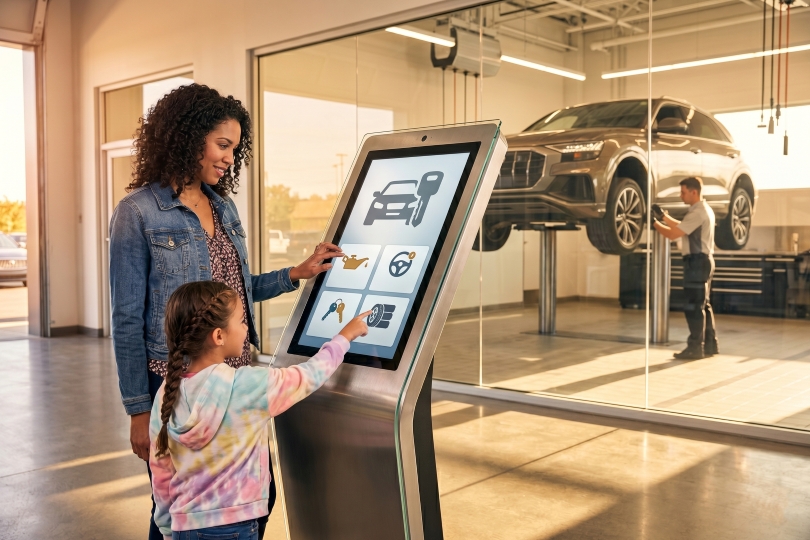
Patrons now use mobile devices or lobby stations to begin appointments. Such tools remove the need to wait for a person to assist. By checking in before reaching the dealership, customers save time for themselves and the workers. People who prefer a hands-on approach can use a kiosk in seconds. Flexibility allows the business to cater to different personality types. It creates a relaxed environment where nobody feels ignored or forgotten during the intake. Adding digital options matches modern habits, considering the average owner visits a service center 2.5 times a year.
● Cutting Wait Times
Software allows a business to help multiple people at once. No one has to stand around while a single worker finishes a task. In a traditional setup, the speed depends on the advisor. Digital systems provide multiple points of entry for information. While an advisor handles a complicated order, other customers check themselves in using tablets. Parallel processing keeps the line moving and keeps satisfaction scores high for everyone involved.
Helping Advisors Focus on People, Not Paper
Efficiency improves when staff members step away from keyboards and spend more time talking to vehicle owners.
● Less Typing
Employees frequently spend over half their shifts performing repetitive office tasks. Filling out addresses and phone numbers manually wastes time that could be spent on sales. Clerical work is a major drain on productivity. Automation handles mundane details, freeing up the team to prioritize higher-value activities. Staff members who spend less time typing can spend more time building relationships, giving them an opportunity to make them comfortable before offering anything to connect with your customer. It makes the job feel less like data entry and more like service.
● Better Preparation
Digital platforms provide repair histories and owner profiles instantly. Advisors see everything they need before the customer even steps inside the building. Knowing that a car is due for service allows the staff to prepare. They can have parts ready or look up pricing beforehand. This level of readiness makes the entire interaction feel professional and structured.
● Expert Advice
Computers handle the data entry, allowing workers to act as professional consultants. Staff explain mechanical needs instead of just reading a screen. An advisor who isn’t buried in paperwork can take time to walk a customer through a repair. Such a consultative approach can turn the advisor into a trusted expert. Not to mention that owners feel more confident when an expert explains the vehicle’s status. Research supports the shift, revealing that 77% of customers feel they receive helpful advice when advisors use tablet-based digital check-ins.
● Consistent Steps
Systems enforce uniform rules for every interaction. Automotive fixed operations consulting expert Chris “Bulldog” Collins always preaches that establishing reliable, step-by-step processes for the staff transforms fixed operations into a highly profitable department. Every car gets a tire-depth check, and every owner hears about shuttle options. A digital checklist guarantees that the team overlooks nothing. Software keeps the process consistent for every single visitor. It removes the risk of human forgetfulness during a busy afternoon.
Improving Speed and Productivity
Rapid processing helps vehicles reach technicians without unnecessary delays in the service lane.
● Faster Repair Orders
Shops aim to move vehicles from the lot to the mechanic as fast as possible. Minimizing the time a car sits idle improves productivity. Every minute a vehicle waits is a minute of lost labor time. Digital check-ins streamline this transition by getting information into the system immediately. Remember, the faster the technician gets the order, the sooner the work begins.
● Automatic Data
Customers input their own information through online portals. This process removes human errors like typos or spelling mistakes in the final order. When people type their own names, they are far more likely to get it right. Clean data ensures that follow-up emails actually reach the intended recipient. It prevents the frustration of lost contact details or incorrect vehicle records.
● Instant Updates
Technicians receive work orders the moment a customer signs a digital tablet. No one has to walk paper files across the building anymore. Digital transmission is instantaneous. This speed allows the shop to maintain a higher velocity. It ensures the floor stays busy with active repairs rather than empty bays.
● Higher Earnings
Revenue often climbs by more than $60 per car because the software presents maintenance needs clearly. Clear suggestions on a screen lead to more sales. When customers see a menu of options with prices, they often choose to add needed services. The software acts as a silent salesperson that never forgets to suggest maintenance. That level of clarity leads to a healthier bottom line for the dealership.
Building Customer Trust Through Transparency
Open communication and visual evidence help owners feel more confident in the repair process.
● Visual Proof
Tablets allow staff to photograph worn parts or body damage. Seeing a picture of a problem builds trust faster than a verbal explanation. If a customer can see a thinning tread on their tires, they are much more likely to approve the repair. Photos provide irrefutable evidence that the work is necessary. It removes skepticism from the interaction.
● No Pressure
Digital menus let patrons choose services at their own pace. People feel more comfortable making decisions on a screen than being pressured by a salesperson. A digital interface allows the customer to digest information without feeling watched. Autonomy often leads to higher satisfaction and more frequent approvals.
● Clear Communication
Automated text messages provide real-time status updates. Owners experience less stress when they know exactly when their vehicle will be ready. Waiting for a phone call is a source of frustration. Automated systems keep the customer informed every step of the way. It shows that the shop values the owner’s time and peace of mind.
● Protecting the Shop
Documenting existing damage during check-in prevents future arguments. Photos act as a time-stamped record of the car’s condition. Occasionally, a customer might believe a scratch happened at the shop. Having a photo from the moment they arrived settles these disputes. It protects the business from false claims and ensures staff are careful with vehicles.
Solving Common Shop Problems
Advanced technology identifies missing information and safety risks that human staff might overlook during busy times.
● Better Records
Digital tools identify up to 56% of visitors who might have been missed by traditional logging. Accurate data leads to better marketing and retention. Digital check-ins capture every person who walks through the door. This allows the marketing team to reach out with personalized offers and reminders later.
● Fixing Recalls
Software automatically scans for safety recalls as soon as the vehicle arrives. Keeping cars safe on the road protects both drivers and businesses. Automated checks make sure that no recall goes unnoticed. Such a proactive approach shows the customer that safety is the top priority. It builds long-term loyalty and professional credibility.
● Flexible Choices
Professional workers, families, and technology enthusiasts all select how they interact with the shop. In fact, 71% of shoppers prefer starting their transactions online. Different demographics have different needs. Digital systems provide the flexibility to serve everyone according to their preferences. It positions the dealership as a modern and customer-centric facility.
● Handling Staff Shortages
Kiosks help maintain a steady flow of traffic even when the shop is understaffed. Automation guarantees that the service drive never stops moving. Digital tools fill the gap by handling routine intake work. Even more, it lets the remaining staff focus on complex tasks. It prevents employee burnout during difficult hiring periods.
What Makes a Good Digital System
Selecting the right software involves evaluating how well it communicates with existing dealership tools.
● DMS Integration
The tool must share information with the main dealership computer. Entering data twice is a waste of time and leads to errors. A seamless flow of information ensures that the department stays in sync with parts and accounting. Integration is the foundation of a modern service drive. Without it, digital tools can create more work than they save.
● Simple Design
Screens should be easy to navigate and read in bright outdoor light. Intuitive layouts guarantee that both staff and customers can use the system without confusion. High-contrast screens and large buttons are necessary for a fast-paced environment. The design must be simple for a first-time user. A complex interface will only slow down the process.
● Mobile Capabilities
Software needs to function on tablets and smartphones. Portable devices let employees walk around the vehicle while recording data. Being tethered to a desk limits an advisor. Mobile tools allow for a dynamic interaction. It shows the customer that the dealership is modern and tech-savvy.
● Clear Reporting
Management requires data on time savings and revenue growth. Dashboards should show exactly how the system affects the bottom line. Good reporting helps managers identify top performers. It provides the insights necessary to run a profitable business. Keeping track of metrics helps the shop to improve every day.
Frequently Asked Questions (FAQs)
Digital check-in eliminates manual data entry errors and reduces long queues that often frustrate morning service arrivals. Automating paperwork allows advisors to spend less time on administrative tasks and focus on identifying necessary vehicle repairs.
Customers enjoy a faster, more transparent process that allows them to approve service recommendations directly from mobile devices. A modern approach builds trust by providing clear pricing and real-time status updates throughout the entire repair visit.
Implementing a digital system ensures every advisor follows a standardized walk-around and inspection process for every vehicle. Centralized data tracking allows management to monitor performance metrics and identify bottlenecks across the entire service department.
Bottom Line
Indeed, having a digital service check-in is no longer just an upgrade. Rather, it’s a great leverage for dealerships committed to driving efficiency and exceeding customer expectations. This technology will surely reduce bottlenecks in your service lane and give your team the freedom to focus on what matters most. If these insights have sparked ideas for your own dealership, consider sharing them with your peers. Together, let us push our industry forward and set new standards for service and profitability!
Achieving and exceeding your goals is possible when you have the right systems in place. With Service Drive Revolution OnDemand, you’ll gain access to the proven systems that have made thousands of SERVICE MANAGERS IRREPLACEABLE. Start transforming your department today!
Need help updating your playbook? Let us know how we can support your team’s growth.
Book a 15-minute strategy session with our team. We’ll explore how to unlock your dealership’s real value.