Quick Answer
Top-performing dealerships complete used car reconditioning in one to three days, while less efficient facilities can take up to two weeks. Much of this time is idle “dwell time” between inspection, repair, and detailing stages rather than active, hands-on labor. Dealerships can speed up this timeline by implementing auto-approval limits, utilizing dedicated reconditioning teams, and proactively ordering parts.
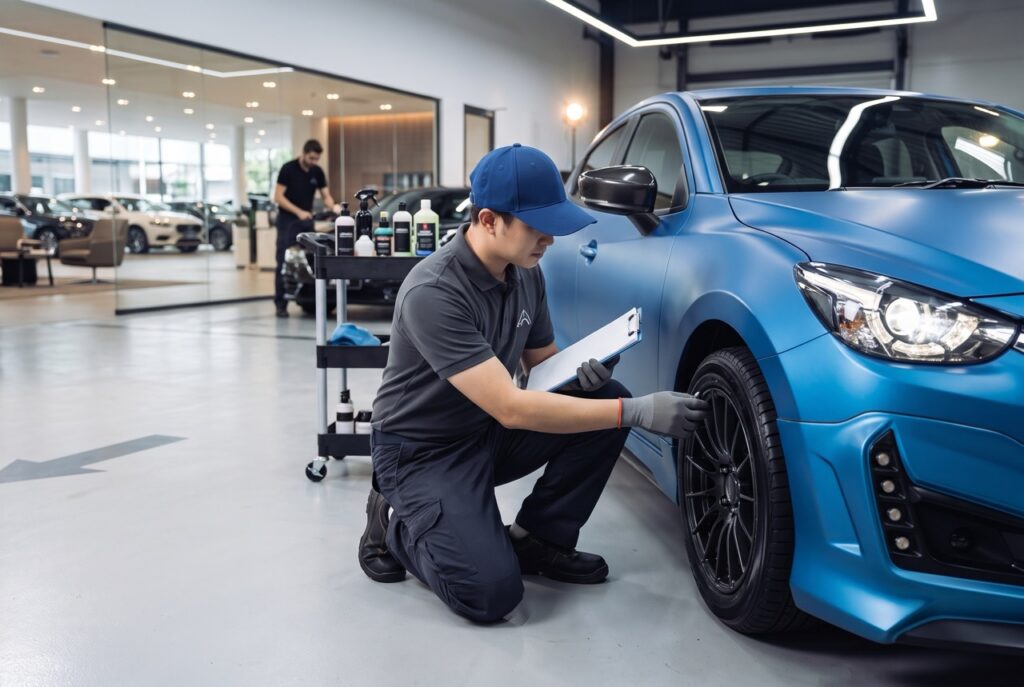
Every day a used car sits untouched in your service bay, it costs you money. Those vehicles aren’t just taking up space. They’re draining your potential profit. Long wait times for inspections, repairs, parts, and approvals are common roadblocks. These inefficiencies in used car reconditioning drive up holding expenses, missed revenue opportunities, and inventory that suffers from “lot rot” instead of moving quickly off the lot. It’s not a rare story. It is a persistent challenge faced by dealership operations.
What if you could consistently get vehicles frontline-ready within three to five days? We can see your reaction. But yes, it’s achievable. By creating dedicated reconditioning teams, using clear checklists, and adopting efficient approval processes, you can fully optimize your reconditioning operation. Below, we break down every factor that influences your turnaround times, from initial inspection to final detail. Read on for proven approaches to lower holding costs, boost margins, and accelerate used car inventory movement.
Key Takeaways
- Reducing idle “dwell time” in vehicle reconditioning is crucial to avoid daily holding costs of $32 to $85.
- Treating the six reconditioning stages like a streamlined assembly line helps eliminate inefficiencies and speeds up retail readiness.
- Dealerships often face bottlenecks due to poor departmental communication, slow repair approvals, and reactive parts ordering.
- Setting auto-approval spending limits and forming dedicated recon teams prevents retail jobs from delaying used-car prep.
- Daily vehicle inspections for proactive parts ordering and daily merchandising scheduling get cars listed online faster.
Understanding Used Car Reconditioning Turnaround Times
The clock starts ticking the moment a used vehicle arrives at your dealership. Let’s first look at how efficiently your team uses that time.
● Standard Industry Benchmark
Top-performing dealerships consistently finish full reconditioning in a swift 24 hours to three days. In contrast, many facilities run much longer cycles, often stretching from seven to 14 days. That speed difference directly affects your profit potential.
● Impact of Dwell Time
Most of the overall turnaround time a vehicle spends in reconditioning isn’t active labor. Instead, it is “dwell time”. What does it mean? Basically, those are periods when cars sit idle between stages, waiting for an inspection, approval, a bay, or a detailing slot. Actual hands-on work, or “touch time,” makes up only a fraction of the total duration. So identifying and reducing these waiting periods is crucial to speeding things up.
● High Cost of Delays
Every extra day a vehicle sits on your lot costs money through floor plan interest, insurance, and rapid market depreciation. This daily cost can range between $32 and $85 per vehicle, cutting directly into your potential front-end profit. Moving quickly through reconditioning reduces these costs and helps protect your margins.
Core Stages in the Used Car Reconditioning Assembly Line
Viewing the journey from a freshly acquired used vehicle to retail-ready inventory as a streamlined assembly line lets you eliminate inefficiencies at every vital stage.
1. Intake and Assessment
The process begins with assigning stock numbers, tagging keys, and accurately logging the vehicle into your management systems. Next, an initial visual assessment, often called a trade walk, quickly identifies obvious needs and sets expectations for the vehicle’s journey.
2. Multi-Point Inspection
Next, technicians conduct a comprehensive evaluation. Technicians perform mechanical diagnostic scans and thoroughly check safety-critical components. By examining the brakes, suspension, tires, and fluid levels, technicians build a clear picture of what the vehicle needs to meet your quality standards and roadworthiness requirements.
3. Mechanical and Safety Maintenance
After the inspection, technicians complete any necessary repairs. This includes essential tasks like engine servicing, replacing worn brake pads, and refreshing vital fluid levels. Addressing these mechanical and safety items promptly ensures the vehicle is reliable and ready for sale.
4. Cosmetic and Body Repairs
Once the vehicle is mechanically sound, attention shifts to its appearance, this stage involves fixing minor scratches, performing paintless dent repair (PDR), restoring damaged wheels, and handling any necessary body panel repainting. Refined aesthetics greatly improve a vehicle’s curb appeal and market value.
5. Deep Detailing
A thorough detailing brings the vehicle to a like-new condition. Teams shampoo carpets, condition upholstery, and remove any lingering odors. Exterior paint receives a meticulous polish, followed by protective finishes. A spotless, fresh interior and exterior make a powerful first impression on potential buyers.
6. Digital Merchandising
The final step involves preparing the vehicle for online sales platforms. This includes taking clear, high-resolution photos and filming 360-degree spins, which are essential for today’s digital shoppers. Printing window stickers and promptly uploading all listings online completes the process, making the vehicle available to a wide audience.
Key Causes of Workflow Bottlenecks
Many dealers face similar challenges that slow down their used car reconditioning process. And so, spotting these common sticking points is the first step toward fixing them.
● Departmental Handoffs
Communication between different departments often creates significant delays. When service, body, detailing, and sales teams do not coordinate smoothly, vehicles can sit unmanaged, waiting for the next step. A lack of clear tracking across these transitions adds up.
● Slow Approval Processes
Repair estimates waiting for approval can grind the process to a halt. Whether these estimates sit on clipboards, pile up in overflowing inboxes, or wait for a manager’s review, any delay in written authorization pushes back the start of essential work.
● Parts Supply Delays
Often, parts are ordered only after the complete repair estimate receives approval. This reactive approach can miss vendor cut-off times and extend turnaround. Proactive ordering based on initial inspections could save valuable days.
● Deprioritized Service Bays
Used car inspections and reconditioning tasks frequently get pushed aside. Dealerships sometimes prioritize higher-paying retail customer repair orders, leaving used vehicles to wait. Now that subtle prioritization indirectly increases holding costs for your pre-owned inventory.
● Third-Party Vendor Dependency
Relying on off-site or mobile contractors for specialized tasks can introduce external delays. Waiting on vendors for services like glass replacement, wheel refinishing, or specific bodywork makes your timeline dependent on their schedules, not just your own.
Best Practices to Eliminate Delays and Boost Margins
Turning these challenges into opportunities requires a focused, efficient approach. Here are proven strategies to get your used vehicles retail-ready faster and more profitably.
● Implement Auto-Approval Limits
Speed up the initial stages by setting pre-approved spending thresholds, such as $500 to $800. These limits let technicians start routine maintenance and common repairs immediately, without needing manual sign-offs for every small job. This change alone can reduce significant time in the early reconditioning process.
● Form Dedicated Recon Teams
Consider establishing specialized teams focused solely on used car reconditioning. Assign fixed-rate technicians and service advisors strictly to this work. This structure prevents used-car tasks from being bumped by retail customer jobs, creating a more consistent and faster flow for your inventory. It also builds reconditioning-specific expertise.
● Conduct Daily Trade Walks
Bring sales, service, and management teams together each day for a quick “trade walk” to inspect newly acquired vehicles. Use this time to promptly identify necessary parts and place orders. Ordering items immediately, sometimes even before the full inspection is complete, can dramatically cut down on wait times.
● Maintain Daily Merchandising Schedules
Avoid batching tasks like detailing, photo shoots, and online inventory uploads at the end of the week. Instead, schedule these activities daily. This simply guarantees that as soon as a vehicle is ready, you photograph and list it online without delay, getting it in front of potential buyers faster.
Ready to Strengthen Your Fixed Ops Systems?
Achieving and exceeding your goals is possible with the right systems in place. Whether you’re improving technician efficiency, streamlining shop dispatching, or building more consistent dealership processes, Service Drive Revolution OnDemand gives you access to the proven systems that have made thousands of Service Managers and shop leaders irreplaceable.
Start transforming your department today!
Need some help updating your playbook? Let us know how we can support your team’s growth potential.
Book a 15-minute strategy session with our team. We’ll explore how to unlock your dealership’s real value.
Frequently Asked Questions (FAQs)
Reconditioning a used car involves inspecting, repairing, and restoring a pre-owned vehicle to ensure it is mechanically sound and visually appealing before resale. This process goes beyond standard detailing by addressing structural safety, engine performance, cosmetic defects, and necessary fluid replacements.
The overall turnaround time typically averages around 3 to 10 days, depending on dealership efficiency and shop workflow. Top-performing operations can streamline the process to complete it within 24 to 72 hours.
The service encompasses a multi-point safety inspection, mechanical maintenance, engine repairs, and bodywork like paint or dent fixes. Additionally, detailers perform deep interior sanitization, exterior polishing, and final photography for digital listings.
Expenses vary widely based on vehicle age, mileage, and required work, but the overall average cost per unit sits around $1,200 to $1,300. Minor touch-ups on newer cars can run under $500, whereas major repairs or luxury models can exceed $2,000.
It protects buyer safety and ensures regional regulatory compliance by eliminating hidden mechanical defects before delivery. Beyond compliance, thorough preparation boosts resale value, reduces daily inventory holding costs, and builds long-term customer trust.
Bottom Line
Every hour a vehicle sits off the frontline is an hour of lost profit, making speed your ultimate competitive advantage. Mastering used car reconditioning lets you reclaim those margins and keeps your team operating at peak efficiency. Implement these refined workflows today to transform your service department into a high-speed profit center. Have you found these insights useful? If so, follow us so you won’t miss the latest updates!
Achieving and exceeding your goals is possible when you have the right systems in place. With Service Drive Revolution OnDemand, you’ll gain access to the proven systems that have made thousands of SERVICE MANAGERS IRREPLACEABLE. Start transforming your department today!
Need help updating your playbook? Let us know how we can support your team’s growth.
Book a 15-minute strategy session with our team. We’ll explore how to unlock your dealership’s real value.