Quick Answer
Service advisors should present multi-point inspections as educational vehicle health checkups rather than sales pitches. They should explain technician findings using visual evidence, simple language, and an urgency-based priority scale. This approach helps customers understand recommended repairs, builds trust, supports vehicle safety, and can prevent costly breakdowns.
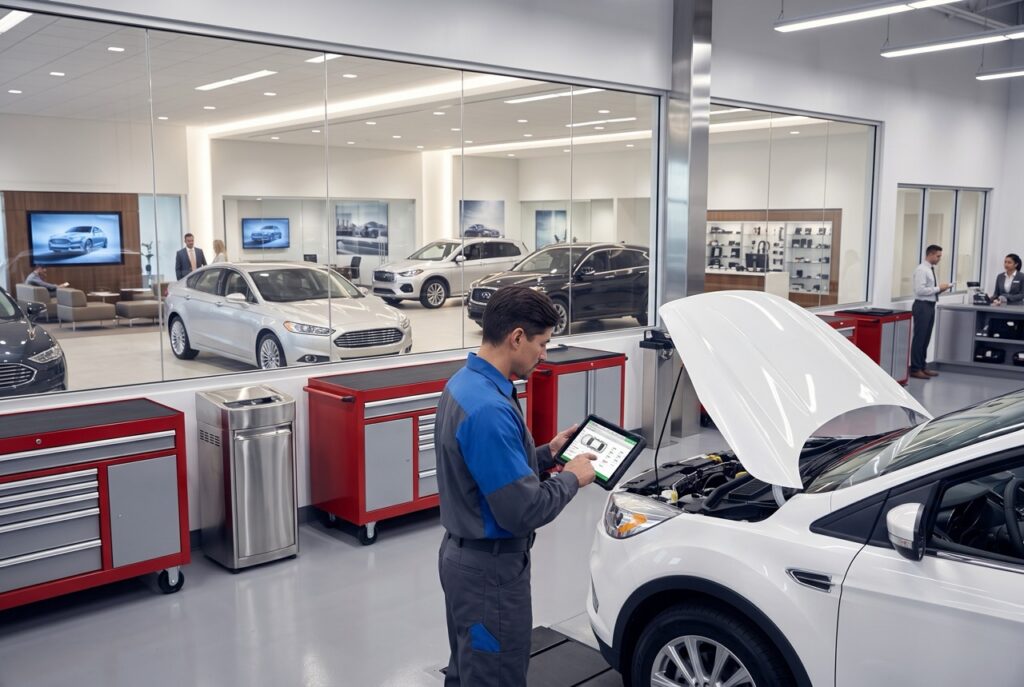
Are your multi-point inspections failing to convert? Technicians deliver crucial data—spanning interior systems, under-hood fluid levels, and undercarriage wear. Yet, if your service advisors cannot translate complex findings into clear, compelling recommendations, these vital diagnostics become useless. Customers leave confused, distrusting your message. Your department sacrifices immense profit, and drivers face unnecessary risks.
Maybe it’s time you armed your service advisors with a system to master multi-point inspections. Give them the power to turn technical reports into undeniable proposals. Only through that can they confidently explain every crucial detail, ensuring vehicle owners understand what is needed for their safety and accept the service. Today, we will give you the exact blueprint to turn every inspection into a powerful revenue generator and a cornerstone of client trust. Let the transformation start now!
Key Takeaways
- Multi-point inspections (MPIs) are comprehensive, color-coded health checks that catch vehicle issues before they become costly.
- Thorough MPIs evaluate critical components across the interior, engine bay, undercarriage, brakes, and tires.
- Advisors should prioritize education over sales pressure, using plain language and visual proof to build customer trust.
- Repair presentations must organize findings by urgency and offer flexible, value-driven solutions for the customer’s budget.
- Consistent MPIs drastically improve road safety by preventing sudden breakdowns, ensuring optimal handling, and guaranteeing visibility.
What Are Multi-Point Inspections?
MPIs are pretty essential for almost any dealership. Let’s break down first what a true MPI means for your operation.
● Full System Assessment
Multi-point inspections (MPIs) are comprehensive evaluations of a vehicle’s overall health. Technicians use a detailed checklist to evaluate various vehicle components for wear and tear, ensuring that performance issues or safety risks are flagged early. This isn’t about guesswork; it’s about systematic precision.
● Tiered Inspection Levels
Smart management understands variety. Depending on a car’s age, mileage, or purpose, inspection checklists range in scope—from basic 12-point checks for newer models to extensive 30- to 50-point assessments for older vehicles, and up to 120+ points for crucial pre-purchase evaluations. Tailor your approach, maximize your capture rate.
● Systematic Risk Scoring
This is your simplified roadmap to action. Every evaluated component receives a specific status, often color-coded as red, yellow, or green. This system highlights items requiring immediate repair versus those that simply need routine monitoring. It removes ambiguity for both your team and your customers.
● Core Purpose
Beyond fulfilling manufacturer mandates, an MPI has clear goals: catch minor problems before they become costly failures, protect driver safety, and build long-term customer trust. This isn’t just about turning wrenches; it’s about securing loyal customers and sustained profitability.
What Should Be Included in Multi-Point Inspections?
To truly dominate your whole service drive, you must know exactly what makes a complete MPI.
● Interior & Cabin Features
Your inspection starts inside the vehicle. Make sure your team is checking dashboard indicators, interior and cabin lighting, horn operation, windshield wipers, and critical cabin air filters. This directly supports driver visibility and comfort and often leads to easy, high-margin ancillary sales.
● Under-Hood & Engine Bay Area
This is where the real money often lies. Technicians must examine essential fluid levels, including engine oil, transmission, coolant, brake, power steering, and washer fluid. Inspect drive belts for cracks or fraying, test battery voltage for reliability, and diligently check all hoses and air filters for damage or leaks. These checks identify imminent failures and help you schedule essential repairs.
● Undercarriage & Drivetrain Components
Don’t overlook the unseen. Inspect exhaust systems for integrity, driveshafts, CV joints, and suspension parts like shocks, struts, ball joints, and springs. Maintaining structural stability and smooth handling keeps customers safe and generates significant repair orders for your shop.
● Safety Controls & Braking Systems
This is non-negotiable. Evaluate brake pads, rotors, shoes, lines, and hardware for wear and function. Also check exterior safety lighting, including headlights, brake lights, fog lamps, and turn signals. Your reputation hinges on uncompromised safety.
● Tire Health & Alignment
Tires are vital for safety and performance. Measuring tire tread depth, evaluating air pressure, checking for uneven tread wear, and inspecting wheel alignment are fundamental. This provides critical data to sell new tires and alignment services.
How Should Service Advisors Explain Multi-Point Inspections?
Your advisors are on the front lines. Their ability to communicate MPI findings effectively is the difference between a satisfied customer and lost revenue. Train them to win.
● Emphasize Education Over Sales Pressure
Coach your advisors to frame the inspection as an informative health checkup. It’s designed to help vehicle owners make smart decisions about their investment, rather than appearing as a hard-sell tactic for additional services. This builds instant rapport and trust.
● Translate Technical Terminology into Plain Language
Automotive jargon alienates customers. Advisors must replace complex terms with simple, relatable descriptions. Clearly explain how a specific component affects daily driving and safety. Empower your customers with knowledge, and they’ll trust your recommendations.
● Use Visual Proof to Build Transparency
In today’s digital world, visuals are non-negotiable. Utilizing photos or video evidence captured during digital inspections allows clients to visually see worn parts, leaking fluids, or damaged belts. Sending digital multi-point inspection videos generates an average $125 increase per repair order. Visual proof cuts down objections and closes sales faster.
● Highlight Good Findings Alongside Needed Repairs
Build credibility with honesty. Your team must always mention components in excellent condition (green items), not just parts that need immediate service or replacement. This balances the message and reinforces trust.
● Provide Forward-Looking Timelines
Help your customers budget and plan proactively. Advisors must discuss items that will likely require attention in the next six to nine months directly with the client. Providing this foresight eliminates sudden, unexpected financial surprises, keeping customers happy and loyal.
How Should Advisors Present Technician Findings to Customers?
This is where you transform data into dollars and build undeniable customer loyalty.
● Prioritize Concerns by Urgency
Structure the presentation logically and with purpose. Advisors should always start by discussing critical safety concerns—those “red items” that demand immediate, non-negotiable attention. Next, move to recommended future maintenance, the “yellow items” that need planning. Only then should they highlight healthy components, the “green items.” This clear hierarchy prevents customer overwhelm and clarifies the urgency of repairs.
● Provide Clear Cost-to-Value Explanations
Never just quote a price. That’s amateur hour. When discussing recommended repairs, advisors must focus on the long-term value and safety benefits each service provides. Explain how a specific replacement part prevents a more expensive breakdown down the road, or how it directly protects their family. Connect the cost to a tangible, undeniable benefit, making the investment clear and justifiable.
● Offer Flexible, Sequenced Solutions
Understand that real-world budgets are a constraint. For clients working with strict financial limitations, advisors should be prepared with phased repair plans. This means tackling immediate safety hazards today, ensuring the customer drives away safe, and strategically deferring secondary repairs to upcoming visits.
● Address Client Hesitation with Empathy
Customers frequently have valid questions and understandable concerns. Advisors must respond to doubts or questions with patience and understanding, never defensiveness or frustration. Offer additional clarity, re-show visual evidence from the inspection, and genuinely listen to their fears. Pushing too hard only creates resistance. Build rapport by showing you understand their position.
● Maintain Consistency across the Service Department
This is absolutely critical for your department’s reputation. Make sure advisor recommendations align perfectly with the technician’s written report. Any discrepancy, however small, immediately erodes client confidence and trust in your entire operation. Your entire team must speak with one unified voice, every single time.
How Do Multi-Point Inspections Improve Vehicle Safety?
A solid MPI process isn’t just about profit. It’s about life and death on the road.
● Prevents Sudden Roadside Breakdowns
Imagine the terror of a drive belt snapping or a battery dying unexpectedly on a busy highway. Multi-point inspections proactively catch component wear—such as worn belts, failing batteries, or degraded fluids—before a catastrophic failure occurs. National data proves that 35% of U.S. drivers delay or skip recommended maintenance, which can lead straight to the shoulder of the highway. Identifying dangerous issues early prevents unexpected breakdowns, keeps your customers safe, and eliminates stressful roadside-assistance calls. Proactive checks bring real peace of mind.
● Ensures Peak Braking and Handling Performance
When your customers are on the road, they need absolute control and maximum responsiveness from their vehicle. Regular monitoring of tire tread depths, brake pad thickness, and suspension components through MPIs is paramount. This vigilance ensures optimal tire traction, shorter stopping distances, and predictable, stable handling, which is especially crucial in sudden emergency situations. It helps customers react effectively and safely, reducing the risk of tragic incidents. Keep that in mind as the National Highway Traffic Safety Administration (NHTSA) estimates that tire failure causes 11,000 vehicle accidents every year.
● Guarantees Essential Visibility and Signal Function
Clear vision and unmistakable signals are non-negotiable for safe driving, period. Thorough MPIs verify that wipers, defrosters, headlights, and all signal lights are fully operational, consistently. This rigorous check keeps drivers compliant with all road laws and ensures maximum visibility for them and their vehicle to other drivers, even during the most adverse weather conditions. There are no excuses for poor visibility or hidden signals when safety is on the line.
● Eliminates False Security
Nothing creates more danger than a driver falsely believing their vehicle is safe when dangerous, hidden defects lurk beneath the surface. Thorough, accurately reported inspections address this problem directly. They prevent vehicle owners from driving away with dangerous, undetected issues that could inevitably lead to severe accidents.
Ready to Level Up Your Service Drive Operations?
Building a transparent, high-performing service drive needs proven systems, continuous staff training, and real-time guidance. Through the Service Drive Revolution Live Academy, your entire team can access live, twice-monthly training sessions, 200+ hours of industry-best Service Drive training videos, and interactive Q&A sessions designed to solve the exact operational hurdles on your desk today.
Stop guessing and start building a scalable, profitable Fixed Ops strategy.
Need help updating your playbook? Explore how the Service Drive Revolution Live Academy can transform your shop’s efficiency, hiring, and bottom line today.
Frequently Asked Questions (FAQs)
No, a multi-point inspection is a routine maintenance check recommended by mechanics to assess general vehicle health. In contrast, a state inspection is a mandatory government evaluation required by law to verify that a vehicle meets specific safety and emissions standards.
The physical check usually takes about 15 to 30 minutes for a technician to complete. However, total wait time at a service center often ranges from 45 minutes to an hour, including check-in procedures and paperwork.
Bottom Line
Indeed, mastering multi-point inspections will transform a standard service visit into a powerful opportunity for growth and client loyalty. When your advisors take those technical details and translate them into valuable safety advice, they become trusted partners in the customer’s journey. This strategy secures immediate revenue and builds a clear roadmap for future maintenance, ensuring your shop remains the first choice for every repair. We hope you found these insights useful! Follow us for more updates!
Achieving and exceeding your goals is possible when you have the right systems in place. With Service Drive Revolution OnDemand, you’ll gain access to the proven systems that have made thousands of SERVICE MANAGERS IRREPLACEABLE. Start transforming your department today!
Need help updating your playbook? Let us know how we can support your team’s growth.
Book a 15-minute strategy session with our team. We’ll explore how to unlock your dealership’s real value.