A dealership’s profit margin often disappears through small, hidden gaps that are difficult to track. Dealing with warranty fraud presents a serious challenge, costing your business money and damaging your reputation with manufacturers. Issues like ghost repairs and parts substitution might seem minor at first, but they can quickly grow into massive financial leaks. These errors cause most failed audits and create friction throughout the service department, making it difficult to maintain a healthy bottom line.
The reality is, you have the power to stop these losses. Implementing effective systems for centralized data and automated claim processing can significantly reduce instances of warranty fraud. Equipping your team with clear protocols and tools to identify suspicious activity ensures better protection for your dealership’s assets. In today’s discussion, we will give you direct insights into the common forms of warranty fraud and provide practical strategies you can implement to safeguard your profits. Let’s begin!
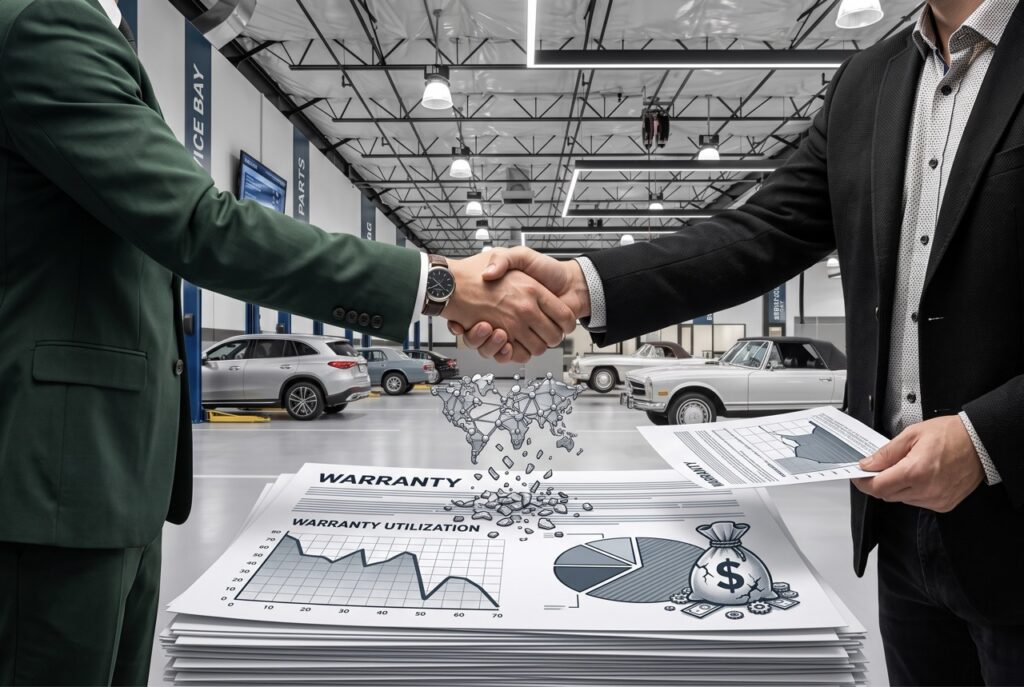
Key Takeaways
- Common dealership fraud schemes include ghost repairs, inflated labor hours, parts manipulation, upcoding, and duplicate billings.
- Warning signs include disproportionate claim volumes, high labor averages, last-minute submissions, repeated VIN claims, and inventory mismatches.
- Centralizing warranty systems, automating claim validation, and requiring diagnostic proof stop fraudulent submissions before payout.
- Advanced solutions like machine learning analytics, network mapping, and vehicle telematics help detect complex, multi-party fraud schemes.
Hidden Financial Impact of Warranty Fraud
Warranty fraud is a big threat to financial stability across the automotive sector, silently eroding profits and destabilizing financial health for everyone involved. Some of the major financial impacts of warranty fraud are as follows.
● A Costly Expense, Not a Minor Detail
Warranty fraud represents a serious depletion of income that severely impacts both cash flow and overall financial statements. These dishonest actions typically burden manufacturers with a cost equivalent to 2% to 4% of company revenues annually. This is a substantial sum that could otherwise be reinvested or used to improve operations, highlighting its significant financial burden.
● Distorted Financial Forecasting
Vehicle manufacturers routinely allocate a portion of their sales, generally between 1.4% and 2.5%, to cover anticipated repair costs. When fraudulent claims enter the system, they skew this critical statistical modeling. The result is often insufficient reserves and inaccurate budgets, leading to unexpected financial shortfalls and operational challenges.
Common Fraud Schemes in Dealerships
Understanding common tactics can help dealers better protect themselves and the industry. Here are some prevalent schemes to be aware of.
● Ghost Repairs
Ghost repairs involve submitting complete documentation for a repair that, in reality, never took place. Such claims are frequently timed just before a vehicle’s warranty coverage is about to expire, making them harder to detect immediately and challenging to verify after the fact.
● Labor Time Inflation
Technicians may deliberately exaggerate the hours spent on a repair job. For instance, a task that should take two hours might be billed as four, quietly adding thousands in unauthorized charges over time across many claims. Without clear benchmarks at the point of submission, this practice often goes unnoticed, leading to inflated costs.
● Parts Manipulation and Substitution
Dealerships or individuals might claim reimbursement for expensive original equipment manufacturer (OEM) parts. However, they install cheaper aftermarket or used alternatives instead, pocketing the difference while the manufacturer pays for premium components. That scheme directly impacts profitability and part quality.
● Upcoding and Misdiagnosis
This tactic involves intentionally reporting a minor, inexpensive issue as a more complex and costly mechanical breakdown. The goal is to receive higher payouts from the manufacturer for a repair that was less extensive than claimed, artificially inflating the service value.
● Duplicate Submissions
Fraudsters repeatedly file the very same repair claim multiple times. They might use different order numbers or channel the claims through various distributor levels to make them appear unique, leading to multiple payments for a single incident and significant overbilling to the manufacturer.
● Double-Dipping Charges
A double-dipping scheme involves billing both the end customer directly and the manufacturer’s warranty program for the exact same repair job. Effectively, the repair shop gets paid twice for one service, inflating costs for both parties and causing unjustified financial drains.
Warning Signs and Red Flags to Watch For
Identifying unusual patterns can be crucial in spotting potential warranty fraud early. Keep an eye out for these tell-tale signs.
● Disproportionate Claim Volumes
Pay attention if a specific dealer consistently submits significantly more warranty claims compared to other dealers with similar service traffic and sales volumes. Such a disparity often warrants a closer look, as it can indicate systemic issues or fraudulent practices.
● Consistently High Labor Averages
If a dealership’s submitted labor hours per repair routinely exceed the network average for identical job codes, it could indicate inflated billing practices. This requires a deeper dive into the technician’s reported work versus actual repair times.
● Unusual Submission Timing
Be wary of a sudden surge in high-value claims, particularly those submitted just before a vehicle’s warranty coverage is set to expire. Such timing can be a deliberate attempt to push through questionable claims under the wire, making them harder to deny.
● Repeated Claims on Single Units
When identical component failures or fault codes frequently appear on the same Vehicle Identification Number (VIN) within short timeframes, it is a BIG red flag. That pattern often suggests either an unresolved issue requiring further repair or potential fraud.
● Identical Claim Documentation
Watch for claims that feature copied text, matching service descriptions, or slightly altered customer contact information across multiple separate files. Such uniformity suggests a lack of genuine, unique documentation for each repair, raising suspicion.
● Parts Inventory Discrepancies
Conduct regular checks to make sure that the actual parts inventory on hand aligns with the parts listed as used on completed repair orders. A mismatch here could signal claims for parts that were never truly installed, pointing to parts manipulation.
Why Disconnected Data Enables Fraud
Fragmented information systems create vulnerabilities fraudsters can exploit. Here’s why a lack of unified systems fuels these issues.
● Trap of Data Silos
Storing crucial information such as customer profiles, detailed repair logs, comprehensive parts databases, and dealer claim submissions in separate, unlinked platforms creates a significant barrier. This separation prevents real-time cross-referencing and immediate checks needed to flag suspicious activity and connect disparate pieces of information.
● Flaws of Manual Reviews
Relying on human reviewers to catch complex fraud patterns across thousands of active claims is simply unrealistic. The sheer volume makes it impossible for an individual to connect subtle pieces of information, allowing slight exaggerations and fraudulent claims to pass through the system unnoticed.
● Late Audits
Without integrated, real-time systems, fraud detection becomes a retrospective exercise. Audits conducted months after the fact can identify fraudulent activities, but by then, the money has already been paid out, making recovery more challenging and costly. The absence of direct communication channels and automated checks means valuable insights are lost.
Effective Prevention and Auditing Strategies
Proactive measures and robust auditing are the key to safeguarding against warranty fraud. Consider implementing these strategies to strengthen your defenses.
● Centralizing Warranty Operations
Consolidate all repair records, crucial parts databases, and communication channels into a single, unified digital platform. This approach guarantees a complete view of every claim, making it harder for fraudulent activity to hide and streamlining dealer interactions.
● Automating Validation at Submission
Implement automated systems to check incoming claims in real-time. These systems should instantly cross-reference claims against fixed labor time guides, specific coverage terms, and historical patterns before any payment is approved. Now that’s the secret to catching discrepancies early.
● Mandating Supporting Proof
For high-cost or complex repairs, make it a strict requirement to submit comprehensive supporting documentation. This should include diagnostic code logs, precise technician clock-in and clock-out records, and clear “before and after” repair photos. Such evidence drastically reduces the chance of unsupported claims.
● Analyzing VIN and Network Patterns
Shift from evaluating individual claims in isolation to reviewing the complete claim history associated with each Vehicle Identification Number (VIN). Furthermore, analyze broader network patterns to identify high-risk dealer behaviors, allowing for targeted investigations.
● Separating Audit Duties
Establish independent teams specifically tasked with claim compliance and auditing. It is vital that these teams operate without any direct financial ties to dealer service revenues. That level of separation will surely reduce the risk of collusion and ensure impartial oversight.
Advanced Fraud Prevention Techniques
Leveraging technology offers powerful new ways to combat sophisticated warranty fraud. These advanced techniques provide a strong line of defense.
● Machine Learning and Predictive Analytics
Utilize algorithms that learn from historical data to spot subtle anomalies and irregular patterns traditional methods miss. These tools can instantly score the risk level of incoming claims and automatically identify emerging fraud tactics, offering proactive protection against evolving schemes.
● Network Analysis
Employ sophisticated tools that map the connections between various entities involved in claims, such as service agents, customers, and part numbers. This deep analysis helps uncover multi-party collusion schemes and reveals hidden relationships indicative of organized fraud, which can be challenging to spot manually.
● Leveraging Telematics and Industry Collaboration
Integrate connected vehicle data, often called telematics, to independently verify actual hardware faults and confirm repair necessity. Additionally, actively participate in industry consortiums to share anonymized threat data and best practices, collectively strengthening the industry’s defenses against common fraud.
Operational Accountability and Training
Operational breakdowns often create the gaps where billing inflation and improper submissions occur. To help dealerships tackle all these discussed challenges, the automotive training and consulting firm Chris Collins Inc. delivers specialized leadership coaching and training for service department teams—encompassing service managers, advisors, and technicians. Their programs focus on implementing standardized, accountable service drive operations that stop compliance failures before they can take root.
Frequently Asked Questions (FAQs)
Nowadays, manufacturers use automated data analytics and machine learning models to detect unusual claim patterns and repeated parts replacements across dealerships. They also perform physical audits of failed components to verify whether reported defects are genuine.
Dealerships can prevent fraud by implementing strict digital approval workflows that verify part numbers and vehicle history before performing repairs. Regular technician training and mandatory double-check sign-offs further help guarantee that all claims are accurate and legitimate.
Individuals and businesses committing warranty fraud face severe legal penalties, including heavy fines and potential state or federal prison time. Offending dealerships also risk criminal wire fraud charges, immediate termination of their franchise agreements, and costly civil lawsuits to repay stolen funds.
Bottom Line
Don’t let assumptions about your network’s integrity erode your bottom line. Warranty fraud is a real and costly issue for manufacturers, but it’s not an unavoidable expense. Applying modern auditing techniques and recognizing common red flags such as ghost repairs and inflated labor hours will already help you identify and prevent profit leaks effectively. So go ahead and take these proactive steps to protect your margins, ensuring your operations remain robust and trustworthy. We hope you found these insights helpful! If so, feel free to share this with your friends and colleagues. Follow us to stay updated on our newest uploads!
Achieving and exceeding your goals is possible when you have the right systems in place. With Service Drive Revolution OnDemand, you’ll gain access to the proven systems that have made thousands of SERVICE MANAGERS IRREPLACEABLE. Start transforming your department today!
Need help updating your playbook? Let us know how we can support your team’s growth.
Book a 15-minute strategy session with our team. We’ll explore how to unlock your dealership’s real value.