Packed service bays and stacking repair orders create a stressful environment when finding new mechanics feels impossible. The industry sees more than 70,000 job openings for technicians each year. Filling open spots only gets harder. Shop foremen and service directors want their teams to produce more hours every day. Instead, mechanics often waste time waiting at the parts counter, chasing phantom vehicle issues when service advisors fail to write down detailed customer concerns. Routine delays drag down daily output and hurt shop revenue.
You do not always need to hire more people to get more work done. The real fix is increasing dealership technician productivity. Management must remove daily obstacles so mechanics can focus entirely on repairing cars. A well-organized parts process, clearer dispatch methods, and better communication from service advisors will directly speed up repair times. Keep reading as we share simple process changes that will eliminate wasted time and keep your shop running efficiently.
Key Takeaways
- Removing hurdles like vague service orders and delayed parts delivery keeps technicians focused on actual repairs.
- Updated dispatch methods, standardized procedures, and smart scheduling create a highly efficient shop with less idle time.
- Comfortable work bays, open communication, and positive feedback directly boost staff morale and overall productivity.
- Tracking key metrics and offering performance-based bonuses motivate staff to increase their daily job completion rates.
- Digital work orders and remote diagnostic tools speed up complex repairs while reducing physical paperwork.
Removing Daily Roadblocks
Improving shop performance starts with identifying and removing the hurdles that slow down technicians. Small interruptions often snowball into major production losses throughout a standard shift.
● Detailed Service Orders
Advisors must provide clear descriptions of vehicle issues. This prevents staff from wasting time trying to guess the problem or re-testing for non-existent concerns. When a repair order lacks detail, a technician loses valuable minutes chasing phantom issues before returning the order to the advisor. Thus, utilizing job aids from OEM along with ongoing training helps advisors ask the right questions to reduce this wasted time. Clear communication ensures staff can successfully duplicate customer concerns during a road test or while in the bay.
● Fast Part Delivery
Personnel lose time when they have to find parts themselves or wait at a counter. A dedicated parts team should deliver components directly to the work bay to keep the job moving. Some staff members do not trust the parts department to find the correct items, leading them to spend 45 minutes a day looking up parts personally.
Such behavior creates a significant drain on productivity when multiplied across the entire team. Properly trained parts staff are necessary for a productive service department. Loading parts onto a cart for direct delivery eliminates the need for technicians to hang out at the counter.
● Vehicle Logistics
Using assistants to move cars in and out of the shop ensures a technician is always working on a vehicle rather than searching the parking lot for the next one. Dealerships with large parking lots present a challenge when staff must wander around looking for their next assignment.
Having an expeditor bring the next vehicle to the bay at the same time the parts arrive creates a seamless workflow. This logistical support keeps the workforce focused on turning wrenches rather than performing low-skill tasks. Efficient movement of vehicles through the shop increases the overall value of the labor performed.
Optimizing the Shop Workflow
The way work is assigned and tracked significantly impacts how many jobs a shop can finish. Streamlining the processes turns the garage into a high-output environment. That being said, a skilled shop foreman in fixed ops plays a central role in guiding technicians and keeping the workflow steady.
● Modern Dispatching
Shops should regularly update how they assign tasks to ensure the right jobs go to the right people without long wait times between assignments. A revised dispatch process can boost shop productivity by 10% or more. Current systems might have worked in the past, but growing teams and new advisors often require updated methods. Managers should evaluate the dispatch flow to resolve complaints about staff waiting for their next job. Matching specific expertise to scheduled jobs prevents bottlenecks and keeps the workflow steady.
● Standardized Procedures
Having a written, step-by-step guide for common tasks like oil changes creates a “well-oiled machine” effect. This allows teams to finish routine work faster and more consistently. Firms like Chris Collins Inc. offer coaching and consulting on implementing consistent processes to optimize fixed operations. While manual guides may not cover every vehicle, they likely apply to 80% of express services, including most gas-powered trucks and cars. Standardized methods improve guest satisfaction by shortening service times. Moreover, observing successful techniques used by top staff and making them official procedures helps the entire crew work more effectively.
● Smart Scheduling
Rather than assigning one job at a time, managers should look at a technician’s specific expertise and plan a full day’s workflow to avoid idle time. If staff members have downtime, they can help in other areas, like inventory or shop organization. Many professionals in this field work a 40-hour week, often between 7 a.m. and 7 p.m. Managing these hours effectively involves assigning walk-in work according to current shop demands. Planning ahead will guarantee that everyone stays busy and meets the expectations of the service department.
Support and Work Environment
A technician who feels supported and comfortable is naturally more productive. Attending to the human element of the shop is just as important as buying tools.
● Climate and Comfort
Keeping work bays at a stable temperature helps staff concentrate. Heating the shop in the winter and cooling it in the summer allows mechanics to breeze through jobs quickly. Providing a clean breakroom with drinks and snacks allows technicians to “reset” between difficult repairs. Employee lounges should have comfortable seating, a fridge, and access to water or energy drinks to keep the team hydrated. During colder months, offering tea, cocoa, or hot soup provides necessary warmth and comfort.
● Open Communication
Managers should encourage staff to share ideas for making repairs more efficient. Valuing their input makes them feel important and often leads to better shop processes. Keeping an open-door policy builds stronger relationships and encourages feedback. Using a mix of face-to-face talks and electronic communication, like email or text, helps prevent misunderstandings. When staff members know they can come to management with problems or ideas, they become a valuable source of innovation for the shop.
● Positive Motivation
Simple gratitude and clear performance goals can inspire a team. Saying “Thank You” frequently shows staff that their hard work is valued. When mistakes happen, using them as teaching moments rather than sources of blame keeps morale high. Analyzing why a mishap occurred—whether due to an oversight or defective equipment—helps the team learn and grow. Handling errors gracefully maintains motivation and prevents the team from feeling shamed.
Performance Tracking and Incentives
Using data and rewards helps technicians understand exactly how they are performing. Clear metrics allow for objective evaluations and personal growth.
● Incentive Programs
Tiered pay systems can reward technicians who consistently beat their labor hour targets with bonuses. For instance, hitting 110% productivity could earn a $60 bonus, with the amount increasing alongside performance. This structure gives workers more control over their own earnings and accountability for their output. These incentives recognize the high value of skilled labor and motivate staff to complete more jobs daily.
● Productivity Monitoring
Utilizing digital tools or “gamification” to track shop progress in real-time helps the entire team stay aware of their goals. Monitoring performance ensures that missed targets are addressed while successful efforts are celebrated. Modern software can track individual and team metrics, encouraging self-monitoring among the staff. In a market with a high annual job opening rate, retaining top talent through fair monitoring and support is a financial necessity. Data from the Auto Care Association reveals that the automotive technician turnover rate is 30% annually, making retention highly valuable.
● Key Performance Indicators
Shops should track how often a car is fixed correctly the first time and the average time it takes to complete a repair. Reviewing 5 key car dealership reports provides managers with the exact numbers needed to assess efficiency. Some of the metrics, known as First-time Fix Rate and Mean Time to Repair, offer basic insights for assessing efficiency. The average first-time fix rate in the repair industry hovers between 70% and 80%. Thus, improving the first-time fix rate saves money by reducing return trips and redundant labor. Tracking completion rates requires effective tracking tools and consistent data collection. High-performing shops use analytics to estimate job lengths based on past performance.
Leveraging Digital Tools
Technology can automate the “paperwork” side of the job, leaving more time for actual repairs. Digital assistance maximizes the number of jobs completed in a day.
● Digital Work Orders
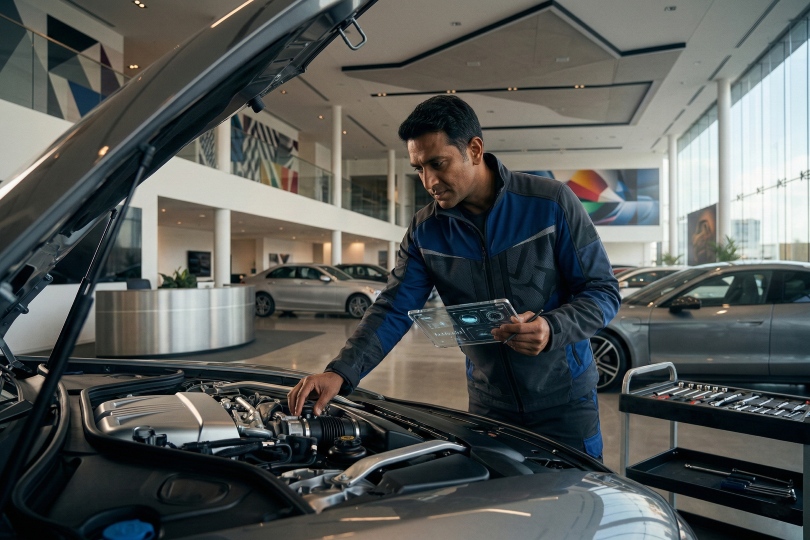
Moving away from paper allows technicians to quickly pull up repair manuals or parts lists on a tablet right at the vehicle. Digital work orders eliminate paperwork and improve the traceability of every job. Personnel can access a knowledge base for various equipment instantly on-site. Being connected through mobile devices allows the workforce to see schedules and customized checklists at their fingertips.
● Advanced Diagnostics
Using sensors and remote assistance allows senior technicians to help junior staff through video streams, ensuring complex problems are solved quickly. Internet of Things sensors can notify dispatchers of problems and generate work orders automatically. Some issues may even be resolved through remote diagnostic tools without the need to travel on-site.
These advancements help workers solve issues correctly the first time, increasing overall shop revenue. Professional growth in this field often involves obtaining ASE Certifications to master these advanced systems. Current Automotive Salary Trends show that skilled technicians earn an average of $28.41 per hour, depending on their expertise and location.
Frequently Asked Questions (FAQs)
Assigning repair orders based on individual technician skill levels maximizes daily billable hours. A well-planned routing system eliminates idle time between jobs and keeps service bays moving efficiently.
Monitoring clocked hours against flat-rate times provides a clear measurement of individual mechanical efficiency. Most of the time, service managers use accurate time data to identify bottlenecks and schedule training for underperforming staff.
Distributing jobs evenly prevents a backlog of repairs at one workstation while others remain empty. Steady task distribution allows mechanics to maintain a consistent pace and complete more customer vehicles per shift.
Bottom Line
Indeed, elevating dealership technician productivity will surely turn a standard service center into a high-performance engine for business growth. When management prioritizes precise repair orders and integrated digital systems, they remove the friction that often stalls progress. Cultivating a respectful environment through as simple as improved amenities and sincere appreciation maintains high morale while lowering staff turnover. Thus, optimizing operational details results in quicker turnaround times, more satisfied customers, and increased revenue for every department.
Achieving and exceeding your goals is possible when you have the right systems in place. With Service Drive Revolution OnDemand, you’ll gain access to the proven systems that have made thousands of SERVICE MANAGERS IRREPLACEABLE. Start transforming your department today!
Need help updating your playbook? Let us know how we can support your team’s growth.
Book a 15-minute strategy session with our team. We’ll explore how to unlock your dealership’s real value.