Quick Answer
To become an automotive service manager, shift your focus from individual sales to the department’s overall profitability. Start by mastering your current advisor duties, learning shop financials, and volunteering for extra leadership tasks. Ultimately, clearly communicate your career ambitions to management and consistently act as a collaborative team coach.

Jumping from a successful service advisor to an automotive service manager marks one of the toughest operational climbs in our business. As an advisor, your wins came from individual hustle like managing personal repair orders, negotiating deals, securing single-ticket upsells, and boosting your commission. Focusing on transactions can be a strength. However, that approach alone won’t work when managing an entire service department. For example, writing tickets faster than everyone else does not guarantee effective leadership. As a result, relying only on speed can limit your growth and hurt your department’s performance.
To truly excel as an automotive service manager, you must step off the front line. Success demands that you manage a whole network of advisors, technicians, dispatchers, and parts counters. It’s about shifting from personal sales to coaching a winning team, fostering collective success, and prioritizing overall department profitability over individual numbers. Today, we will give you the strategies to master this crucial transition and empower your entire operation.
Key Takeaways
- Transitioning to management requires prioritizing team collaboration and departmental profitability over individual sales.
- Daily duties involve organizing technician workflows, tracking financial metrics, and ensuring high customer satisfaction.
- The role demands practical advisory experience, strong financial literacy, and effective conflict resolution skills.
- Managers must set clear boundaries with former peers and smoothly mediate between technicians and advisors.
- Landing the promotion requires mastering your current role, learning the financials, and demonstrating leadership early.
Shift Your Mindset from Solo Player to Team Coach
Succeeding in a management role means prioritizing the bigger picture.
● Move Beyond the Personal Hustle
Your new focus becomes the entire service department’s financial health, not just your personal commission. Stop viewing fellow service writers as competition for walk-in clients or high-value repair orders. Instead, cultivate a collaborative environment where everyone works toward shared goals. Your success hinges on the team’s combined output, not your individual sales.
● Face the Reality of Management
In a recent episode of Service Drive Revolution, The Best Service Advisor Training Has…, the hosts discuss the stark contrast between writing service and managing the drive. They point out that a service writer can just work harder to increase their income. A manager cannot rely on individual effort alone. Management requires scaling impact by inspiring the staff and driving two core metrics. And that’s profitability and customer experience. Every interaction with your team becomes a chance to train and lead rather than a solo sprint for commission.
● Stop Trying to Fix Everything Yourself
Resist the urge to directly intervene every time a staff member faces a challenge. Instead, invest time in coaching and preparing your team members. Guide them through client interactions and sales strategies so they can build their own confidence and sharpen their skills. Empowering your team fosters self-sufficiency and strengthens the entire department.
● Focus on Total Department Performance
Shift your focus to the service shop’s overall profitability, maintain healthy profit margins, and nurture a positive team culture. Individual sales figures become secondary to these broader indicators. Actively support and train underperforming team members. Raise their capabilities to elevate the standards and output of the entire department.
Automotive Service Manager Responsibilities
Service manager duties typically involve operational oversight and strategic decisions.
● Morning Preparation and Shop Workflow
Start each day by reviewing any repair jobs carried over from the previous day. Check technician attendance, then schedule the day’s workload before the service drive opens. Assign tasks thoughtfully, making sure highly skilled mechanics handle complex diagnostics while express teams manage routine maintenance.
Such a targeted approach can boost efficiency and optimize technician utilization. The automotive technician turnover rate currently stands at 30% annually, creating a constant drain on resources. Thus, keeping workflow organized and technicians productive helps retain top talent.
● Financial Management and Department Profitability
Diligently track key financial metrics such as Effective Labor Rates, Service Absorption, and Work-In-Process. These numbers are vital for maintaining the shop’s profitability. To control costs, limit unauthorized discounts. Keep a close watch on policy spending. Try to reduce idle labor time. These steps will help your profits.
● Customer Satisfaction and Quality Assurance
Monitor your Customer Satisfaction Index (CSI) scores closely. Make sure your team consistently follows up with clients after service visits to gauge their experience. Uphold all factory warranty policies and safety regulations.
This guarantees clean inspection records, protects your dealership’s reputation, and helps avoid costly penalties. It also includes standardizing multi-point inspection video procedures to improve transparency and customer trust.
How to Become an Automotive Service Manager
An automotive service manager role needs a blend of practical experience, financial acumen, and strong leadership.
● Required Background and Experience
A solid foundation comes from several years of experience as a service advisor. This experience gives you invaluable insight into daily shop operations and customer expectations. You need to learn how to use Dealership Management Systems (DMS). These systems are essential for generating financial and performance reports that support decision-making.
● Certifications and Financial Literacy
Obtain certifications from various vehicle manufacturers and industry bodies like the National Institute for Automotive Service Excellence (ASE). Strong business acumen means understanding how to read monthly operating statements, track labor margins, and budget expenses accurately. Take note that these financial details are crucial for strategic planning.
● Leadership and Conflict Resolution
Cultivate clear communication skills to motivate your staff and build a positive automotive shop culture. You will need to resolve team disputes fairly and effectively. Skillfully de-escalate angry customer complaints while protecting the department’s finances and reputation. Leading with a steady hand helps maintain a productive and harmonious work environment.
Real Operational Realities and Team Challenges
Challenges are always part of any role. Managing a service department comes with its unique set of challenges, from balancing internal relationships to navigating inter-departmental needs.
● Managing Former Peers and Establishing Boundaries
Upon promotion, immediately establish clear, professional boundaries with former coworkers. Maintain strict fairness in distributing walk-in customers and assigning work. This approach helps prevent accusations of favoritism and builds trust among your team. Consistency and impartiality are your strongest allies.
● Bridging the Gap Between Mechanics and Service Writers
As a manager, you will often act as a neutral mediator between technicians and advisors. Mechanics require detailed symptom notes for accurate diagnostics, while advisors seek quick answers for customers. Establish and enforce clear repair order write-up standards. Standards make sure work flows smoothly through the shop and minimize misunderstandings.
● Handling Inter-Department Dynamics and Staffing
Maintain smooth workflows with parts departments to ensure required replacement components arrive on time. Work directly with sales managers on used car reconditioning turnaround times without sacrificing shop margins. Recruiting, training, and retaining skilled mechanics and advisors in a fast-paced, high-demand industry is an ongoing challenge that needs constant attention.
Step-by-Step Guide to Landing the Promotion
If you want to step up, a strategic approach will position you as the ideal candidate for an automotive service manager role.
1. Express Career Intentions Directly
Schedule a formal, professional meeting with your General Manager or Service Director. Clearly state your career ambitions and ask for their mentorship. Ask what specific skills, operational knowledge gaps, or performance benchmarks you need to master to prove you are ready for the responsibility. Listen to their feedback without becoming defensive.
2. Master Your Current Position Flawlessly
Promotion begins with exemplary performance in your current role. Maintain top-tier customer satisfaction scores, build reliable documentation habits, and deliver consistent sales results. General managers promote advisors who handle their current jobs with order, professionalism, and minimal daily issues.
3. Learn Departmental Financials and Systems
Proactively shadow leadership during financial reviews. Take the initiative to learn how composite statements, policy adjustments, and shop absorption affect the department’s financial health. Understanding how a discounted labor rate affects the department’s breakeven point will set you apart as a future manager.
4. Take on Additional Leadership Responsibilities
Demonstrate your coaching capabilities and willingness to lead. Volunteer to train new advisors, lead difficult customer escalations, and help with shop dispatch duties. Showing you can shoulder extra responsibility proves your commitment to the team’s success.
5. Adopt the Managerial Persona Early
Begin acting like a manager before you get the title. Maintain a positive, consistent attitude, uphold high professional standards, and focus on the shop’s overall success rather than seeking immediate personal recognition.
Even better? Create a growth plan based on feedback from leaders. Keep track of key goals and progress. Show that you care about the shop’s success to stand out.
Ready to Level Up Your Service Drive Operations?
Building a transparent, high-performing service drive needs proven systems, continuous staff training, and real-time guidance. Through the Service Drive Revolution Live Academy, your entire team can access live, twice-monthly training sessions, 200+ hours of industry-best Service Drive training videos, and interactive Q&A sessions designed to solve the exact operational hurdles on your desk today.
Stop guessing and start building a scalable, profitable Fixed Ops strategy.
Need help updating your playbook? Explore how the Service Drive Revolution Live Academy can transform your shop’s efficiency, hiring, and bottom line today.
Frequently Asked Questions (FAQs)
To become an automotive service manager, you usually need years of dealership experience. Many people start as service advisors. Beyond acquiring frontline experience, candidates must complete factory or OEM management courses and demonstrate financial literacy and leadership skills.
Candidates generally need a high school diploma or equivalent alongside several years of retail automotive experience. The role also requires proficiency in Dealer Management Systems (DMS), manufacturer-backed certifications, and credentials like ASE Service Consultant certification.
An automotive service manager runs a dealership’s mechanical repair operations by managing department personnel, dispatching technicians, and overseeing workflow. Responsibilities also include handling customer escalations, maintaining factory warranty compliance, and managing financial metrics to drive profitability.
A service manager requires strong financial literacy to analyze profit-and-loss statements, effective labor rates, and departmental budgets. Key non-financial capabilities include coaching teams, resolving conflicts, optimizing workflows, and recruiting talent.
Moving into management means doing well in your current advisor job. It also requires a change in mindset. Instead of focusing on personal sales, you must prioritize the department’s overall success.
In addition, you need to study the store’s financial reports. You should also communicate your management goals to leadership.
Furthermore, taking on extra responsibilities can strengthen your leadership skills. For example, mentoring junior service advisors helps prepare you for a management role.
Bottom Line
Moving into an automotive service manager role means trading your personal hustle for a conductor’s mindset. Your success now depends on your coaching and your shop floor’s total throughput, not the gross profit on a single repair order. When you prioritize departmental profitability and team development over individual sales tickets, you build a sustainable operation that wins in any market.
Found these tips and insights useful? If so, share this with your industry peers to spread the knowledge. Don’t forget to follow us so you won’t miss any of our latest uploads!
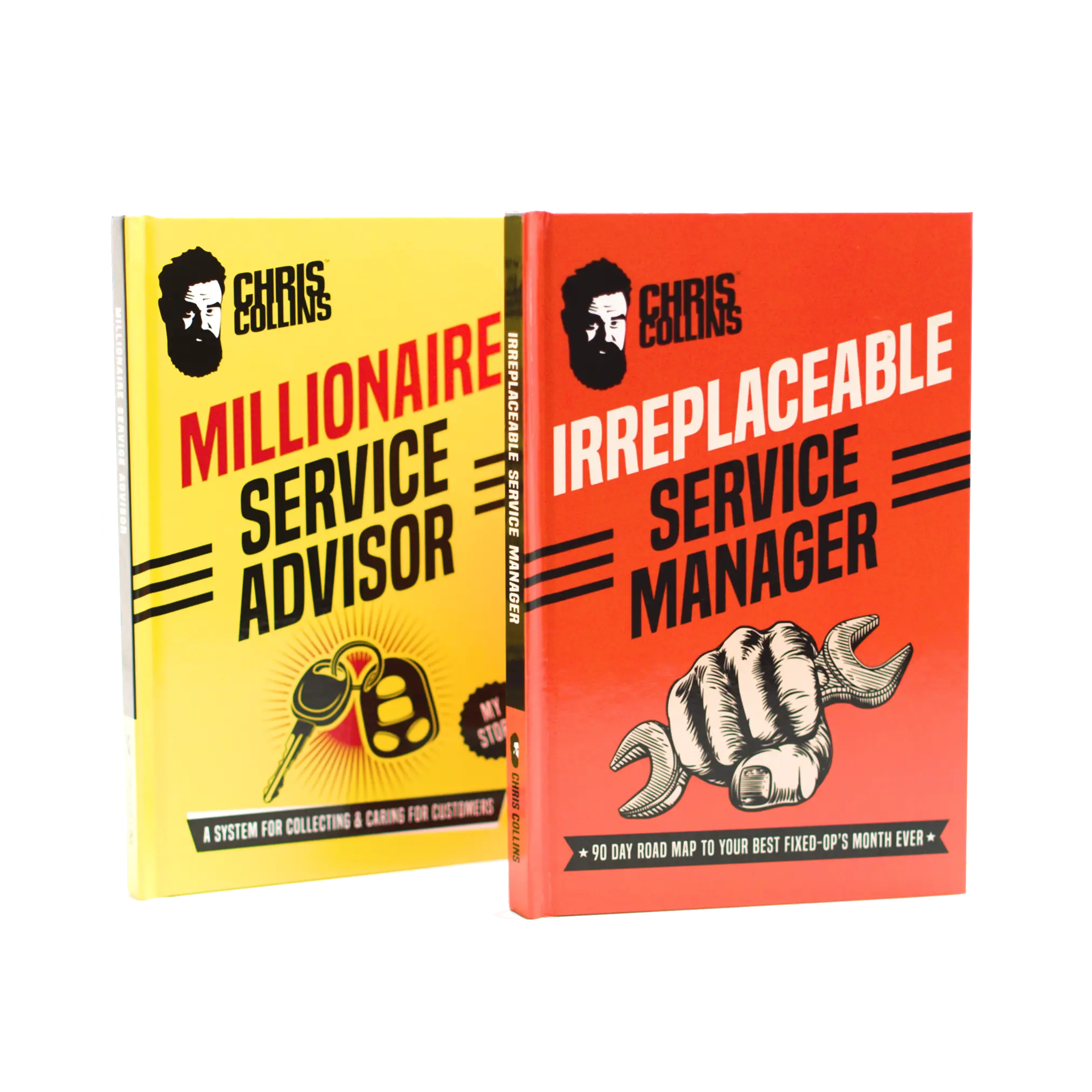
Achieving and exceeding your goals is possible when you have the right systems in place. With Service Drive Revolution OnDemand, you’ll gain access to the proven systems that have made thousands of SERVICE MANAGERS IRREPLACEABLE. Start transforming your department today!
Need help updating your playbook? Let us know how we can support your team’s growth.
Book a 15-minute strategy session with our team. We’ll explore how to unlock your dealership’s real value.