If you’re a SERVICE MANAGER, you’ve probably asked yourself this at some point:
“Why can’t I get my technicians more motivated?”
It’s a common frustration—and one that directly impacts everything from productivity to profitability.
In Service Drive Revolution #353, Chris Collins and the team break down what really drives technician motivation—and why most dealerships are getting it wrong.
Here’s the reality:
Motivation isn’t about pushing harder.
It’s about understanding what actually drives performance.
The Mistake Most Service Departments Make
Most dealerships try to motivate technicians the same way:
- More pressure
- More reminders
- More “we need to hit our numbers” conversations
But here’s what happens:
The more pressure you apply, the more disengaged your team becomes.
Because pressure isn’t motivation—it’s stress.
And in Fixed Ops, stressed technicians don’t produce better results. They produce inconsistent ones.
What Actually Motivates Technicians
If you want better performance, you need to focus on what matters to technicians—not just what matters to management.
Real motivation comes from:
- Clear expectations
- Consistent workflow
- Fair opportunity
- Respect for their time and skill
- The ability to make a good living without chaos
That last one is critical.
Technicians don’t leave because they don’t like working on cars.
They leave because the system around them doesn’t work.

Workflow Is Everything
One of the biggest motivation killers in any service department?
Inconsistent workflow.
When technicians experience:
- Vehicles stacking up unexpectedly
- Poor dispatching
- Missing parts
- Incomplete write-ups
…it creates frustration fast.
And over time, that frustration turns into disengagement.
This is where strong Fixed Ops processes matter most. When your operation runs smoothly, your technicians can focus on what they do best—producing quality work efficiently.
(If your department is struggling with consistency and profitability, this is a great related read on improving your
https://chriscollinsinc.com/sdr/service-department-menu-profit/)
SERVICE ADVISORS Play a Bigger Role Than They Think
Motivating technicians isn’t just a management issue.
SERVICE ADVISORS have a direct impact on technician performance every single day.
Think about it:
- Are write-ups clear and accurate?
- Are jobs sold properly?
- Is the customer communication setting the right expectations?
When SERVICE ADVISORS struggle in these areas, technicians feel it immediately.
Poor communication leads to:
- Comebacks
- Delays
- Frustration
And ultimately—less motivation.
(This is especially true when it comes to handling objections and selling work effectively—something many SERVICE ADVISORS still get wrong:
https://chriscollinsinc.com/sdr/service-advisor-sales-mistakes/)
Stop Managing—Start Leading
Here’s a hard truth:
You can’t force motivation.
But you can create an environment where motivation happens naturally.
That means shifting from:
Managing tasks → Leading people
Great SERVICE MANAGERS focus on:
- Removing obstacles
- Creating consistency
- Supporting their team
- Holding people accountable the right way
Because when technicians feel supported—and set up to succeed—their performance follows.
The Culture Factor
Motivation isn’t just about systems.
It’s about culture.
Ask yourself:
- Do your technicians feel valued?
- Do they trust management?
- Do they believe the pay structure is fair?
- Do they see a future in your dealership?
If the answer is “no” to any of those, motivation will always be a struggle.
Because no process can fix a broken culture.
What the Best SERVICE MANAGERS Do Differently
Top-performing SERVICE MANAGERS understand something others miss:
Motivation is built—not demanded.
They focus on:
- Consistency in workflow
- Clear communication between SERVICE ADVISORS and technicians
- Fair and transparent opportunities for work
- Ongoing coaching and development
Instead of relying on pressure, top-performing service managers build systems that drive results. Process—not pressure—is what creates long-term success.
Final Thought: Motivation Starts With the System
If your technicians aren’t motivated, it’s easy to assume it’s a people problem.
Most of the time—it’s not.
It’s a system problem.
Fix the workflow.
Improve communication.
Create consistency.
And motivation becomes a byproduct—not a battle.
FULL VIDEO TRANSCRIPT
Property Rights and the Turkey Lottery
Welcome to the big show. I am Chris Collins. Adam is here. Hogi is here. Today we’re going to talk about ways to motivate your technicians, part one. And we talk about why I’m going to become a libertarian. Is that what it would be, Adam? I’m a libertarian. Like, I believe my land is my land. No. And I don’t want the government messing with me. What do you call that? Oh, isn’t that a song? My land is—no, I don’t know. I’m the song.
We also have—go ahead. We have an exciting announcement also and much, much more coming up right now on Service Drive Revolution. So, Adam, tell everybody why you’re excited. I’m excited because turkey season’s right around the corner. It’s not turkey season. Yes, it is. No, we just had Thanksgiving in a week. It will be. They’re having youth turkey season right now. And I just saw three—that’s how red you are is you eat turkey all year round, not just on Thanksgiving.
I thought I saw three huge toms today, dude. What are—I just—they’re male turkeys. Jakes are the young ones. You only murder the male turkeys? Yes. Wouldn’t it be funny if—we get people on YouTube for saying that. You’re not allowed to—you’re not allowed to hunt any hens. Okay. But there is a bearded hen. You ever seen a bearded hen? Same. It’s the same as normal society. All the men go to war and get killed. All the men do the dangerous jobs. Men are disposable. I think the bearded thing is just a Missouri thing. I don’t think they have those everywhere. No, for sure.
Property Rights and Government Overreach
Dude, I think that’s your neck of the woods. How many tags? That’s a you problem, not a we problem. How many tags do you get there? You get one tag in the lottery, which I did not win the lottery. So, I’m hoping to use my—how many tags are given out? It all depends on who’s gotten that lottery. I’m sure there’s several thousand, but you’re only allowed one tag, one limit per season.
Illinois has them really pretty tight, but land owners get their tags shipped to them every year. So, I’m hoping that my father-in-law might let me—hold on, hold on a second.
Private Land vs. Government Regulation
Let me get this straight. I own, let’s say, the amount of land that your father-in-law owns, which is what, how many acres? Combined, it’s about a couple hundred. Yeah. So, I own 200 acres, and they tell me who and what I can kill on my land. Yes, when it comes to hunting season. What? Yeah, that’s where we’re at.
Yeah, Illinois—that makes no sense. I wouldn’t say it’s the worst, but every state has some sort of limit. What if I have chickens? I have to get a tag to have chicken tacos? No, it’s not a—I don’t know. I’m sure there’s some sort about a turkey compared to a chicken on my land. This is my land. Well, first off, it’s a wild turkey. Public land. It’s the same thing. Not wild. If my land is fenced in, it’s not wild. I mean, the difference between wild and not wild is a fence. And if I had 200 acres, I’m pretty sure I would have it fenced in. So, explain to me this government that you’ve elected there that tells me on my land what I can eat.
Farming vs. Wild Turkeys
All right. So, first off, I could be speaking totally out of turn, so I’m sure somebody will mention something in the thread on our video here. Hopefully they can correct me if I’m wrong, but some folks actually do raise not only chickens, but they’ll raise turkey. Yeah, of course. I think when you’re going to the grocery store, somebody is raising those turkeys. There isn’t a 3D printer somewhere making them. I’m going to tell you right now, somebody is farming those turkeys, dude.
Chris, this turkey that I killed behind me was definitely not the size of the turkey that you would eat. No, they’re healthy, right? They’re not full of hormones, right? There’s very little meat on them, too. Yeah. Well, that’s what happens. But if you go to Europe and you butcher a cow, it looks completely different than these things that we have here that are full of steroids and hormones and whatever we do.
Well, even if you don’t do steroids, even if you give them feed, right? They’re not eating the kind of feed or the majority of the feed that if you’re trying to raise them all as in they’re eating all the grubs or whatever.
Property Rights and the “Rent-Free” Turkey
I’m just still—I’m sorry. I’m stuck on this is my 200 acres. I bought this 200 acres. I’m paying taxes, probably crazy taxes there. Property taxes. Oh yeah. And I can’t kill my own livestock. Well, technically it’s not your livestock because you’re not raising it, right? It’s my land and it’s on my land and I can’t charge it rent. The turkey isn’t paying rent. It’s eating. That’s exactly why it’s a good job to hunt. They’re not paying rent or paying taxes. Okay. I didn’t make the rules, bud.
I could tell you right now, as backwards as it can be, but I’m pretty sure that if I have 200 acres here and I have turkey—if I’m raising turkeys or there’s a turkey from my neighbor’s 200 acres gets on my 200 acres, I can shoot it. I’m pretty sure. I bet the turkey has more rights on that land than you do in California. Yeah, let’s be real, dude. You’re going to have to sign it over. Dude, you’d have a better bet trying to hit it with your car and then claiming it, man. That’s nuts.
The Launch of SDR Academy
We are excited to talk about one thing that I want to bring up before we get to this list that we’ve been working on for a couple days: How to motivate your technicians, we are going to launch here coming up at the beginning of June something we are going to call—what did we decide we were going to call it yesterday? we were originally calling it SDR Live, but now we’re going to call it Service Drive Revolution Academy. Yeah.
And we are—this is something we’ve been wanting to do since last year, but we’re going to start going live weekly and we’re going to go through different modules and train on, “Hey, here’s pricing strategies,” “Here’s how to hire and recruit,” “Here’s how to read the financial statement,” and we’re going to certify whoever’s in the academy on those. So, they’re going to get a certificate that they participated and passed that section.
A Bi-Weekly Approach to Vocational and Leadership Skills
And the way that we’re setting it up, which for me is super exciting because I love hanging out with our audience and getting to know them and help them and kind of get vested in them—and I know you guys feel the same way—is Hogi is going to do the more vocational side and then I’m going to do leadership. So, every other week we’re going to go back and forth because I think the leadership stuff can be kind of heavy. You need a little time to think about it. So, two weeks of processing and thinking about it is good.
And then the same thing with the vocational stuff: the pricing strategies, how to read a financial—you need a little time in between. So, we’re going to go every other week and we’re going to help you get some incredible results, help you become a better leader, help you understand the business in a different way, show you where the leverage is. There are so many things that you can do in a parts or service department to increase the profit and the sales and the customer experience tenfold. And that’s going to be the focus: How can we make you more effective? How can we weaponize you to be the best version of yourself?
On Demand and Community Value
Now, the good news with this is this is just going to be SDR on demand is what it’s going to be. So, if you’re in On Demand right now, you’re going to get this. If you’re in our coaching, you’re going to get it. If you’re not, I would encourage you to sign up for On Demand as quick as you can because we might do some early stuff.
And we also might let people in the academy that hit some benchmarks come to Top Dog, which—if you’ve ever heard—our Top Dog event every year is a pretty big deal. We always have some incredible speakers. We already have locked in one incredible speaker for this year, Jefferson, who Adam and I met at an event we were at. He’s pretty cool. Can help you talk your way out of any argument with your wife. He doesn’t start there, but he definitely ends there. It applies for sure.
Contextual Leadership and Audience Dialogue
I’m really excited about this. I’m excited to be able to teach the leadership stuff. I was just thinking about it and most of these episodes come from our audience, right? We get a lot of ideas for the different things we’re going to talk about from what’s happening in the field. What I’m most excited about is we get a lot of great feedback from these episodes, but these questions come and we take them and we do an episode on them.
The way we’re setting this up is we’ll help you set up a system where these different topics, when you isolate them by themselves and try to execute on them, are really hard. But when they’re put in context for you and we’re going through them one by one, it’s way easier to put that puzzle together. I think it’s important for the audience to be able to have some dialogue with you on some of these leadership topics because that’s always pretty profound and there’s a ton of great feedback from that.
Investing in the Service Department
The leadership stuff is my favorite just because of human behavior. There is this backlash internally in our company that we aren’t charging enough for this. So we charge $250 a month for On Demand. We price it there because, unfortunately, in our industry, a lot of dealers won’t invest in their service department. They’ll invest in sales, training, and F&I, but they don’t invest in service. So a lot of managers pay for that themselves and it’s affordable enough that they can pay for it themselves but get a ton of value.
You can put your advisors on the training; you can put your techs on the training in there. All of that—there’s modules in there for everyone. But there is this undercurrent that we want to charge twice that, which would make it a little harder for managers. So I would just say the way that we always do things is we kind of start out with a low price and add value and gain momentum and then we’ll raise the price. So there is a benefit to getting in early.
Eventually, we will raise the price because the value is going to be pretty incredible. I mean, to every week be able to get on, have a community that you can share what’s going on—let’s face it, it’s lonely to be a manager a lot of times. You have a community to get the training that we’re going to provide and to be able to ask questions and participate in it actively. This doesn’t exist on this level in our industry. We love our industry and we want to make it better. We want to improve the leadership; then that will improve the industry. All ships rise when we get better.
Networking and the Power of the Tribe
I want to emphasize the opportunity for our current clients on the platform or future clients that are thinking about getting on. Having a tribe that you can openly share and discuss with—it’s just like a 20 group that everyone tries to focus to be a part of. The networking piece of this and having opportunities to openly discuss or bring up things that they maybe don’t have the opportunity to bring up internally—they can have this here and that’s giving them that voice. I’m excited mostly about giving people that opportunity to have that environment.
You can just go to chriscollinsinc.com and sign up for On Demand. We’ll do one or two practice ones leading up to the beginning of June, but it’s going to start in June. We’re thinking about doing them on Wednesdays at 11:00 Pacific. Doesn’t matter the time zone you’re in; you can take an early lunch or a late lunch, but you’ll be able to do it on your lunch. Super fun.
Motivating Technicians: Part One
What we’re going to talk about today is ways to motivate your technicians. This topic was brought up by somebody actually that I was interviewing for a coach position. She was talking about how much she loves SDR and how it helped her because she moved from being a warranty administrator—a lot like Vicki, one of our coaches that I have worked with for over 20 years.
This person was a warranty administrator, became a manager, and had no training. The dealer wouldn’t invest in any training, and SDR was a place where she could go and learn and get ideas. This is from her saying, “One thing that I always wish I was better at and had more tools is how to motivate technicians because they drive everything; they’re the heart and soul of what we’re doing.”
We started outlining this and brainstorming what we have seen be the most effective over the years. It’s a two-parter because this would be probably a two-hour episode if we went through the whole list. I think I counted 15 things that we put on here, so we’re going to break it in half. Today we’re going to go through half of it. The two lists will stand up on their own.
The Foundation of Culture
In the frame up front, the most important part of building a team of technicians that are productive, that are team players, that are growing and advancing with the company, is the culture that you have. Too many times the thing that we see is there isn’t a lack of good technicians that we can recruit; there’s a terrible culture that we’re bringing the technicians into. So the culture that you have determines your success probably more than anything else.
Your leadership is the other part of that. The culture, your leadership, and the expectations you have drive everything on this list. Without a strong culture and you becoming a better leader with clear expectations, all of this is for naught. Too many times we go into a shop where the technicians are quitting and leaving. The top two techs just left, or they’re quitting and we’re trying to get them to stay. The rest of the technicians aren’t very motivated. The production is very low—maybe 50 or 60% in the shop. That all comes down to it not being clear what it is we’re trying to do.
The person in charge—the manager, the dealer, the general manager—are in a position where they are such terrible leaders. They are begging technicians to stay, begging technicians to work there, and everything is out of whack. It’s not a collaboration between the techs, the customers, and the leadership; it’s a one-way hostage situation where nobody is happy. I’ve never seen a situation where the technicians are holding management hostage and the technicians are happy. They’re always miserable and it always just gets worse.
Standards vs. Anarchy
People want to work somewhere where there’s a strong culture. It’s constantly improving and getting better and there’s optimism for the future. It isn’t just like survive today. Unfortunately in our industry, there’s just too many survive-today shops out there. If you don’t have clear expectations, you’re not becoming a better leader, and you don’t have a strong culture, all of this is for naught. You could just turn it off right now and go do something else because it requires clear intention and leadership at the top in order for there to be a shop that’s producing quality work and constantly growing.
A question we’ll get from time to time is: “Hey, do you have any tips on how do I get my techs to clock in on tickets?” or “How do I get advisors to do walkarounds?” It’s the same question; it’s a symptom of your culture. When we’re talking about culture, we’re talking about structure and holding people to that structure that you set up and design for your department. If you get key things correct with your culture—behavior-wise and performance-wise—a lot of the little things take care of themselves. The foundation of all of this is definitely culture and how intentional you’re being as a leader to set up a framework.
Defining What Culture Is (and Is Not)
What culture is not, which it commonly gets mistaken for, is free lunches or “kumbaya.” Back in the day when I worked for Tesla, everybody was like, “What’s the culture like there? You get free lunches and there’s ping pong tables.” And I’m like, yeah, you do—it’s Silicon Valley, it’s right down the street. But no, I get a coat hanger and bubble gum and I got to fly to Oklahoma to fix a car. The standards are crazy. There’s a huge vision. Every person in that place you could walk by, you could ask them what the purpose of the company is and they could recite it to you.
There’s just clarity all the way around as to what you’re doing and everybody is running on edge, figuring out what the thing is. If there’s clarity on what the standards are for me to do my job, and you as the leader are helping me meet those standards, there’s a lot of structure with that. A lot of times as leaders today, the most common thing we see is there is no standard or people are hard to find so they don’t hold people to the standard.
What you have by definition, if you as a leader are not setting a standard and bringing people to the standard, is chaos. It’s anarchy. A lot of shops out there are anarchy. Culture, our definition for it, is the opposite of that, it’s the opposite of chaos. It’s law and order, it’s having standards, clear expectations, and a clear vision.
Setting the Minimum Standard
In the commercial truck space, I almost felt like because they were mostly hourly-paid techs, that added to the anarchy piece. The tail was wagging the dog and there was no oversight or leadership to actually have that structure of what it should be. That’s just blocking and tackling—setting some framework. Being a technician is pretty competitive; most technicians are.
If you give them some sort of minimum standard, some framework, and something to shoot for, they definitely don’t want to be below that “murder line.” When we go in to have those discussions, it was like, “Oh, I really don’t want to be below that. Am I that bad?” No one comes in there saying, “I want to suck or waste time.” There should be structure and systems in place to foster success. Set a standard, have a minimum standard. Don’t be afraid if technicians don’t want to be there, but also show them the pathway and how they can be successful and achieve.
Tip #1: Don’t Treat Them Like a Number
The first one we have on the list of ways to motivate your technicians is not to treat them like a number. Understand that every technician is an individual. They are human. They’re special. There’s things about them that they bring to the table that are great and things they probably need to work on. But as a leader, as a coach, you need to see them as humans, not as numbers.
This is manifested in the way that you treat them, not in what you say. Most people, if you said, “Hey, technicians aren’t just a number,” would say, “Oh, of course not.” But the way that they actually treat them, their behaviors, and where they spend their time says something completely different. Really getting to know them on a personal level, sitting down with them once a month and doing goals, taking your top performers out to lunch or dinner—that matters.
Hogi had a great example about when somebody has a technician who has been there a long time and has gone sour. The way to work around that is to take them and their spouse to dinner and really hang out with them socially. Get to know them in the context of their actual life. Really listening and paying attention to what their goals are and what their needs are. It’s hard sometimes for some of these techs as they get older; they don’t see any improvement, their bodies are starting to break down, and it gets hard.
Investing in Long-Term Relationships
Some people struggle with this because they’ve heard throughout the industry that you “can’t be friends with your people.” So they shy away from getting to know them. You can have a strong culture and still care about people, know their kids’ birthdays, and take them out to lunch. You can learn about them and be invested in them and still hold them to a standard. Those two things can happen and be true at the same time.
I’ve watched Chris over the years at different meetings. People will bring up a question like, “Hey, I’ve got this cancerous tech,” or “Hey, I’ve got this tech who’s really difficult.” You always ask them one question after you let them tell you all about this person for five minutes: “Hey, are they married?” And they’re like, “Yeah, I think so.” “What’s their wife’s name?” “I have no idea.” He’s like, “Okay, why don’t you go get to know them, take them out to dinner.”
It’s always amazing what you find there. Wives are intuitive and you learn a lot about someone when you talk to their spouse because they’re going home and telling them how they really feel. They’re probably not vocalizing that to us. For this to work, you’ve got to care and really be interested in people. It’s not an easy path. It’s certainly way easier to be indifferent or use the excuse of “it’s just business.” That’s the easy path, but that isn’t the long-term path. That path puts you at a dead end because people don’t want that anymore. Especially when talking about younger techs—they won’t stand for it.
Tip #2: Career Paths and Performance Reviews
Number two is a career path. It’s a road map for what’s coming in the future. We talked a second ago about sitting down with them once a month. Sitting down with them and saying, “Hey, here’s where you’re at. Here’s what you did well this month. Here’s where I want to see improvement next month. But let’s look at where you want to be in a year. Let’s look at where you want to be in five years.”
Most technicians—it’s rare to find one who doesn’t want more. They want more money, they want more freedom, they want more knowledge. Sitting down and showing them what it takes to get there—it isn’t just about putting time in; it’s about what you bring to the table. We’re going to help you get those skills. We’re going to help you get that knowledge. That builds a ton of loyalty because they see that you’re invested in them.
Moving Beyond Punitive Performance Reviews
In a lot of these shops, performance reviews are nonexistent. If they are there, they’re usually punitive. You’re only sitting down because someone messed up. We’re talking about sitting down when things are going well. It’s amazing what that does for morale. It shows them that you’re paying attention when they do a good job, not just when they mess up. That regular cadence of communication is key.
In my experience, when people say they have a career path, it’s just a list of the levels of technicians. “If you do this training and have these years of experience, you go from a B-tech to an A-tech.” That’s not a career path. A career path is individualized. It’s about what that person wants. Maybe they want to be a shop foreman, they want to get into management, they just want to be the best transmission tech in the city. Whatever it is, you help them get there. It’s about their goals, not just the company’s levels.
Tip #3: Education and Professional Development
Number three on our list is education. This goes hand-in-hand with the career path, but it’s its own thing. Investing in their education. Not just the technical stuff—the manufacturer training is important—but also personal development. We talk about the SDR Academy; having them participate in that, having them understand the business side of it. When a technician understands how the service drive works, why we price things the way we do, and how the advisor’s job is hard too, it changes their perspective.
We’ve seen technicians that were very talented but had a bad attitude. Once they were educated on the business side and the leadership side, their attitude completely changed. They became mentors to the younger guys. They became part of the solution instead of part of the problem. That investment in their mind, not just their hands, pays huge dividends. It shows them that you see them as a professional, not just a laborer.
I’ve had technicians tell me that they were never offered any kind of training other than the mandatory manufacturer stuff. When we offered them a leadership course or a communication seminar, they were blown away. It makes them feel like a valued part of the team. It’s about growing the person, not just the technician.
Tip #4: A Parts Department with Empathy and Speed
Number four—and this is a big one—is a good parts department. A parts department that has empathy and speed. We talked about this last week, but it’s so important to the technician’s motivation. When a tech has a car on the rack and they’re ready to go, and they have to wait an hour at the parts counter, it’s a motivation killer. They feel like their time isn’t valued.
When the parts people understand that every minute the tech is waiting is money out of the tech’s pocket, and they move with a sense of urgency, it changes the whole vibe of the shop. That empathy—understanding the technician’s side—goes a long way. It stops being “us vs. them.” It becomes a partnership.
We’ve seen shops where the parts manager and the service manager meet every morning to talk about what’s on the schedule and what parts are coming in. That level of communication prevents so many headaches. It keeps the techs productive and motivated. A parts department that is slow or indifferent is the fastest way to demotivate a good technician. They’ll go somewhere else where they can actually get their work done.
Conclusion: More to Come
That’s the beginning of our list of ways to motivate your technicians. We got through four of them: not treating them like a number, having a career path, educating them, and having a good parts department. We have several more that we’re going to go through next week. I hope you have a good week. For Adam and Hogi and myself, we’ll see you next time on Service Drive Revolution.
Final Outro
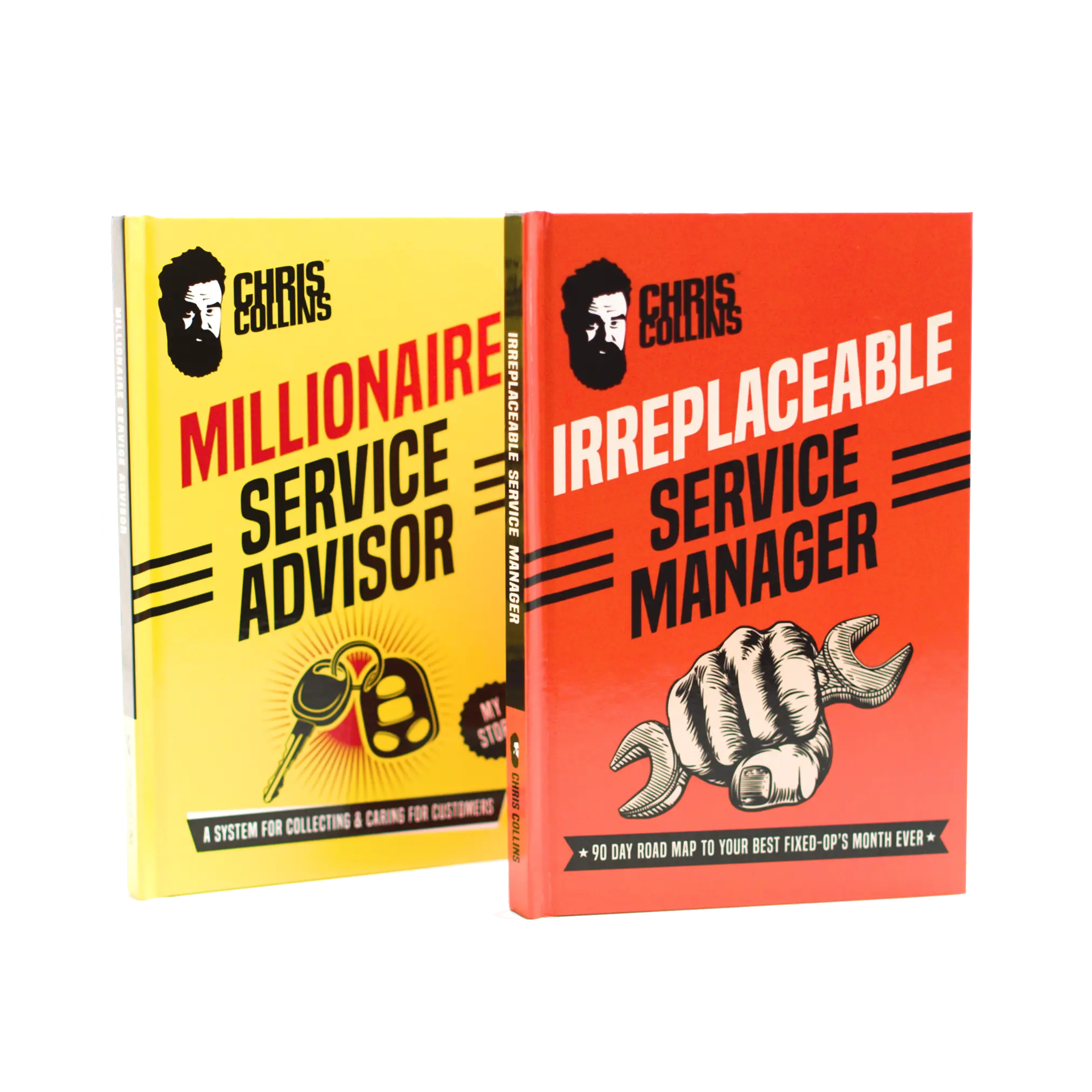
Thanks so much for watching this episode of Service Drive Revolution. We’re uploading new stuff every day, so make sure you subscribe and click the bell icon so you don’t miss out. If you have a question you’d like us to answer on the show, call 833-ASK-SDR, and we’ll answer your question on the show. That’s 833-ASK-SDR. For special deals on our books and training, head over to offers.chriscollinsinc.com. I’m Chris Collins, and I’ll see you in the next video.
🔗 Related Resources
- Service Advisor Sales: 5 Mistakes Advisors Make After a No
- Service Department Menu: 6 Tips to Increase Service Profit
- Why Systems Matter More Than People in Fixed Ops Leadership
Feel free to explore the linked articles above for deeper insights into each strategy. If you have any further questions or need additional resources, don’t hesitate to ask!
Achieving and exceeding your goals is possible when you have the right systems in place. With Service Drive Revolution OnDemand, you’ll gain access to the proven systems that have made thousands of SERVICE MANAGERS IRREPLACEABLE. Start transforming your department today!
Need help updating your playbook? Let us know how we can support your team’s growth.
Book a 15-minute strategy session with our team. We’ll explore how to unlock your dealership’s real value.