Have you ever wondered why some shops build trust with customers and boost their bottom line, while others struggle with repeat business and poor communication? The difference often comes down to a single key factor: understanding the true impact of service writer vs. service advisor on your dealership’s success. When the wrong approach becomes the norm, missed opportunities and customer frustration are never far behind.
Well, there’s an easy solution for that. You just have to know what separates a service writer from a service advisor and choose to invest in the right skills for your team. With the right people in place, communication will be clear, technicians will stay productive, and customers will leave satisfied and coming back for more. Keep reading as we break down what sets these roles apart and how you can use that knowledge to drive stronger results at your dealership. Let’s begin!

Key Takeaways
- Service writers handle administrative tasks and reactively pass customer requests to mechanics without upselling.
- Service advisors operate as proactive sales consultants, recommending long-term maintenance and building trust with car owners.
- Both positions demand clear communication and technical know-how to explain mechanical issues in simple terms.
- Performance heavily influences pay, rewarding successful advisors with commissions and clear paths to management roles.
- Job seekers should pick writing for task-focused administration or advising for sales-driven relationship building.
What Is the Difference Between a Service Writer and a Service Advisor?
At the heart of every automotive repair facility, two distinct roles often blur together in the minds of the public. Both service writers and service advisors act as the primary link between the car owner and the repair team. These professionals are the first people a customer meets when they walk in and the last ones they see when they pick up their keys. While they share the same workspace and goals, their approaches to the job create different experiences for the customer. Understanding the nuances between these titles is essential for anyone looking to enter the industry or for a dealership aiming to improve its operations. Take a look at the key difference:
● Service Writers
These individuals act mostly as clerks who record exactly what a customer asks for and pass that note to the mechanic. Their focus is largely administrative, ensuring that the initial paperwork is processed without necessarily digging into the “why” behind a vehicle’s issues.
● Service Advisors
Professional sales experts occupy the role, checking the vehicle’s needs and recommending long-term maintenance plans. As consultants, they use their expertise to guide customers toward safer vehicle ownership, proving why service advisors are smarter than your average bear.
The Service Writer: A Reactive Approach
Success in a high-volume shop often depends on speed, but a service writer usually focuses on the immediate task at hand rather than looking for future needs. This role is often seen as an “order taker” because the employee reacts to the customer’s requests rather than anticipating them. When a writer behaves reactively, it can lead to missed opportunities for the shop and potential safety oversights for the vehicle owner.
● Daily Habits
These staff members might arrive just as the shop opens, often appearing unprepared to face the morning rush. They might spend more time chatting in the repair bays than greeting guests on the service drive. Without checking the day’s schedule in advance, they spend their shift “putting out fires” instead of managing the flow of work.
● Customer Interaction
Recording the specific complaints a customer mentions is the priority, yet these writers rarely suggest extra services or check the car’s repair history. By assuming a client “doesn’t want to spend money,” they fail to offer necessary preventative care. Such a hands-off approach leaves the responsibility of discovery entirely on the technicians.
● Communication Style
Pressure to keep customers happy can lead a writer to overpromise how fast a car will be ready. They might provide best-case scenarios and “hope” the work finishes on time. Such habits often result in frustrated owners calling the shop for updates when the promised deadline is missed.
● Inspection Process
After a technician checks the car, a service writer might simply attach a report to the invoice without explaining the results to the owner. This “hope-based” strategy relies on the customer reading the report later and deciding to book another visit on their own. Without a verbal explanation, the value of the inspection is frequently lost.
The Service Advisor: A Proactive Professional
Conversely, a service advisor takes a more active role in managing the customer’s vehicle health. They focus on building trust and ensuring the car remains safe in the long term by using proven communication processes. Acting as a salesperson rather than a clerk drives higher revenue and better customer satisfaction scores.
● Daily Habits
Preparation is the hallmark of a professional advisor who arrives early to review the day’s schedule and look at client histories. They prepare for appointments before the first customer arrives, allowing them to greet clients by name and provide a stellar first impression. That level of proactivity guarantees that the advisor is always a step ahead of the shop’s needs.
● Investigation & Walk-Around
Instead of just taking an order, they ask detailed questions to help the mechanic find the root of a problem. They physically walk around the car with the owner to spot obvious issues like worn tires or cracked lights, which builds transparency. Seeing a problem firsthand makes it much easier for a customer to believe and approve a repair recommendation.
● Setting Expectations
Professionals provide realistic timelines for repairs and update the customer at specific times, regardless of whether the work is finished. By promising a call within a specific window, they eliminate the stress of uncertainty for the client. This practice significantly reduces the volume of inbound “status check” calls that can disrupt a busy shop.
Core Skills and Requirements
You do not always need a college degree for these roles, but you do need a mix of technical knowledge and people skills. The most successful candidates are those who can bridge the gap between complex mechanical concepts and everyday language. Mastery of these skills will surely let you move from being a simple writer to a high-performing advisor.
● Education
Most shops require a high school diploma or its equivalent as a baseline. Many employers prefer candidates with trade school training, such as those from UTI’s Automotive Technology program. Specialized certifications from the National Institute for Automotive Service Excellence (ASE) are also highly valued in the industry.
● Communication
Effective advisors must be able to explain complex engine problems in simple terms that anyone can understand. The job requires practicing the art of active listening while you’re at work to decipher what a customer is experiencing behind the wheel. Clear verbal and written skills are necessary to make sure that technicians receive accurate instructions.
● Problem-Solving
Thinking fast is a requirement when parts arrive late or a repair takes longer than expected. An advisor must analyze conflicts and find solutions that satisfy the customer without hurting the shop’s bottom line. Adaptability is crucial as daily schedules are often subject to sudden changes.
● Math and Tech
Modern departments rely heavily on technology, so proficiency in automative software is a must. Advisors use specialized systems to track repairs, order parts, and calculate bills accurately. Precision in math ensures that cost estimates remain reliable and transparent.
Pay Structures and Career Growth
Earnings often depend on how well these professionals serve customers and how much work they bring into the shop. Many dealerships view the service department as a way to recession-proof the business by maximizing profits in the back end. Consequently, performance-based pay is common, rewarding those who can sell effectively.
● Earnings
According to the U.S. Bureau of Labor Statistics (BLS), the median annual salary for automotive staff was roughly $49,670 in May 2024. This figure can vary based on experience, location, and the specific employer. Top-performing advisors who meet high sales goals for customer-pay repair orders often earn significantly more through commissions.
● Path Forward
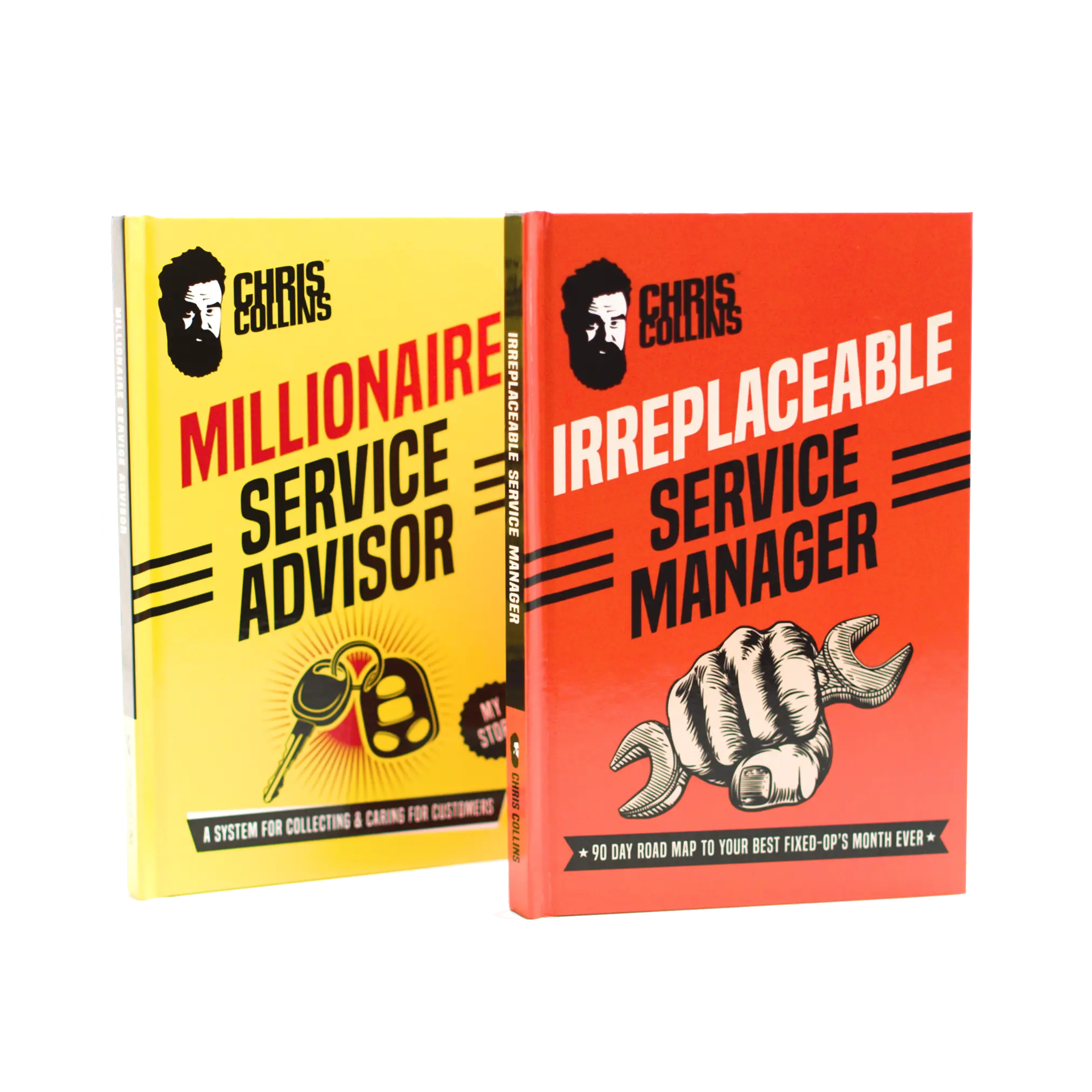
Starting as a service writer is an excellent way to learn the ropes of the automotive world. With consistent training and experience, you can move up to a professional advisor role and eventually into service management. As a matter of fact, the fixed operations department is an area many dealerships use to diversify revenue streams. Automotive fixed operations consulting firms like Chris Collins Inc. specialize in helping dealerships optimize fixed ops, providing expert guidance on streamlining processes and training staff. They teach service managers, service advisors, and automotive technicians.
● Job Outlook
Talented advisors are always in demand because they help a dealership stay profitable even when vehicle sales are slow. Shops that invest in the professional development of their team tend to have lower turnover and higher customer retention.
Which Path Fits You?
Choosing between these roles depends on your personality and career goals. While the environment is the same, the daily rhythm and expectations differ greatly. Consider which approach aligns best with how you like to work with people and technology.
● Choose Service Writing…
Suppose you enjoy a fast-paced environment where you focus on administrative tasks, organizing schedules, and helping the shop run smoothly behind the scenes. This role is ideal for those who prefer specific, direct tasks and acting as a vital liaison for technical teams.
● Choose Service Advising…
If you enjoy sales, building long-term relationships, and acting as a consultant who helps people make smart decisions about their vehicles. This path is perfect for those who want to be held accountable for their productivity and thrive on hitting performance targets.
Frequently Asked Questions (FAQs)
Dealerships today predominantly use the title service advisor over the service writer. The automotive industry shifted toward the advisor title to reflect a consultative approach rather than mere clerical work.
Employers often pay both roles using a base salary plus commission based on parts and labor sales. Dealerships sometimes offer higher percentage bonuses to service advisors who consistently meet high customer satisfaction scores.
The service advisor position offers a stronger foundation for long-term career growth in automotive management. Professionals in advisor roles gain extensive customer service experience and sales training required for promotions to service manager.
A service writer primarily records customer complaints and schedules repair appointments. On the other hand, a service advisor performs identical clerical duties while actively recommending preventive maintenance and explaining technical repairs to vehicle owners.
Bottom Line
Indeed, choosing between a service writer vs service advisor is more than just a title change. It’s actually a shift toward building stronger customer relationships and driving real results for your dealership. Now that you are convinced to invest in training, have clear goals, and focus on turning service writers into true advisors, you have successfully created a team that does more than process orders. They can now build trust, spot new opportunities, and boost your bottom line. If these strategies helped you rethink your own team’s approach, share this article with your network so we can continue powering up our industry with smart insights.
Achieving and exceeding your goals is possible when you have the right systems in place. With Service Drive Revolution OnDemand, you’ll gain access to the proven systems that have made thousands of SERVICE MANAGERS IRREPLACEABLE. Start transforming your department today!
Need help updating your playbook? Let us know how we can support your team’s growth.
Book a 15-minute strategy session with our team. We’ll explore how to unlock your dealership’s real value.