
Quick Answer
A car dealership porter is an entry-level employee responsible for moving, staging, and performing basic vehicle maintenance. This physically demanding role requires a valid driver’s license, stamina, and the ability to work in various weather conditions. Porters earn a national average of $32,212 annually and often use the position as a gateway to more advanced automotive careers.
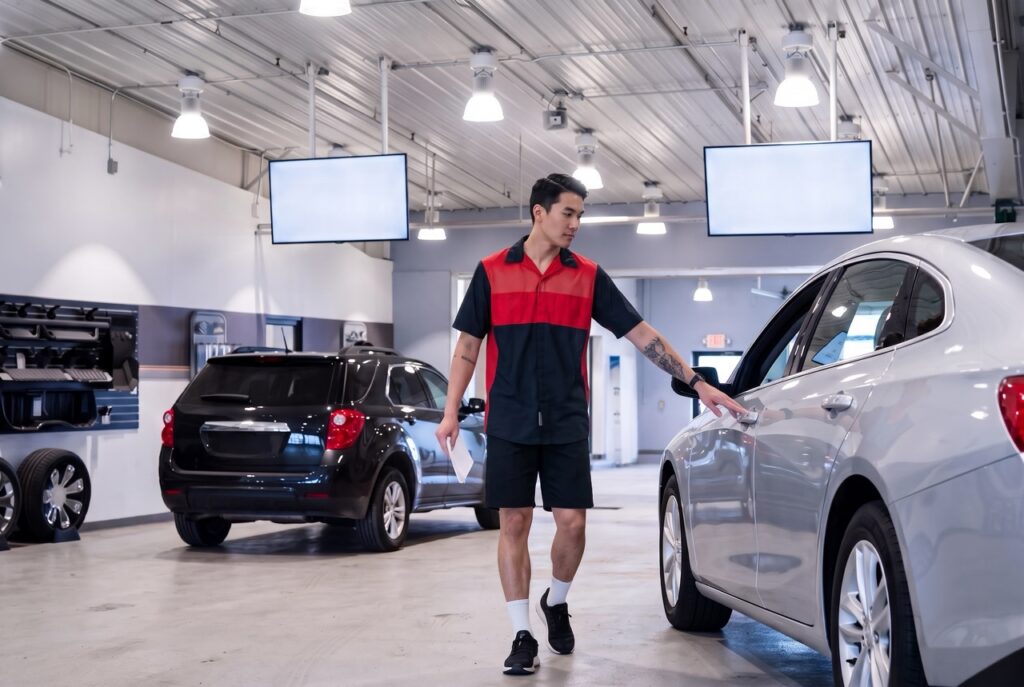
When vehicle movement stalls, dealership operations grind to a halt. Bottlenecks in moving cars to the service department, setting up test drives, or completing customer handoffs clog service bays and drag down sales performance. These operational bottlenecks waste precious time, negatively affect the customer experience, and ultimately erode profitability.
A dedicated on-site professional is essential for seamless movement throughout the facility. So, what does a car dealership porter do? As the backbone of daily lot logistics, they quickly move vehicles, keep the lot organized, and stage cars for showroom displays or customer deliveries. By keeping operations running smoothly, porters let sales and service teams stay focused on their primary responsibilities. This steady workflow boosts staff productivity and enhances client satisfaction. Explore this guide to learn more about their key responsibilities, required skill sets, and salary trends to help your dealership operate more efficiently.
Key Takeaways
- Car dealership porters are essential entry-level workers who move, stage, and maintain vehicles across sales and service departments.
- The role includes lot and service porters, who handle broader logistics and basic upkeep compared to valets or detailers.
- Candidates need a valid driver’s license, the ability to drive various transmissions, strong physical stamina, and solid communication skills.
- Average annual compensation is roughly $32,212, though earning potential varies by location, experience, and specific skills.
- While physically demanding, the position is an excellent gateway to career advancement into specialized automotive industry roles.
Understanding the Role of a Car Dealership Porter
A car porter is a key part of the dealership’s backbone, making sure that vehicles are in the right place at the right time.
● Definition and Core Purpose
At its heart, a car dealership porter holds an entry-level position focused on moving, staging, and maintaining cars. Their work keeps daily dealership operations running smoothly. They are the unseen force that keeps everything aligned for both staff and customers.
● Essential Impact on Operations
A porter connects sales, service, and detail teams through skillful vehicle management. By handling car-moving logistics, porters free up technicians and salespeople. This allows those teams to focus on their primary tasks, boosting overall productivity and customer flow. Their work directly supports timely vehicle preparation and delivery.
● Work Environment
A porter’s typical workday often involves a mix of indoor and outdoor tasks. Most of the time, they relocate vehicles on auto lots, move cars within service bays, or drive between storage areas and client drop-off points. This job involves physically demanding tasks, including standing for long periods and doing manual labor, especially during busy times or in varying weather conditions.
● Porter Types
Within dealerships, the porter role can specialize into two main areas, each with a distinct focus:
- Service Porter: This individual primarily transports customer vehicles. These movements occur between service lanes, repair bays, and pickup zones, keeping service appointments on schedule.
- Lot Porter: Manages sales inventory and positions cars for optimal display. They also prepare vehicles for test drives, ensuring the sales team always has ready options for prospective buyers.
● Porter vs. Valet
While both roles handle vehicle movement, their scope differs. Porters manage broader vehicle care, including basic cleaning and internal transport across all dealership departments. Valets, however, strictly focus on parking and retrieving guest cars for tips, typically interacting directly with customers for short periods.
● Porter vs. Detailer
The difference between a porter and a detailer lies in the depth of their responsibilities. Porters handle the lot’s broader logistics, performing basic cleaning and fluid checks to make vehicles presentable. Detailers, by contrast, specialize in deep cleaning, polishing, and full interior restoration, providing a meticulous, showroom-ready finish.
Daily Responsibilities and Key Duties
A porter’s day is filled with a wide range of tasks, all critical to the dealership’s operational harmony.
● Vehicle Movement & Lot Management
A primary duty involves driving cars to specific rows on the lot. Porters arrange vehicles uniformly, creating an attractive curb appeal for potential buyers. An organized lot improves the customer experience. Efficient movement also includes tracking vehicle locations using stock tags or VINs, an important part of inventory control.
● Service Department Support
Porters often act as the first point of contact for service clients, greeting visitors and guiding them through the initial drop-off process. They install protective seat covers and floor mats in customer vehicles before moving them to the appropriate technicians. This proactive step helps keep customer vehicles pristine during service, improving satisfaction.
● Vehicle Prep & Basic Maintenance
Getting a vehicle ready for sale or service means attention to detail. Porters run cars through automatic washes, vacuum interiors, and perform routine checks. Topping off fluids, checking tire pressure, and charging dead batteries are all part of their basic maintenance routine. These actions ensure vehicles are in proper condition and presentable for customers.
● Customer Service & Delivery
Beyond moving cars, porters often assist customers directly. They might drive courtesy shuttles, offering rides to clients whose vehicles are in for service. Sometimes, they even deliver newly purchased vehicles directly to buyers’ homes. This role also involves answering basic questions about vehicle location or dealership services, providing a helpful face for the brand.
● Facility Maintenance
Maintaining the dealership’s appearance and functionality goes beyond the cars. Porters help keep the parking lot, showroom, and shop clean by picking up trash and clearing natural elements like snow or ice. They also restock customer waiting areas, ensuring a comfortable and welcoming environment for everyone.
Key Requirements and Essential Skills
To excel as a car dealership porter, you need a blend of practical skills and personal attributes.
● Basic Qualifications
Individuals seeking this role typically need a high school diploma or GED. A valid driver’s license with a clean driving record is non-negotiable, given the constant vehicle movement. Most dealerships also require candidates to be at least 18 years old.
● Driving Abilities
Mastering the art of driving various vehicle types is crucial. This includes familiarity with manual transmissions, modern push-button shifters, and even larger trucks or SUVs. Skillful and safe handling of every vehicle type is expected.
● Physical Stamina
The role is physically demanding. Porters must be able to stand, walk, bend, and occasionally lift heavy items throughout long shifts. They often do this in all kinds of weather conditions, from heat to cold.
● Soft Skills
Great porters possess a range of interpersonal skills. Active listening helps them understand instructions and customer needs clearly. Strong attention to detail is vital for tracking vehicles and spotting potential issues. Clear communication ensures smooth interactions with managers, staff, and customers. Good time management helps them prioritize tasks effectively. Finally, a customer-focused attitude elevates the service experience for every visitor. Their reliability is paramount to maintaining daily operations.
Compensation and Salary Trends
Understanding the financial aspects of the porter role can help in both attracting talent and planning budgets.
● National Average Earnings
As of late 2026, the average annual pay for a Dealership Porter in the United States stands at approximately $32,212. That breaks down to roughly $15.49 per hour, about $619 per week, or around $2,684 per month. This provides a clear picture of typical compensation.
● Typical Pay Range
While averages are useful, actual salaries can vary. Most porter salaries fall between $28,500 (the 25th percentile) and $35,500 (the 75th percentile). Top earners in the field can reach annual wages of up to $39,500, reflecting varied experience and responsibility levels.
● Highest-Paying Locations
Geographic location significantly impacts earning potential. Specific cities offer higher average compensation for porters. For example, Rock River, Wyoming, reports an average of $39,086; Sitka, Alaska, averages $38,805; and Brisbane, California, offers around $38,753. All those figures highlight regional pay differences.
● Factors Influencing Pay
Several elements influence a porter’s hourly rate. Location plays a big part, often reflecting the local cost of living. An individual’s experience level, whether they are new to the role or seasoned, also affects pay. Specific job skills, such as advanced driving experience or particular certifications, can also lead to higher compensation.
Career Path and Growth Opportunities
Many see the porter position not just as a job, but as an entry point into a rewarding automotive career.
● Industry Gateway
This role is an excellent, low-barrier starting point for many individuals. It gives them direct, hands-on exposure to different vehicle makes and the various functions within a dealership. It’s a practical way to learn the ropes of the automotive world.
● Advancement Potential
High-performing porters often find clear pathways for career advancement. Their fundamental understanding of dealership operations makes them strong candidates for other roles. Many transition into positions as service advisors, detail specialists, parts drivers, or even mechanic apprentices, building on their initial experience.
● Pros and Cons
The porter role offers advantages, including some independence in daily tasks and valuable networking opportunities across the dealership. However, it also comes with challenges. These include the physical exertion required, exposure to varying weather conditions, and typically lower starting wages compared to more specialized roles. Despite these aspects, the experience gained can open doors to significant development within the automotive industry.
Ready to Strengthen Your Fixed Ops Systems?
Achieving and exceeding your goals is possible with the right systems in place. Whether you’re improving technician efficiency, streamlining shop dispatching, or building more consistent dealership processes, Service Drive Revolution OnDemand gives you access to the proven systems that have made thousands of Service Managers and shop leaders irreplaceable.
Start transforming your department today!
Need some help updating your playbook? Let us know how we can support your team’s growth potential.
Book a 15-minute strategy session with our team. We’ll explore how to unlock your dealership’s real value.
Frequently Asked Questions (FAQs)
A car dealership porter manages the physical movement and organization of vehicles across the lot and service facilities. They keep operations running smoothly by moving cars between departments, preparing vehicles for display or customer pickup, and maintaining the facility’s overall cleanliness.
Key duties include moving cars between display areas and repair bays, cleaning vehicle interiors and exteriors, and keeping parking lots tidy. Additionally, they log inventory locations, perform basic maintenance like topping off fluids or changing batteries, and run off-site errands for the dealership.
It is a strong entry-level position that offers low customer stress and acts as an accessible stepping stone into the automotive industry. However, the role can be physically demanding because it involves constant manual labor and extended exposure to changing weather conditions.
You need safe driving precision, a clean driving record, and the physical stamina required to perform active manual tasks. Success also relies on strong communication skills, an eye for detail when inspecting vehicles, and basic mechanical knowledge.
While a valet focuses primarily on greeting guests and parking cars for the hospitality industry, an auto porter manages broader internal dealership logistics. Beyond driving, porters handle ongoing vehicle maintenance, inventory tracking, and reconditioning work that valets do not perform.
Bottom Line
Indeed, elevating your lot’s curb appeal and operational speed depends on a skilled car dealership porter. This role acts as the functional glue for your daily workflow, keeping inventory retail-ready and ensuring technicians remain focused on billable hours. Integrating an efficient porter into your team is a direct investment in your dealership’s professional image and total profit potential. Have you found these insights useful? If so, follow us so you won’t miss the latest updates!
Achieving and exceeding your goals is possible when you have the right systems in place. With Service Drive Revolution OnDemand, you’ll gain access to the proven systems that have made thousands of SERVICE MANAGERS IRREPLACEABLE. Start transforming your department today!
Need help updating your playbook? Let us know how we can support your team’s growth.
Book a 15-minute strategy session with our team. We’ll explore how to unlock your dealership’s real value.