
Quick Answer
A car dealership valet manages front-of-house operations by safely transporting vehicles, welcoming guests, and tracking key inventory. The role requires strong driving skills, keen spatial judgment, and excellent customer service to navigate busy dealership lots. With an average annual salary of about $35,617, this position offers a valuable entry point for career advancement in the automotive retail industry.
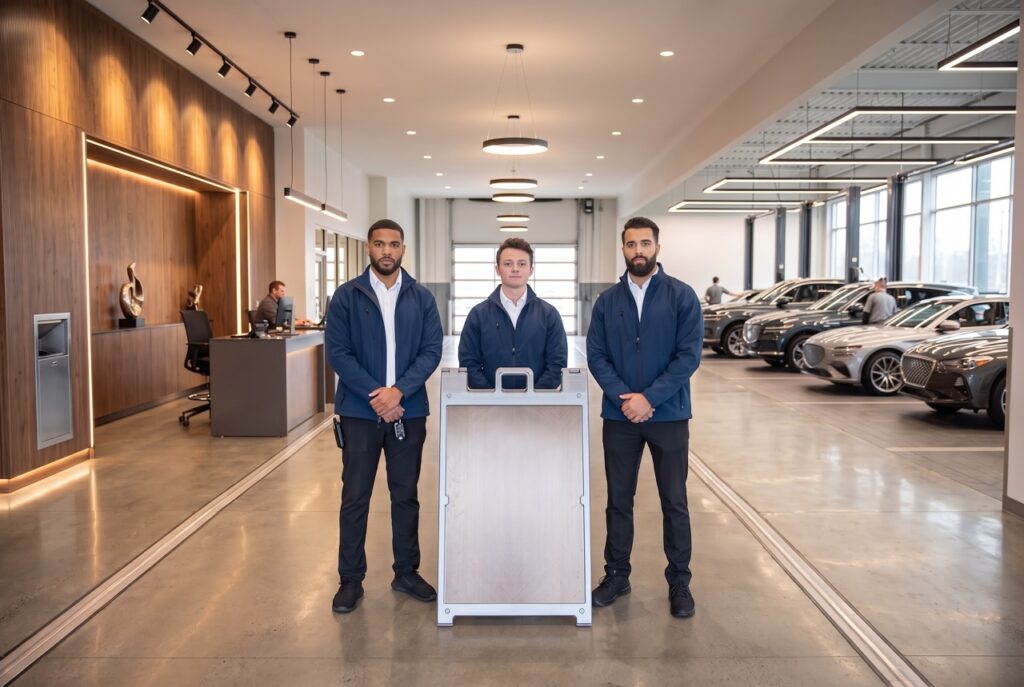
Your dealership’s front line sets the tone. When customers pull onto your lot, anything less than a smooth, professional welcome can quickly create frustration. Disorganized vehicle movement, clogged service lanes, and unnecessary waiting waste valuable time and can derail that crucial first impression. The result? Negative impact on your sales and service operations.
That’s why knowing exactly what a car dealership valet does is essential to solving this challenge. A valet streamlines operations, making sure every car and customer moves smoothly from arrival to departure. They greet guests, park vehicles efficiently, and keep the entire lot organized. This crucial role guarantees technicians and sales staff focus on their core jobs, improving efficiency and customer satisfaction. Read on to see how this specific role can actually optimize your dealership’s success.
Key Takeaways
- Dealership valets manage front-of-house operations, handling vehicle staging, customer intake, and shuttle services to keep workflows smooth.
- The role demands proficiency with various vehicle types, strict spatial awareness, and strong customer service skills.
- Unlike service porters who handle back-of-house inventory, valets focus on customer-owned vehicles and direct client interactions.
- Daily challenges include navigating tight lot clearances, managing peak traffic surges, and maintaining meticulous key tracking.
- Offering an average salary of about $35,600, the position provides a proven entry point into automotive retail.
Core Responsibilities of a Car Dealership Valet
A valet’s daily tasks are diverse, requiring a blend of precision and customer focus to keep the dealership running seamlessly.
● Vehicle Movement & Staging
Valets guarantee seamless vehicle circulation across the facility. They safely transport vehicles between reception bays, service stalls, detailing zones, and staging areas, preventing congestion across lot grounds and nearby public streets. Upon arrival, valets move customer vehicles from intake lines to holding areas, advance cars into repair bays when technicians are ready, and stage serviced, fully cleaned vehicles near the lounge for quick client retrieval.
● Customer Intake & Reception
The valet often provides the first point of contact for arriving customers. They meet guests immediately upon arrival, offer a warm welcome, and ascertain the purpose of the visit. After identifying the reason for the visit, they introduce drivers to their assigned service advisor. A crucial step is walking around the vehicle to log details such as mileage and any pre-existing dents, scrapes, windshield cracks, or wheel rash before the dealership takes custody of the keys.
● Vehicle Preparation & Care
Protecting a customer’s vehicle is very important. Valets immediately install protective items like disposable steering wheel covers, paper floor mats, and plastic seat covers. These covers shield interiors from grease, dirt, and general wear during service. Beyond protection, they run vehicles through wash bays, clean glass, and top off essential fluids such as gas or washer fluid. Such meticulous care helps maintain dealership standards and boosts customer satisfaction upon vehicle return.
● Inventory & Key Tracking
Maintaining order means meticulous organization. Valets attach mirror tags to match vehicles with their corresponding repair orders. Logging key fobs into secure tracking systems or lockboxes is another critical task. This practice prevents misplaced keys and streamlines the process for both customers and staff. Accurate tracking supports efficient workflow throughout the service department and beyond.
● Concierge & Shuttle Services
Valet services also extend to customer convenience. This can include operating customer shuttles and transporting clients to and from their destinations while their vehicle is serviced. Some valets participate in remote pickup and delivery services, swapping loaner vehicles at a client’s home or office. Such offerings enhance the overall customer experience and expand the dealership’s service reach.
Essential Skills and Qualifications
A successful dealership valet combines practical abilities with a strong service mindset.
● Driving Proficiency
The job demands skill in handling various vehicle types. Valets must competently operate diverse drivetrains, including manual transmissions, electric vehicles, and heavy-duty trucks. They navigate these vehicles in busy conditions, prioritizing safety and precision.
● Spatial Judgment
Awareness of surroundings is a must. Valets require keen awareness for tasks like parallel parking, navigating narrow service tunnels, and reversing into tight spaces without causing any damage. Such spatial acumen is vital in crowded dealership lots and during inclement weather.
● Customer Service & Communication
Interacting with customers is a significant part of the role. Professionalism and clear speech are necessary to welcome guests, ease customer concerns, and relay updates effectively to service advisors. Valets are often the first and last point of contact, so their communication skills are essential to a positive customer experience. A friendly, reassuring demeanor can set the tone for the entire visit.
● Digital & Organizational Skills
To keep operations running efficiently, modern dealerships rely on technology. Valets need to be adept at utilizing digital solutions, including tablet-based check-in systems, key-tracking hardware, and inventory-scanning applications. According to a Cox Automotive study, 9 in 10 vehicle owners who schedule their service visit online are highly satisfied with the digital experience. Being comfortable with these tools minimizes mistakes and speeds up workflows. Strong organizational habits make tracking vehicles and keys easier, supporting smoother dealership operations.
● Physical Fitness & Endurance
Given the physically intensive nature of the role, valets need immense endurance to handle extended shifts on concrete surfaces, varying weather conditions, and thousands of steps each day. Maintaining a high level of physical readiness and stamina is critical in this fast-paced automotive environment to meet peak operational demands effectively.
● General Requirements
Key qualifications include a valid driver’s license and a clean driving record. Standard protocols, including background checks and drug testing, help safeguard both the dealership and its clientele, establishing essential trust and operational compliance.
Dealership Valet vs. Service Porter
While both roles involve moving vehicles, their primary focus and interaction points differ. Here’s a quick side-by-side comparison for your reference.
| Feature | Dealership Valet | Service Porter |
| Primary Focus | Front-of-house guest experience and intake flow | Back-of-house lot management and facility care |
| Customer Interaction | High; serves as the first and last point of contact | Minimal to none; works mostly with internal staff |
| Vehicles Handled | Customer-owned cars under repair and loaner vehicles | Dealer inventory, trade-ins, and newly delivered stock |
| Common Tasks | Key tagging, customer shuttling, and door opening | Unloading haulers, detailing, and shop maintenance |
| Work Environment | Service drive, intake lanes, and customer lounge | Sales lots, detail bays, and storage compounds |
Daily Challenges and Management Strategies
The fast pace of a dealership brings specific hurdles, but proactive strategies can overcome them.
● Peak Surge Traffic
During busy times, like early-morning drop-offs or late-afternoon pick-ups, valets handle high volumes of vehicle movement. Managing this without causing lot gridlock requires quick thinking and excellent coordination. Strategies include pre-planning parking configurations, using clear signage, and communicating constantly with service advisors to anticipate vehicle readiness.
● Tight Spatial Clearance
Moving valuable vehicles through crowded lots, especially in bad weather or during high-volume hours, demands extreme caution. Valets often navigate narrow service tunnels and park in close quarters. To manage this, valets rely on their spatial judgment and always prioritize safety over speed.
● Organization & Key Management
One common pitfall is misplaced keys. Avoiding this requires strict adherence to established tagging routines and digital tracking protocols. Implementing a robust key-management system, whether physical lockboxes or digital tracking apps, is essential. Regular audits and clear sign-in/sign-out procedures will help maintain accountability.
● Stress Management
Fast-paced operational rushes can create a stressful environment. Staying calm, polite, and attentive under pressure is crucial to maintaining service quality. Valets need strong time-management skills to prioritize tasks efficiently. Deep breaths, brief mental resets, and a focus on one task at a time help valets navigate hectic moments while keeping a positive attitude. Compartmentalizing tasks and maintaining clear communication with team members further support effective stress management.
Salary Trends and Career Outlook
The valet position offers a solid entry point into the lucrative automotive retail industry with competitive compensation.
● National Average Salary
The average annual pay for a Dealership Valet in the United States is about $35,617. When broken down, this translates to about $17.12 an hour, $684 per week, or $2,968 per month. This average provides a solid baseline for compensation in the role.
● Typical Salary Range
Salaries range from $19,500 to $49,000 annually, but most dealership valets earn between $30,000 (25th percentile) and $40,000 (75th percentile). Top earners, representing the 90th percentile, can reach annual salaries of $45,500 across the United States. Factors like experience, location, and dealership size often influence these figures.
● Top-Paying Cities
Specific geographic areas show higher earning potential. For instance, Berkeley, CA, offers an average annual salary of $43,611 for valets. Aspen, CO, also presents a higher average pay at $43,051 per year. These figures suggest that location can greatly affect a valet’s earnings.
● Career Growth
Many view the dealership valet position as an excellent entry point into automotive retail. It provides hands-on experience, a deep understanding of dealership operations, and strong customer-interaction skills. Individuals starting as valets often transition into other roles such as service advisor, parts specialist, or even sales representative. The experience gained in vehicle management and customer handling makes valets well-suited for upward mobility within the automotive industry, offering a clear path to career advancement.
Ready to Level Up Your Service Drive Operations?
Building a transparent, high-performing service drive needs proven systems, continuous staff training, and real-time guidance. Through the Service Drive Revolution Live Academy, your entire team can access live, twice-monthly training sessions, 200+ hours of industry-best Service Drive training videos, and interactive Q&A sessions designed to solve the exact operational hurdles on your desk today.
Stop guessing and start building a scalable, profitable Fixed Ops strategy.
Need help updating your playbook? Explore how the Service Drive Revolution Live Academy can transform your shop’s efficiency, hiring, and bottom line today.
Frequently Asked Questions (FAQs)
A dealership valet manages vehicle movements on the lot and serves as a primary point of contact for arriving customers. They greet guests, safely park and retrieve vehicles, and keep cars clean and ready for delivery.
Core responsibilities include checking in vehicles, tagging keys, and placing protective covers inside customer cars. Valets also perform walk-around damage inspections, drive cars through wash bays, and stage completed vehicles for owner pickup.
Strong driving capabilities are essential, including the ability to operate both manual and automatic transmissions safely. Valets also need strong spatial awareness for tight parking spaces, strong organization for key tracking, and solid customer service skills.
A service valet specifically handles the vehicle intake flow for the maintenance and repair department. They welcome customers dropping off cars, route vehicles to assigned service bays, and sometimes drive loaners directly to a client’s home or office.
A valet works in customer-facing areas to manage vehicle handoffs and support client visits. Conversely, a porter focuses on back-of-house lot management, such as unloading transport trucks, maintaining new stock, and servicing facility areas.
Bottom Line
Lot efficiency determines the pace of your profit. So investing in a professional dealership valet keeps your service lanes clear, your inventory organized, and your customers getting a premium experience from the moment they arrive. Use this breakdown of duties and market salary rates to fine-tune your staffing and reclaim wasted hours. If these tips helped clarify your next move, please share this guide with a colleague. Spreading the word helps us continue providing the high-impact advice you need to win. Stay tuned for more!
Achieving and exceeding your goals is possible when you have the right systems in place. With Service Drive Revolution OnDemand, you’ll gain access to the proven systems that have made thousands of SERVICE MANAGERS IRREPLACEABLE. Start transforming your department today!
Need help updating your playbook? Let us know how we can support your team’s growth.
Book a 15-minute strategy session with our team. We’ll explore how to unlock your dealership’s real value.