Service Drive Revolution — Episode #379
Official Full Transcript
Host: Chris Collins
Guests: Adam Krey and Chris Hogland
Published: October 12, 2026
Duration: 1:01:00
Listen on Apple | Listen on Spotify
Continuing our deep dive into fixed operations growth and department capacity, Service Drive Revolution — Episode #379 tackles a universal dealership question: Does your service department really need more traffic, or are you just leaking the traffic you already have? Host Chris Collins, alongside guests Adam Krey and Chris Hogland, breaks down the hard truths about marketing spend, appointment management, and why driving more cars onto a broken service drive only accelerates customer loss.
Key Takeaways & Highlights
- Fix the Leaks Before Pouring More Water: Driving hundreds of new leads into an unoptimized service lane with poor communication and slow turnaround times only burns your local market reputation.
- The True Cost of No-Shows: Unconfirmed appointments and empty slots kill daily shop pacing, yet many dealerships lack a clean follow-up cadence for missed bookings or overdue maintenance.
- Marketing vs. Retention: Acquiring a brand-new customer is far more expensive than retaining an existing one. True volume growth comes from building lifelong “key-throwers,” not constant one-and-done ad campaigns.
- Aligning Capacity with Demand: Before increasing your advertising budget or pushing for more drive traffic, ensure your multi-point inspections (MPIs), technician capacity, and advisor workflows can actually absorb the extra work.
Why More Traffic Can Break a Weak Service Department
Many fixed operations directors and general managers immediately react to a dip in monthly revenue by demanding a bigger marketing budget to drive more traffic. However, increasing car count without operational alignment creates severe bottlenecks.
1. The Capacity Trap
When marketing campaigns successfully drive a surge of new appointments, repair orders land on a shop floor that may already be struggling with technician efficiency or parts delays. If your workflow cannot handle the influx, promise times slip, customers grow frustrated, and trust is destroyed permanently.
2. Maximizing What You Already Have
Before spending thousands on top-of-funnel acquisition, dealerships must audit their existing database:
- Declined Work Follow-Up: Systematically reaching out to customers who left with uncompleted recommended repairs.
- Overdue Maintenance Captures: Re-engaging local clients who haven’t visited in 6 to 12 months.
- No-Show Management: Actively following up with missed appointments to get cars back on the schedule.
Financial & Operational Impact of Traffic Optimization
Balancing inbound marketing with internal shop efficiency stabilizes gross profit and customer lifetime value:
| Performance Area | Operational & Financial Outcome |
| Effective Labor Rate (ELR) | Protected as structured inspection processes replace random discounting to chase volume. |
| Customer Retention (CSI/NPS) | Rises sharply because vehicles are delivered on time without communication breakdowns. |
| Advertising ROI | Maximized because every marketing dollar supports a streamlined, high-converting service drive. |

Frequently Asked Questions
If your shop floor, parts department, and advisors cannot handle the current volume efficiently, adding more traffic only creates longer delays, broken promises, and burned customer relationships.
Management should audit declined work, follow up on unconfirmed or missed appointments, and ensure internal workflows can absorb increased labor hours.
Acquiring a brand-new service customer is expensive. If the initial experience is poor, the dealership wastes marketing dollars on a one-time visitor who never returns.
Final Thoughts
Driving traffic to your service department is only valuable if your drive can successfully convert and retain those customers. Stop looking at marketing as a magic pill for a broken process; fix your internal capacity, tighten up your follow-up systems, and build an experience worth returning for.
Actionable Takeaways
- Audit your database today: Pull a report of all unclosed declined work and missed appointments from the last 30 days before spending another dollar on external lead generation.
- Check shop capacity: Ensure your technicians and advisors can comfortably absorb a 15% increase in workflow before turning on high-volume advertising campaigns.
Ready to Strengthen Your Fixed Ops Systems?
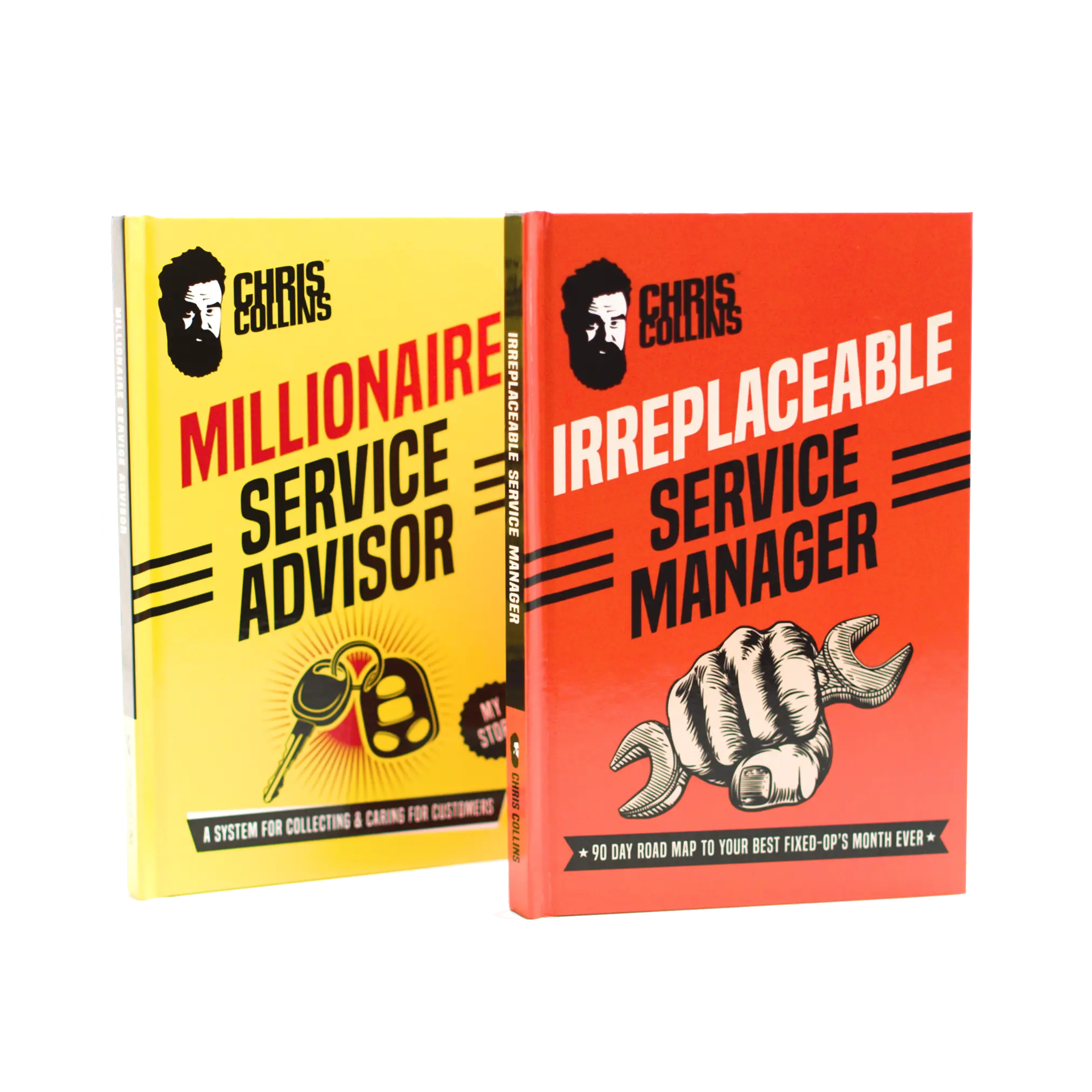
Achieving and exceeding your goals is possible with the right systems in place. With Service Drive Revolution OnDemand, you’ll gain access to the proven systems that have made thousands of SERVICE MANAGERS IRREPLACEABLE. Start transforming your department today!
Need help updating your playbook? Let us know how we can support your team’s growth.
Book a 15-minute strategy session with our team. We’ll explore how to unlock your dealership’s real value.
Service Drive Revolution – Episode #379 Transcript
Higher RO Counts & More Customers | SDR #379
Service Drive Revolution
Hosts: Chris Collins, Hogi, Adam Krey
In This Episode
- Why relying purely on new car sales volume is causing traffic to drop in service departments, and how losing customers after the warranty period impacts repair order counts.
- The real truth behind customer acquisition: why driving new traffic is expensive ($50 to $200 per customer) and why focusing on retention is always a better strategy than chasing new leads.
- A comprehensive breakdown of multi-channel traffic generation tactics, including effective reminder systems, phone follow-ups for declined work and lost customers, and purifying your database.
- Why independent shops outperform dealerships on social media by focusing on taste and lifestyle storytelling instead of standard car photos.
- The secret to utilizing Business Development Centers (BDCs) as a force multiplier for outbound calls, tracking no-shows, and managing customer follow-ups effectively.
Opening & Community Catch-Up
Introduction and Football Banter
Chris Collins: Hey! Welcome everybody to the big show here on Service Drive Revolution. The show for anybody with a service drive. I’m Chris Collins. Hogi the Oklahoma Smoke Show is here. Say hello to everybody. Adam.
Adam: Hello everyone.
Chris Collins: Today we’re going to be talking about how to drive traffic into your service drive, a topic that’s very popular. How do I get more customers into my service drive? It’s pretty good lists. A lot of things to it that I think will spark some ideas. You’ll take away at least a couple of things that you can apply. So should be fun. And Adam was telling us that it’s a Bears week. Bears Packers rivalry week.
Adam: Yes. And I said, I don’t think anybody wants to talk about football and you’re convinced that they do. It’s the, it’s the oldest rivalry in the book, man. You just, you just have to. Now I won’t ask anybody to start a chant at wherever they’re at, but you can in your head. How many Packer fans do you think that we have listening? I would say how many Bears fans do we have listening right now? For one year. It doesn’t matter who we’re playing. We are starting the chant. I was at last Sunday’s game with mom and it was awesome. Just how just no matter what, what quarter doesn’t beginning in the first or whatever, just the Packers chant just starts. It’s pretty awesome.
Chris Collins: What’s the Packer chain?
Adam: Packer suck. Just takes the whole stadium. I was just saying Packers stadium tailgate. Where were you guys didn’t play the Packers?
Hogi: Nope.
Adam: Doesn’t matter. It’s in anticipation. Oh dude. Win or lose doesn’t matter what game it is. It’s awesome. Chris Collins: So yeah, I think, uh, I think, uh, all is right with the world. Actually gonna say that the Packers kind of live right free in your head. Sure. That’s okay. I think who was it? Was it, uh, Luther burden said, uh, we just want to bring in the pain to the, where they quit, we just want to make them quit something along the lines. I’m all for it. It’s Sunday should be a good game.
Hogi: That’s funny.
Chris Collins: It is. Well, if you’re listening to this on like Monday, when I think most people listen to it, just a little reminder, we go live on Wednesday. So we’re live right now and doing this at 10 o’clock Pacific. That’s when we do it every Wednesday. Kind of fun to hang out. We do have the chat going. So if you have any questions or anything you want to talk about, please put it in the chat.
Addressing Disclaimers and Lot Damage Misconceptions
Chris Collins: Our buddy, a roller pig says question of the day. Let’s talk about it. Let’s talk about disclaimers on repair orders that protect us from the savage clients looking to say it wasn’t like that until you blank blank blank. It’s so funny. I rented a car at, uh, the airport in Phoenix and they have those things at the car rental place now, like some of the dealerships are buying where you’re driving it or something.
Hogi: Yeah.
Chris Collins: Yeah. It also is, it’s just funny how as an industry, we always throw the baby out with the bathwater, like we’re talking about one weirdo in like six months or whatever, like, you know, we must do it on every single one. I remember, uh, a management meeting when I was running crevie. So I would have a weekly managers meeting and I would sit at the end of the conference room and I don’t know, I had like 20 something people in there, managers, and one day I went into the meeting and it was kind of like, you could tell something was going on.
Like nobody was making eye contact. It was just kind of interesting. And then the union leader who was the GSM, like once I sat down and kind of started the meeting, he like, you know, wanted to talk representing everybody about how it was this new thing called blogs. And people were posting on blogs, how to get over on us for a lot damage. Flavor of the day. I had the financial there, you know, and I’m like, I pointed at policy for the whole store, like an even year to date.
And I’m like, we’re number one in the country and we’re making one point something million a month in net. We’re, we’re, we’re okay. Like, yeah, it’s not the blogs, but yeah. It’s okay if people, if the perception is, is that we fold and we prioritize the customer, we’re good., like we don’t want to be right. You know, and we did walk arounds really good. And, you know, I think part of the walk around being effective is the advisor pointing it out and a lot of service drives, the advisor doesn’t go out to the car with the customer.
Hogi: Nope.
Chris Collins: So the customer’s inside at the desk, advisor goes out. Part of preventing lot damage is documenting it, but also it’s pointing it out to the customer as you do the walk around. Making that connection.
Hogi: Yep.
Chris Collins: That experience in itself.
Hogi: Yep.
Chris Collins: And so, and then I, those, those things that you drive through that do the ultraviolet picture, whatever it is, it’s doing.
Hogi: Yeah.
Chris Collins: Um, I don’t know. I feel like that’s a lot of to do about nothing in a way, like. I’ve still yet to see one of those scanners. I know they were trying to do it in some trucks overseas for some of the PDI. They’re really great to drive through because you, they’re really tight. Try not to hit it.
Hogi: Yeah.
Chris Collins: Yeah. I feel like what’s funny though, is you’re, you’re driving through it on your way out and then you’re driving through one on your way in.
Hogi: Yeah. It’s like a pre and post kind of trip.
Chris Collins: Yeah. So I don’t know. Do you guys have any thoughts on that? I don’t know. I think that you should be documenting it and pointing it out, but there is going to be that customer every once in a while.
Hogi: Yep. Sometimes people are people. They just, uh, you know, yeah, you’re going to have one. You’re going to have them here and there. And then, uh, you know, if you refuse a customer to come back, like if they had a prior history, no, like, so the, the, the, the, the, the, the, the, the, the, the, we have a lot of clients. I mean, one of the fun things about what we do is we get to see different people in the way they handle things.
Chris Collins: Yeah. Right. The way they fire, the way they hire, the way they treat customers and all that. And there are dealerships out there that fire customers. They put them on a blacklist. You are not allowed to come back. And then there are dealerships that never put anybody on a blacklist hardly ever. And so the crevie is that I worked for as a family never put anybody on a blacklist ever, like it was, it was rare that that would happen. Like people could go pretty far in their behavior and still they were allowed to come back.
Hogi: Yeah. No, I think the, like, I can’t think of one or two times, uh, like parting ways with the customer, but it was like, one of them was, uh, you know, they were like attacking service advisors and stuff like that. Like it was, uh, it wasn’t a, I think you should, but yeah, there’s a pretty long leash to that though.
Chris Collins: Never over a scratch bumper.
Hogi: No.
Chris Collins: No, even people attacking or cussing, like, you weren’t allowed to, uh, find the only person that was allowed to fire him was me. And I was told never to fire. Like that was it.
Hogi: Yeah.
Chris Collins: I find that the dealerships that have that mindset are the ones that sell the most cars. Like there’s a commonality. If you go to like Longo Toyota, Fletcher Jones, Crevie, like the dealerships that are number one in their brands, one thing that you will see, and you know, I’ve worked with all of those at one point or another, basically you will see an overwhelming focus on customers and customers can get away with stuff and then it just is what it like, they’re not, uh, they’re going to focus their time on just the experience pure.
And they will let go of a sales person or an advisor or tech that don’t take care of customers. So like if, if you get bad reviews, you, you know, you get one or two shots and then you’re gone. If you have comebacks, just not tolerated. There’s just an expectation of how, how the customer service goes. And it’s not about being right. It’s, it’s about the long game and you know, your reputation in the marketplace, how people feel.
Hogi: Yeah. I think, I think, uh, if damage is happening with any type of consistency or you’re getting accused of damage with any type of consistency, it’s just a symptom of something more, you know, like, um, when, when you’re having a lot of damage yet to your point, like the advisor walking around the car pointing those things out, but it goes beyond that too. Cause if, if the customer is, is walking around the car with the advisor and things like that, there’s a better relationship with connection preventative and, uh, yeah, I think you could, uh, if you’re having a lot of that, I bet you probably have inconsistent CSI. I bet you have, uh, customers complaining about communication, like consistent inspections.
Chris Collins: Yeah. I agree with that. You know, you, uh, kind of bring up a point in this, um, this is something that I’m, that I’m fascinated with. And I don’t feel like anybody’s written a good book on this, but the energy of the department attracts that. Like the reason why we didn’t see a lot of that, or you don’t see a lot of that in the higher performing stores is because the energy is just different. It’s very calm.
There’s an order to things. Customers aren’t left to, to swim on their own. In a sense, there’s all, there’s always kind of somebody attached to them. The, everything is out in the open and well lit. And like, the ones where it’s disorganized, you can’t find anybody to help. And nobody answers the phone. Like there’s a direct correlation between the one that has a hard time answering the phone and lot damage.
Hogi: Yeah.
Chris Collins: Yeah. Like it’s just, it’s just how it is. Right. It’s just like that sort of energy. There’s an energy to the dealerships that get taken advantage of versus the, the ones that are like, you know, okay. Ones that are intentional versus ones that are not. This is where we’re going with this, I guess. What’s that book? A broken windows broken broken by Michael Levine, the famous Michael Levine. Do you ever hang out with him? We sell the office all the time.
Hogi: Yeah.
Chris Collins: He’s so funny. Is he? I’ve got so many things from him. It’s been a lot of time with him. He’s a really smart guy.
Hogi: Yeah.
Chris Collins: He, uh, one time we had him on SDR and, uh, a couple years ago, wasn’t he? A mic check. And he goes one, two, three, four, five. That was it. That’s all you get. So be ready. Like also went to a pretty high end restaurant that I frequent with him. And, uh, right when he sat down, he’s like, uh, I’m on a wet hot, wet towel, which isn’t something that happens there. And guess what? He got a hot, wet towel. It was pretty funny. Like, but he has all these systems for the way you look at your business and how you analyze things. And he’s very to the point. Like, I, I, I love it. I love hanging out with him.
Hogi: Yeah.
Chris Collins: Yeah. Broken windows, broken businesses, a great book. Everybody should read it.
Hogi: Yep.
Chris Collins: But I think that, yeah, I think lot damage, like when people bring that up, it falls right into that. Um, there’s other things that are driving. So the point of that, the story I think you’re referencing is like, if, if somebody throws a rock through the front of your business and you leave it like that, then you’ll, you’ll attract graffiti, you attract a car up on jacks. And all of a sudden your business looks like a junkyard versus if you put up a sign right away under repair or, you know, you board it up or you do something and you show that it’s being fixed and you fix it very quickly, get rid of graffiti very quick, then it doesn’t attract more graffiti.
Hogi: Yep.
Chris Collins: And so in a, in a service drive that’s disorganized, what it’s just, all those things I want to track the other riffraff.
Hogi: Yep.
Chris Collins: I heard that. That’s cool. Do you think that that’s a, what McRoller pig was thinking we were going to answer? Probably not. Hopefully that helps. I just don’t, don’t focus on a, just do walk arounds, do dam and, you know, write down the damage and all that and focus more on making friends with customers in that process and you’ll get less of that.
Hogi: Yeah.
Chris Collins: Yeah. The more the advisors are going out to the customer, the more they’re making friends with the customer and not treating them just like a number and running them through the more organized everything is the less lot damage happens. Hoagie: Yeah.
Chris Collins: Because of us creating it and just perception from the customer. It’s very much a perception thing. Like I know when I go somewhere and it’s chaotic, I’m always like, Oh, did I get what I paid for? Like you’re, you’re just, you’re in, in that kind of mode of like, and there’s a level anxiety in that whole experience too, that you’re just like, what just happened? It’s funny. It was good. Good question.
Top Dog Event & Fun Community Moments
Chris Collins: Um, okay. So then, uh, we’re really a few weeks away from top dog, right? Just a couple two weeks.
Hogi: Yeah. It’s a couple, man. It’s going to be incredible.
Chris Collins: Yeah. You can’t come if you didn’t sign up already. Cause we’re actually hoping a couple of you that signed up don’t come. Me and Adam are going to be outside. We left the, we have to give you guys a couple of. We left the registration opened too long. Nobody was counting how many people, so we’re, we’re literally wiring the building so our team can watch the event from other offices in here. Just so we, you know, have a good problem for their clients.
Hogi: Yeah. That’s a good problem.
Chris Collins: I do wish the library was a little bit bigger. The next library we built will, will, you know, have a little more capacity, but going to be really fun. The speakers and the way that it’s curated and the surprises that we have. I’m very confident and we say it every year, but this year will be the best top dog we’ve ever done.
Hogi: Yeah. Just with everything going on in the industry right now, this isn’t going to be one you’re going to want to miss. Like, uh, I can say with all confidence and you know, I know we’ve talked about that thing, like it is a thing where we meet after every top dog, as soon as it’s over and you know, collaborate and try to focus on how to make it better. It can see this improve.
Hogi: Yep. And it’s one thing that I would say, uh, we’re rude, you know, um, we’re really, good at, at making it better year after year, but just like with everything that’s going on, uh, you’re really going to be able to zoom out and gain a new perspective on, uh, how to be more effective in your business and what that kind of looks like considering all the changes in the industry right now. And for that, I’m really excited.
Chris Collins: Yeah. And, the, the theme is, uh, transcending the service drive, thinking, thinking beyond your department and that way. And that is definitely the content that we’re, that we’re doing and the speakers. You will, you’re going to leave inspired and with some tools and ideas, how you can be the solution and make a difference. It’s exciting. Really exciting. It’s exciting to see the team help put this all together. It’s going to be a really good event.
Hogi: Yeah. We’re good at events. We should throw more events. There’s a business for us throwing events that we haven’t, because not only that, we like it, we like hosting people. Like one of the, like, you know, how many of, of our team members just like cooking for people. Hoagie: Yeah. Like when you come here to a bootcamp, like we’re Alex is making you fresh cookies, which she’s always testing a new batch.
Chris Collins: Yeah. The coffee, like, um, that was so great about Amy Grant too is, uh, so we had Amy Grant in for books that changed my life. If you don’t know who Amy Grant is, it means you’re 30 or younger. Cause some of the team members here didn’t know who Amy was. And I’m like, well, ask your parents. But growing up in a Christian household and listening to Christian music, Amy Grant was a legend to me.
And so having her on books that changed my life was incredible. But the thing that happens when people come here is they want to, they don’t leave, they want to stay like in, uh, Ryan made her a latte and like, we have this coffee we get from Seattle and he’s really good at, you know, making lattes, he’s a great barista, but also the art and the whole thing. And I think she had three lattes when she was here. She took one to go.
Hogi: That’s awesome.
Chris Collins: Yeah. We love to feed people, we love to create experiences. Uh, we love, uh, you know, just showing people books and that sort of thing. And super fun.
Hogi: Yeah. It’s always funny when, uh, when we have the, those type of celebrities here and they instantly are like, Oh, this is something I’ve never experienced. Like a lot of the PR people will bring their clients here to break up their press tour just because it’ll be something they’ll talk about. Like they’re like, can I come back? Can I, you know, is this, you know, is it private? Is it public? What is it?
And it’s like, no, it’s private, but you know, you can, we can talk about you coming back like in looking at books, that sort of thing, but it’s, uh, it’s something where we really love doing is like making an impression on people through experience, so we should figure out how we can make that into a business of all the other things we’re doing. Something else, you know, figure it out. You know, you know, uh, who was it? That sent me a video of this thing they do in Japan called book raves. Did you guys see that? I sent that to you. Oh, you sent that to me. Hoagie: Yeah.
Chris Collins: Yeah. Book raves. Yeah. It’s crazy, right? They, they, uh, they like performative book reading. Like they’re playing a record and then people are reading.
Hogi: Yeah.
Chris Collins: Hmm. Yeah. It’s like be seen reading in a round. Yeah. Cause think about that. Like there’s a, there’s a thing going on there, right? So he’s like, well, what is he reading? Like that tells you a lot about him sort of a thing while they’re listening to music.
Hogi: Yeah. They play records. They like shut down a nightclub and you bring, you know, you bring your favorite book and, uh, yeah, it’s really popular in Japan. And then, uh, I, I saw it on some random, like Maria Shriver’s Instagram or something like that. So somebody like that, I think it was Maria Shriver is trying to start him here in LA.
Chris Collins: Interesting. And what kind of music are they playing with that book? Is it like complimentary to it or what?
Hogi: I’m going to guess it’s more like trance trip hop, like slow tempo, like what you would hear in like a hotel lobby, probably there’s a lot of records. There’s a lot of places that you can go in LA that are spinning those kind of records and it’s just about doing your work or so the music doesn’t have a lot of music, but it’s, it’s, it’s, it’s more just, you know, beats about the speed of your heartbeat, so they’re not amping you up. They’re not slowing you down. They’re just kind of moving your form. Hypnotic. It’s more hypnotic. The only rule is, is you can’t have a Kindle or bears fans.
Chris Collins: Oops. I’m out. The packer fans fall in that case. I’ll bring the cheese grater. I talked to a dealer. Uh, I, I showed you the numbers, but a dealer in Oklahoma and I was telling him that he lived close by and I was saying, Oh, he’s a cheap span and it ends up, he’s a Packers fan from Florida, Florida. I, that is so weird.
Hogi: I know. It’s always weird to me when people, when you meet somebody, you’re like, what’d you grow up in like LA? I’m like, Oh, you lived here your whole life. Yeah. Oh, who’s your team? Just dealers. Why? Why? And they’re like, well, you know, I, my dad or I watched them or something like never makes sense. Hoagie: Yeah. Same thing with cowboy fans. Like there aren’t that many people in Dallas. There’s more Cowboys fans than there are people in Dallas.
Chris Collins: Well, what was their, their whole adage thing was like, Oh, that’s America’s team. I’m like, okay. It’s great marketing.
Hogi: Yeah. Put a star on it.
Chris Collins: Yeah. Nobody’s saying that about the bears. Like nobody’s saying bears. And nobody’s saying anything about the Seahawks. I don’t know. They’re doing awesome in my fantasy, like man, so keep on winning. They are. They’re doing good.
Academy Updates & Consistent CSI
Chris Collins: What, one more thing, uh, before we get to the topic of driving traffic is next week on the SDR Academy, we’re going to be talking about consistent CSI. Consistent CSI. And so if you’re not signed up for the academy, you can go to Chris Collins, inc.com and sign up. We do it every other Wednesday. The, um, the last two were so good.
Hogi: Yeah. They’re really, really good. What to do at the desk. Like there’s so many nuances to that.
Chris Collins: Yeah. Really is a science.
Hogi: Yeah.
Chris Collins: Yeah.
Hogi: Yeah. It’ll be a, that it’s going to be a fun conversation. And I know, you0 know, there’s a lot of people with a lot of questions. Most manufacturers are starting to go towards some type of NPS and then. Chris Collins: Yeah. That’s a thing too. Hoagie: Yeah. For sure. You know, it’s all kind of caveats to learn and, uh, but, uh, but yeah, it’s a, it’s a fun conversation. It’s a good group. It’s a growing group too. For sure. Sure. Be exciting.
Core Topic: Driving Traffic Into Your Service Drive
Chris Collins: So talking about driving traffic into your service drive. And if we just want to unpack why that is a subject is a lot of dealerships in the last three or four years have not been selling a lot of new cars in, in a service department, in a dealership, just like in truck, it’s dependent on you selling into the marketplace to get them back. Most dealership service departments lose their customer. They lose 80% of their customers once they’re out of warranty. So you usually have those customers for the three or the four years.
They’re there in warranty. If we’re not selling a lot of cars, then those customers are going to independence and they’re not coming to the dealership. So traffic is down. And so in the, you know, in the dealerships that aren’t doing a good job of selling cars, you’re going to feel that in the service department the next year. It’s usually like a delay of about a year, but you’re going to start to see that kind of draw down and a lot of that too, of losing the customers to independence is the customer experience.
So we want to talk about the fact that we’re not selling cars, but it also is we’re not retaining those customers to keep them coming back in that way. And so we’re, we’re seeing a decline in repair orders or that’s the conversation often. Now it’s always been the conversation. Whenever somebody’s service department is struggling, there’s kind of two things that are the default solutions that people perceive. One is advisor training and the other is I need more traffic. Neither one of those two things usually are the actual answer.
So most of the time, what we would do is focus on what you’re doing with the traffic you have and usually that’s enough. Right. But we’re going to pretend like that’s not the answer today. And we’re going to talk about how you would drive more traffic. We should understand that getting more traffic is very expensive. It’s way easier to keep the customers that you have than to go out and find traffic.
It’s very expensive. So it could be between 50 and 200 dollars a customer to get them in. And then if you aren’t good at retaining them, a lot of times you only get them once or twice and then they’re going to leave again. So you’re spending all this money to get a new customer. They will follow the same pattern of retention as your other customers. So retention is always a better strategy than acquisition of new customers.
Hogi: Yeah. That way. Right.
Chris Collins: But let’s we’re going to table that we’re going to put that to the side and we’re going to say, no, how do we drive more traffic? And so I have a pretty good list here and you guys can add to this and tell me what you think. So the very first one is having reminders. So just reminding customers and there’s a bunch of ways to do reminders. And I don’t think one works better than the other. You kind of need to be able to do them all. So one way of reminding customers is to make their next appointment when they’re in right.
And then putting the sticker there for them. And that stuff still works to this day. Those sort of reminders. Another form of reminders is emails. Then if emails don’t work letters, oversized postcards and then phone calls. So if you want to have a really effective system for getting customers back and reminders, it won’t be just emails. Like a lot of times the stores that are just doing emails, their open rates are really low because it’s very spammy and they’re not telling a story.
There’s nothing interesting about those emails and it’s just coupons and people see no value in it whatsoever. And it kind of dies down. So, you know, telling a story also is a big part of that. But the phone call, the physical letter, all of that in combination works really, really well. The other one is when we talk about phone calls, there’s three different kinds of phone calls, in my opinion, off the top of my head.
One is the reminder and the phone call can be very effective. The other is customers that declined work and then customers that we’ve lost, which is another form of reminder. But let’s say they’re due for maintenance every six months and you haven’t seen them for eight months. That’s a customer that we’ve lost. Calling those customers and tracking them down is more effective than letters. It also helps you update your database. So if you call them and they say, hey, I traded it in, I sold it, I gave it to my kid, whatever it is.
Hogi: Heard some of that stuff. Yeah.
Chris Collins: So you’re not spending money on physical mail for customers that actually don’t even have the vehicle anymore. I still get stuff from my 2011.
Hogi: Yeah.
Chris Collins: And I don’t have it. You can buy an extended warranty or whatever. And it’s like, dude, I haven’t had it since.
Hogi: No, it’s about to come out.
Chris Collins: Dude, it’s been gone. So purifying your database in that way is an important one. So reminder, letters, emails, phone calls, stickers, all of that works. The next one is social media. And we have coached this before. I find that the independent shops are way quicker to adopt this and make it effective than dealers, because a lot of times the face of the dealership doesn’t care about service. They care about selling vehicles. And so they’re not doing social media where if you have an independent shop and the owner of the shop is online doing videos, it’s very effective. And it’s a very low cost way of doing marketing. Anyone can do it.
Hogi: Yeah.
Chris Collins: And then the thing that you want to understand about social media, like the reason why dealerships do such a terrible job in social media is they’re just taking pictures of people with the new car they bought or they’re talking about cars. They’re not telling any story. They’re not telling a lifestyle or taste. One of the things that is a big deal with online influence currently is taste, like sharing your taste in things.
Like I was talking to somebody that I’m in a group with and he’s literally a billionaire has a has a Instagram that he gets. I don’t know. He’s a million subscribers and he gets tons of views on his videos and he’s giving tips about business and that sort of thing. But his thing is flat or whatever. And I was I was telling him, like, one of the things that I love when I hang out with him is we talk about books. He’s written a bunch of books and he’s a connoisseur of old collectible books.
But he also has Porsches. He has a couple of yachts. He has houses in different cities and he collects art. And so, you know, a lot of the younger kids that are looking up to him online trying to learn how to be successful don’t know how to go into a restaurant and order a bottle of wine. And I was telling him, like, because what his point was like, and I get this because I feel the same way, I don’t want to show off.
I don’t you know, I feel like he feels the same way. And we’re very similar in our sensibility is like. I don’t want to show people my lifestyle because there’s a good chance that that demotivates them and makes them feel inferior. I also don’t like how social media works where people are just showing off all the time. And it’s, you know, the Ferrari they’re driving isn’t even there as its lease.
The private jet that they’re on, like I’ve flown private a ton of times and have pictures of myself on private jets. I don’t own a private jet. Like it’s my friends jets that I’ve been on. It’s not me, but I could make it look like I have a private jet. Pretty easy, right? Like, and so there’s just a lot of that in that. What, what does that do to somebody if I’m showing them I’m on a private jet? Well, it just makes them feel inferior and it it’s glorifying me in a way that really has no substance or context because it’s not even real. It’s a it’s a illusion in a sense. And a lot of what’s online is an illusion. So he doesn’t want to brag. He doesn’t want to show off his cars. But there’s there’s taste like his taste in art.
Like it doesn’t matter whether he has a five million dollar Picasso. How when he’s collecting art, what is his mindset? What is his taste in sensibility when he goes in and orders a bottle of wine? What is he looking at? Like, how is he if you’re with a group of six, how do you order a bottle of wine for everybody? Like, you know, a lot of kids don’t know how to order a bottle of wine. They don’t know how to host a thing. They don’t they don’t know, you know, if you are going to collect Porsches, they don’t know where to start, that sort of thing. And so a big part of what pulls online is is taste. And so.
Unfortunately, in a service drive, nobody is. Sure, if they have taste, they’re not sharing it and they’re they’re not talking about the lifestyle and the nuances. People love the nuances. They love the story behind something. If you want an example of that and it’s a video that we reference all the time is Johnny I’ve made the the the podium for the auctioneer for was it Christie’s? It was Christie’s. If you just look that up, Johnny I’ve Christie’s podium on YouTube and watch how they tell that story about a freaking podium. Like, but they’re they’re, you know, interviewing the woodworker and showing the hundreds of different parts that go into this thing and the psychology of the height, the psychology of how many different people have to go up on it, what it serves in the bigger thing.
All of a sudden, it’s not just a podium, it’s the center of the universe in an auction. And so a lot of times we we think about cars as maintenance. We think about it as this transaction. But if you want to be good at driving traffic and differentiating yourself in the marketplace, you got to be telling a story about the lifestyle and what people are doing with the vehicles and how they’re living and like that sort of thing. And so it’s about taste. It’s about lifestyle more than anything else. So somebody’s got to be the face of that. You got to constantly be looking for those stories. I mean, just look at how much time this takes us every week to do this. It’s a commitment.
Like your schedule works around that sort of thing. But I would say there’s I mean, what’s interesting about this show that we do is it gets more downloads and views than anything else in the car business more than automotive news. Like you can go through the list and it’s because we’re humans and we’re talking about real things and we’re not pretending to be something we’re not.
And we’re you know, we have an empathy for the audience and we want to help. Like I’ve said from the very beginning of this, I want to give away better information for free than other people are charging for. And that’s you know, that’s kind of always been the goal. And so, you know, nobody could nobody can come in and do what we’re doing because we’ve been doing it so long, so consistently that, you know, it’s not even close. Now we’re trying this new thing where we’re going live every week.
We don’t get as many people on live as we want or whatever, but that’s a thing. You know, over time, you got to continually do it and build it, try to make it better and that sort of thing. But overall, this gets more views and more downloads than anything else in in automotive about the industry, right? So I mean, it’s a model for that. Now, the backside of that on the social media thing is that that has changed in where there used to be something called SEO, which is search engine optimization in a sense of when somebody types in, where can I get tires in Los Angeles or whatever it is, you can do things with your website to get link backs, to use keywords, to optimize your website where you come up on the first page without paying for the ads. You rank high.
Well, nobody’s searching on Google and being in that anymore. They’re searching in AI. And so the equivalent of search engine optimization for AI is called AEO. You can, I mean, do a test, but you can type in questions about fixed stops and watch how we come up. Most of the time, we’re the only ones that come up when you’re testing it across all the models. So chat, GPT, Grok, all of them. We’re manufacturing that. So we we own tons of media sites. We are doing press.
Like we’re doing a bunch of different things that create that outcome to the degree that we’re at the forefront of a new, a new thing. And we’re starting to do it for our clients. So we’re, we’re helping them gain that in the marketplace. Because the interesting thing about Google search versus AI is people have a personal relationship with AI. And so when they’re asking a question, they’re asking it in a different way. It’s not just being polite.
Hogi: Yeah.
Chris Collins: And then the AI is it knows about you in a sense. And so there there’s a, there’s a completely different relationship and it has, it has more credibility than in Google search in a lot of ways. So, you know, that’s, that’s something that we’re starting to do. If you need help with that, you can reach out and we’ll talk to you about it. We haven’t done it for any outsiders yet, but this will be something that we will start doing for businesses, service departments, furniture stores, whatever it is, because we’ve built the, it takes a lot.
I mean, it’s taken us over a year to build the infrastructure. And we’re still always learning and figuring it out because it does change, but you, you got to be good at the AEO part of it. Um, another way to drive traffic is events. We talk about our car doctor service clinics, having events, partnering with other businesses in your market that have the same customers that you have or you want one of the two and allowing them access to your database.
And we teach how to do that, but I mean, you should be having an event every quarter at least and switching them up. Like, you know, once you do the car doctor, you kind of understand how it works and you can, you can switch that up. It’s also really good for sales because you’re going to sell a lot of cars to during that. Um, then, I mean, just experience, right? Right. Like probably that is number one is the best way to drive traffic is having a great experience and making it easy. Answering the phone when people call, like how many people talk about we need more traffic and when you, when you call, you can’t get anybody to help you. Or you can even oddly enough, you can’t even get in. Oh, I’d like to book you an appointment like two weeks out. What?
Hogi: Yeah, it is my favorite question to ask when someone brings up our account. We were talking about this, this earlier with Byron, but my favorite question to ask when someone brings up our account is what CSI look like. And a good portion of the time, most of the time the answer you’ll get is well, it’s not great, you know, and, and, um, so like you said, like the, the, the first thing to start with is, uh, is, is the experience. And that’s true of a, of a lot of situations. If you go over to parts and it’s obsolescence, if you go over to, uh, service and we’re talking about RO account, whether it’s obsolescence, RO account, um, you know, just to kind of bring back up one of the places you started Chris is, uh, stop the bleeding.
Like, um, if it’s obsolescence, uh, you know, yeah, you need to clean up the obsolescence, but what’s causing the obsolescence, uh, with RO account, if RO accounts bleeding, what’s causing that? You usually the, the ad is the experience. And, um, and then there’s a lot of tools you have at your disposal to get the RO account back, uh, to get rid of obsolescence, you know, whatever the thing is. But, uh, a lot of these things that, uh, we come up to over and over and over again. Um, you know, uh, there’s lots of things you can do to treat the symptom. Um, but the, the problem, uh, and it’s amazing when you start building back a reputation for a service department, how quickly it can recover. That’s one thing in flipping it a couple of different times.
Chris Collins: Yeah.
Hogi: Uh, that always amazed me was, uh, uh, that propaganda war is relatively easy, uh, to win. Um, we just don’t train on that thing, but.
Chris Collins: Yeah, I would, that’s such a good point to Hoagie. And also that reputation in the marketplace is very easy to change, but the employees, like people will say, oh, nobody wants to work here because blah, blah, blah. It’s like, okay, well we’re not them. So this is a new day and it’s really easy to change the, the perception of that too. Oh, nobody wants to work here. It’s like, really? Yeah. I think we’ll, but you can change that. You can literally wake up tomorrow and just decide to be different.
Hogi: Yeah. For sure. Cause, but it’s all based on the experience and how you make people feel. And if you make people feel ignored, if you make them feel unseen or irrelevant, they don’t want to come there. And then it just so happens that the things that you tried in the past that didn’t work, uh, cause while also when it comes to driving RO account, like a lot of times if you start talking about reminders or something, another thing that happens is people be like, Oh, Chris, I, I tried that. It didn’t work. Like, okay. We’re going to do it. We’re not going to try it because try already is an insight into, you were never committed to, to, to begin with.
Hogi: Yeah. Yeah. Yeah. Um, well, I’ll try. Yeah. Uh, what, what do you think Chris about, uh, with, with some of the things you talked about, outbound communication, do you have any opinion on, uh, service advisors doing it versus BDC, uh, agents doing it?
Chris Collins: BDC is always more effective because you know, if you set up a BDC, right? You’re paying them on shows. And so like, think about if I have a BDC and I’m having a slow month. And I tell the BDC, Hey, I know, uh, declines pay five bucks, but this, this, uh, week they pay 20. So it’s for a show, right? So you bonus your BDC on shows, not appointments. Uh, how many do you think we’re going to get it more than we did last week?
And so a BDC gives you the ability to incentivize, manage, fine tune, how that, that goes. And it’s a completely different, it’s a completely different skill. Like I remember in the sales department, having a BDC and thinking like, cause you know, the salespeople like, Oh, you’re giving the phone calls to these young kids, they don’t know whatever. Well, the thing about salespeople is they pre-qualify on the phone. So they don’t want to waste their time. All’s the BDC does is make an appointment.
It ends up, it doesn’t matter what their credit score is or what, you know, once they’re there, you have a much better chance of selling them a car than trying to figure out on the phone if they’re at easy layup or not, right? And so the, the young, you know, kids at the BDC sold us a bunch of cars because all they were focused on is getting them in, not selling them anything. And so it ends up that when you niche those sort of things, ship away at it.
Hogi: Yeah.
Chris Collins: You, you end up being really good at that. And if at the top of the funnel is getting the appointment, getting the customer back in, I mean, how many advisors, Hogy are going to call 10 times to get a customer that hasn’t been in for eight months? So they’re not, but in a BDC, it can almost be automated. Like you can, uh, you know, just make it a part of the process. So a BDC, once you get to the size where you can afford a BDC, it’s, um, it’s a force multiplier with that. You, you know, how many advisors are calling on no shows? Like think about if you make a hundred appointments in a day, there’s 10 that don’t show up, what are we doing with those?
Hogi: Yeah.
Chris Collins: Well, the B a BDC would be calling those customers to get them back. Oh, Hey, ho, yeah, you didn’t, we didn’t see it today. Everything. Okay. You want to come in, you know, Friday, that sort of thing. And oh, I got caught up or, you know, whatever it is, the, you know, you might go for months and you know, the BDC just, you know, tomorrow, like what, you know, what can we do? Keeps at it.
Hogi: Yeah. And, um, yeah, there’s so many nuances to make an appointment to like how many advisors are going to say, uh, at the end of it, like, Hey, we have an appointment right before you one right after. Do you know where we are located? Do you want direction? Like, you know, they want to get off the phone. And so a BDC is a force multiplier and allows you to do more to be creative, to shift on a dime.
Hogi: Yeah.
Chris Collins: So it can be a real integral part of it. And, um, and I think a lot of times we’re, we’re using our BDCs as like, uh, a backstop for, uh, answering the phone.
Hogi: Yeah. Yeah. That’s not a strategic thing that’s meant to, you know, business development is what it stands for.
Hogi: Yeah. Yeah. And, and setting goals for them on what we want in appointment count and, and things like that. And a lot of times too, we’re talking about considering everything that’s happened, uh, with new car sales and, and, and all of those things, when you start looking at our accounts and we’re off 10% or 20% or whatever the number is for, for any particular, uh, department, uh, when you break that down, when, you know, when you take a department, that’s, that’s awful a little bit. A lot of times it ends up being like two, three, four repair orders a day or something like that, you know? And so, um,
Hogi: Yeah. Like when you look at a service department off a big whole month numbers, a lot of times the number seems more overwhelming than it is. And you go back and break it down and it’s just a few RO’s a day. Just a handful. And with just a little bit of an intentionality, you can get that, uh, you know, you can go get those RO’s back and, and keep that number growing in, in the right direction. Um, but you know, to your point, like you said, at the beginning too, it’s 90% of the time I don’t need another RO to, uh, what I’m more worried about, uh, with RO account is we’re talking about it more from a financial standpoint.
When there’s money laying all over these RO’s, what I really worry about with RO account is, uh, the, the 80% of customers were losing after a few years. After it goes out of warranty. It turns into more of a transaction. Wish it was more of a customer retention conversation than it was a financial conversation. That’s what you should. That’s the real shame of it.
Hogi: Yeah. We’ll start the conversation as a retention conversation period.
Chris Collins: These names on here in the chat drive me crazy. I wish I knew their real names, but anonymous minor too. One of our writers just doesn’t understand the art of smiling through the phone. She keeps texting and doesn’t understand the problem. You know, one thing in BDC training that I’ve found very effective or any sort of training in a phone room is having mirrors in front of them and then listening to the calls and, and telling them like when they have to hear themselves back over and over again, they start to understand and then role play.
You got to, that’s the other thing about a BDC is the role playing, the scripting, the hitting the different points, all that are, are, you know, really crucial. What just one, one last thing about the BDC too, I thought of, uh, was the other thing I love about a BDC is the, the trackability of how long people are on hold. Like you can run it like a phone room with software.
You don’t really have that same ability when it comes to just the general department, whether it’s in a, you know, the advisors, because the advisors are doing something else. Like if you just have the BDC doing incoming appointments, you know, how long somebody’s on hold. It tells like if somebody says like, should I add another person to my BDC? I’m like, well, how, let me see the stats.
Like if, you know, if somebody’s on hold more than a minute and a half, we either need more coverage, we need to play with the schedule or we need to add somebody else, but the, the ability to track and have real data is very powerful in service of the customer experience. Cause you know, people are on hold for a long time. Like when you sit and listen to phone calls and somebody’s on hold 30 seconds feels like a lifetime.
Hogi: Yeah.
Chris Collins: It’s crazy. And so yeah, listening, I would role play anonymous minor too. Chuck, I would role play, uh, put a mirror up is a good one. And you can get little mirrors, like the little kind of round car mirrors and just put them somewhere just as a reminder for her. I mean, it’s probably good for everybody.
Chris Collins: Um, anonymous minor too. Also said live is hard. We are at work. If you could do it on the weekends. Yeah, we’re not doing that. Great idea though. I understand. I’m sure Saturday morning would do, would do fine, but no, we’d have a few special guests, little ones. You can still listen to the, the, uh, recording recording. Yes. I was doing that leadership thing on Sundays for a while.
Hogi: Oh yeah. Yeah. That’s rough.
Chris Collins: Yeah. On the weekends. I don’t know.
Chris Collins: Um, he, anonymous minor too said my store went from 40 to 45 to 84 on Chris Collins. I think he’s probably talking about CSI.
Hogi: Yeah. Maybe NPS. Those look like NPS.
Chris Collins: Um, favorite part is the greeter service drive judo. It’s so obvious when greeter isn’t at the podium.
Hogi: Yeah. I mean, that’s the thing about what we try to do is it’s very obvious when the system isn’t working.
Chris Collins: Yeah. Cause everything has a rhyme and reason. And it’s like dominoes. Like if the, if the greeter isn’t there, then all of a sudden customers are parked.
Hogi: Yeah. It’s worse than chaos. We can go sideways really quick. So, you know, yeah, that’s great.
Chris Collins: Um, so then the kind of the other thing about driving traffic is being very keen about what is working and what isn’t in trackability. So like, look, one, another way of driving traffic is giving incentives or selling maintenance in FNI when people buy the vehicle, but then you want to track how many of those actually come in. if you’re giving away free oil changes, how many people you got to have special op codes for all of that. Creating op codes and tracking things, I would rather lose money on something to drive traffic to a niche of customers to know how it worked, you know, then just blanketing a bunch of stuff and not knowing whether my traffic’s up because my traffic’s up or is it up because of my marketing?
Hogi: Yeah. So having, you know, building in trackability to things. And that’s another benefit of having a BDC is like, if I’m, if I’m running a lost customer campaign with the BDC, they’re, uh, you know, that customer in op code is tracked to the BDC rep. I can tell, you know, that it came from that because they’re coming in on a special that we’re giving them to get them back. We want you back campaign. Basically we miss you sort of a thing. So, you know, really, instead of just blanket coupons that aren’t that effective. And, um, I think it was, uh, what is that Chet, Chet Holmes book? The, uh, what is his book called? The sales book.
Chris Collins: Well, it’s Chet Holmes and it’s something about sales. I think he only wrote one book, but, um, he talks about in there how we do coupons mailers and only like 5% of our customers are actually in the market for that thing. And I was like, Oh geez, it’s less than that. When you talk about a coolant exchange or breaks, like we’re sending out these coupons for things that people don’t need.
And so the most effective way to market is what is something that customers need all the time? Well, they always need their fluids topped off their tire pressure checked. So they need, you know, get ready for summer, get ready for winter. Like, you know, we’ll out pull anything else because even like the way intervals now are for, uh, oil changes or services. It’s like a year way, super extended and they don’t really know.
Hogi: Yeah. But how many people, like, I don’t know how many times my wash and fluid like comes on my PSI light. So that sort of stuff. Then you do an inspection and then, you know, you, uh, and you make a friend too. Like they just get, there’s, there’s something about that retention that is the familiarity.
Chris Collins: Yeah. People buy what they under what they, uh, can understand. Right. And, uh, that’s the same thing that’ll drive traffic. It is funny, something, um, you know, we’ve talked about, we’ve talked about as a team before several times, but I don’t know that we’ve, we’ve talked about it with clients as much. Uh, but if, if you take one of these coupons, that’s like 10% off repair. And we’ve done this a number of, number of times where we’ll say, okay, we ran this coupon, Hey, it did, you know, did pretty good or whatever.
And we’ll go look at those RO’s and, uh, you know, if there’s 10 of those RO’s, uh, that are a 10% off coupon, I’ve never had it where I don’t find at least one or two out of the 10 where the RO has been marked toe in and it’s a 10% off repair coupon, right? So just process that in your mind for a second. On, uh, and so I can’t, you know, like in a cool and exchange coupon or any of those things, you’re sending these coupons out there and the only times they’re getting utilized is the customer was already there.
Hogi: Yeah. They had to, they had to.
Chris Collins: And, uh, oh, when, when I was an advisor, customers would come in with those stupid coupon sheets and you would take the sheet and then the other advisors would just use the other coupons for the price. For everybody else. They would have them in their desk.
Hogi: Yeah.
Chris Collins: And I always thought like, why are we discount? Like that’s hurting my paycheck. Like, I don’t know why we’re discounting if they don’t ask.
Hogi: Yeah.
Chris Collins: If you don’t have it, why am I giving it to you? Sort of a thing.
Chris Collins: Um, Dokes, whatever, eight, nine, six, three cent ultimate sales machine. That’s the book. Genomes.
Hogi: Oh, thank you.
Chris Collins: Yeah. Yeah. Thank you. Great job.
Chris Collins: Um, yeah. So, you know, kind of just wrapping up this idea of driving traffic. The thing to remember is it’s way better to keep the customers that you have focus on making friends, making it seamless for the customers. And, you know, it helps to have a general sales manager that knows how to sell cars. Cause in the dealership game, that that’s a cheaper way of doing it than any, I mean, if you’re not a customer, you know, you’re not, you’re not, you’re not, you’re not, you’ve tried it. It’s hard. I get it. Like you’re not as far from it as you think from creating, uh, and having a system that creates a great customer experience, and I can’t emphasize, uh, enough how quick it can flip.
Like I think a lot of people feel, you know, we’ve never been good in service. You know, we, we’ve always struggled with that. So they just set that aside in their mind and then try to go treat the symptom and drive traffic off of advertising or whatever. And not only is that a really expensive route, um, but it has a short, short, uh, lifespan to bring more customers for a bad experience. You’re just going to scare more people. You’re going to do the opposite. Make less friends.
Hogi: Yeah. Yeah. Yeah. The market’s changing too. Like people’s threshold for nonsense is very low. Like they just, they won’t, like I was, uh, I was talking to an independent, a really big independent dealership yesterday and they were, they had all these stories about how many customers bring in their new cars in buy-in, buy-in, buy-in, their new cars and buy the part and have them do the work. They would rather pay for them to do the work than take it into a, to warranty in a dealership. Can you imagine? Hoagie: Yeah. Yeah.
Chris Collins: So I think everybody’s talking about nobody has money and prices and whatever. And literally people are paying to have their warranty work done by the people they like and trust versus going to a dealership and dealing with, you know, whatever the nonsense is that they have to deal with that is a sad thing. It’s just an industry. That’s terrible.
Hogi: Yeah.
Chris Collins: Okay. Well, everybody enjoyed bears week. This bears week end on Sunday. When does it end? Sunday afternoon. The bears let’s go. I’m going to San Diego. So I got to find Matt’s so sweet. He found like a couple of bars down there that, uh, have like a Seahawks club.
Hogi: Yeah. Cool. That’s a thing. I guess.
Chris Collins: Yeah. Yeah. I don’t really want to watch the game in a bar. It might be same fan fried food and it’s all right. We see Hawks fans. You’ll find somebody to talk to somebody interesting to talk to. So Paul, I know, but I want, I want healthy food and water couch. Funny.
Chris Collins: Okay. Well, everybody enjoy your week. We hope you have a good one and for hoagie and Adam and myself. Thank you for hanging out with us. And we’ll see you next time on service drive revolution.
Outro
Chris Collins (Outro): I know from experience that a lot of our dealers owners won’t invest in training for fixed stops, but eight service managers in our coaching group have been promoted to general manager, something that doesn’t happen enough in our industry. Prove that when you’re given the right tools and the right mentorship, you can do amazing things. And I’d like to personally invite you to something that should exist already, but unfortunately it doesn’t.
And that’s a live fixed off Academy, a mentorship, a community. But what it really is is a service drive revolution. Anybody can afford it. Anybody that wants to invest in themselves. We’re going to teach what we know about running a healthy fixed off service business. Our average coaching client performs well above the industry average and a handful of them are in a league completely their own. In fact, if I told you their numbers, you wouldn’t even believe it. They’re so good.
About Service Drive Revolution Academy
I know from experience that a lot of dealer owners won’t invest in training for fixed ops — but eight SERVICE MANAGERS in our coaching group have been promoted to general managers. That doesn’t happen enough in our industry. It’s proof that when you’re given the right tools and the right mentorship, you can do amazing things.
I’d like to personally invite you to something that should exist already, but unfortunately doesn’t: a live Fixed Ops Academy — a mentorship, a community. It’s a Service Drive Revolution Academy. Anybody can afford it; anybody who wants to invest in themselves can join. We teach what we know about running a healthy fixed-ops service business. Our average coaching client performs well above the industry average, and a handful are in a league completely their own — if I told you their numbers, you wouldn’t believe it.
🔗 Related Resources
- Catch up on previous leadership insights: Making the Jump: What It Really Takes to Go From Service Advisor to Service Manager | SDR #378
- Explore why advisor training fails without systems: You Don’t Need Advisor Training | SDR #377
- Master shop floor culture: Is “Socialism” Coming to Your Service Drive?
Feel free to explore the linked articles above for deeper insights into each strategy. If you have any further questions or need additional resources, don’t hesitate to ask!