Quick Answer
To win at AI search visibility, dealerships must adapt to conversational queries by optimizing content directly for Answer Engine Optimization (AEO) and Generative Engine Optimization (GEO). This involves adopting an “answer-first” writing style, implementing clean schema markup, creating specialized service pages, and maintaining a clear website structure. Also, keeping business details consistent across platforms, building a strong review profile, and regularly auditing online performance helps AI search engines trust and recommend the dealership.
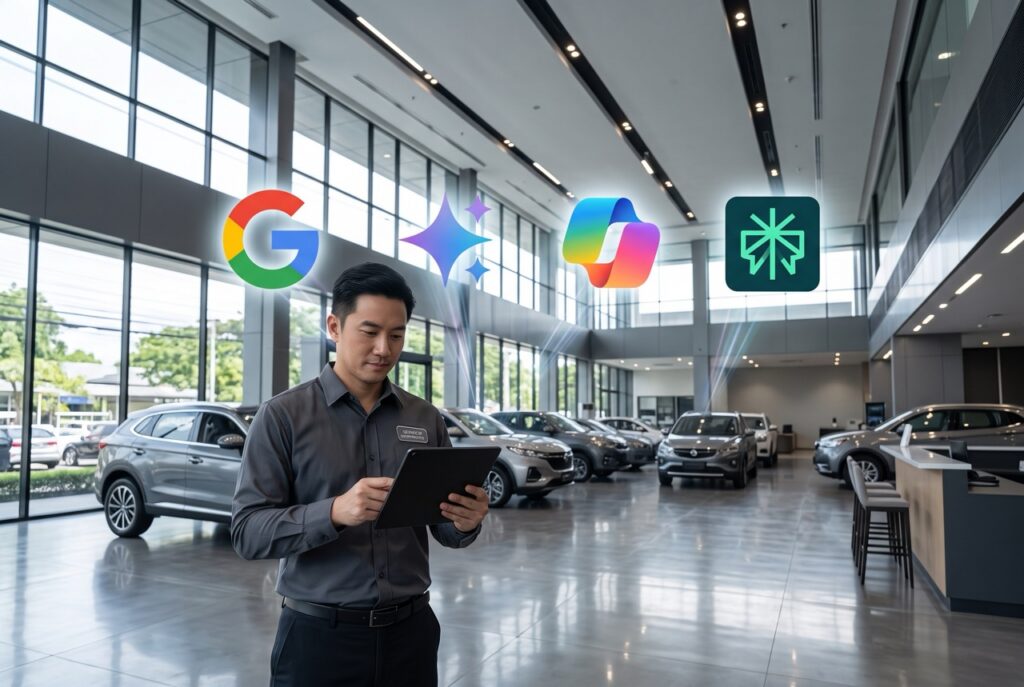
Getting found online has changed. Instead of clicking through pages of links, car shoppers now ask AI tools like ChatGPT or Gemini direct questions. They expect fast answers, comparisons, and local recommendations. Your dealership’s prime spot on traditional search rankings no longer guarantees traffic. If your site isn’t optimized for these conversational “answer engines,” your inventory and services could be completely overlooked. Old search strategies won’t cut it anymore.
To stay ahead, dealerships must refine their approach. AI search prioritizes comprehensive, well-structured details about your vehicles, services, and dealership offerings. That means you have to structure your content to directly answer real buyer questions. Make it easy for AI platforms to confidently pull your dealership’s data and recommend you. Ready to strengthen your AI search visibility and showcase your vehicles to buyers? Keep reading for practical steps to get ahead.
Key Takeaways
- Car buyers increasingly use conversational AI tools for complex queries, expecting direct summaries over link lists.
- Core technologies like NLP, Machine Learning, and Generative AI prioritize user intent, accurate data, and instant synthesis.
- Dealership strategies must shift from traditional keyword automotive SEO to Answer Engine Optimization (AEO) and Generative Engine Optimization (GEO).
- Optimizing for AI requires answer-first writing, clean schema markup, descriptive smart URLs, and specialized service pages.
- Digital trust depends on consistent NAP details, strong customer reviews, and multi-platform engagement.
- Measuring success includes tracking AI citation frequency, monitoring downstream conversions, and performing regular site audits.
Understanding the Shift to AI Search in the Automotive Market
Modern shoppers are changing how they look for cars. As dealerships, we need to adapt our strategies.
● Rise of Conversational Search
Car buyers today are stepping away from typing simple keywords into search bars. Instead, they interact with AI assistants like ChatGPT, Google AI Overviews, Perplexity, and Claude. These conversations are detailed, asking questions in natural language, much like talking to a person. Someone might ask, “Which nearby dealerships have used Ford trucks under $35,000?” rather than just “used trucks [city]”. This shift means your online content must answer specific, complex questions.
● New Search Objective
Shoppers’ goal has moved beyond browsing endless pages of website links. Now, they expect direct, summarized answers that often name specific dealerships. Imagine an AI responding, “Based on current inventory and customer reviews, [Your Dealership Name] typically has strong inventory for that request.” Becoming featured in these AI responses is crucial. It’s about being the definitive answer, not just one of many links on a search results page.
Key Technologies Driving Modern Search Engines
Here’s some foundational knowledge. Powerful technologies make this shift possible.
● Natural Language Processing (NLP)
This technology allows AI tools to truly understand human conversation. NLP helps search engines decode the full intent behind a question, rather than just matching isolated words. It lets AI grasp context, nuance, and slang, translating complex buyer requests into relevant dealership information. Getting this right helps digital platforms confidently pull your dealership’s data.
● Machine Learning (ML)
Machine Learning is the engine that helps these algorithms continually get smarter. It learns from vast amounts of data over time, improving its ability to identify trustworthy, high-quality information. These learning systems reward dealerships that consistently publish accurate, helpful, up-to-date content, improving their chances of being recommended.
● Generative AI (GenAI)
Generative AI pulls information from credible websites and quickly creates human-like summaries. These instant overviews often appear at the very top of search results. For a dealership, structuring content so GenAI can easily combine and present your offerings is a game-changer. This can help our business become a primary source for conversational search.
Comparing Traditional SEO, Answer Engine Optimization (AEO), and Generative Engine Optimization (GEO)
As search technology evolves, so too do the strategies for getting found online.
● Traditional SEO
For years, traditional SEO has focused on optimizing keywords and building backlinks. The aim was to rank high in standard search engine results. This approach prioritizes specific phrases people might type and links from other reputable sites to boost a page’s authority. While still foundational, it’s not enough on its own in the AI era.
● Answer Engine Optimization (AEO)
Answer Engine Optimization takes a more direct approach. It centers on using clear language and specific formatting so search tools can instantly extract facts. It aims for featured snippets, where a direct answer appears immediately in search results, and also helps with voice search queries. Basically, the content is designed to answer a specific question efficiently.
Industry leaders recognize how rapidly consumer search behavior is transforming. In a recent episode of Service Drive Revolution, Chris Collins notes that buyers are shifting from traditional search engines to AI platforms like ChatGPT and Grok, turning SEO into AEO. He observes that shoppers now build personal relationships with AI, asking conversational questions instead of typing fragmented keywords. Dealerships wanting to dominate local markets must engineer their online presence to appear in AI outputs. Watch the detailed breakdown on adjusting to AEO in the episode Higher RO Counts & More Customers.
● Generative Engine Optimization (GEO)
Generative Engine Optimization is the next frontier. It focuses on positioning a dealership as a trusted, cited, and recommended source in complex AI-generated comparisons and shortlists. GEO is about becoming an authority that AI truly relies on. It encompasses not just answers, but also credibility, reputation, and transparency.
Step-by-Step Guide to Optimizing Dealerships for AI Search Visibility
Ready to put these concepts into action? Here are some smart steps to optimize your dealership.
● Adopt an “Answer-First” Writing Style
Go through your website pages and vehicle descriptions. Place the direct answer to a common question in the very first sentence or two. Then, follow up with supporting details. For instance, instead of generic paragraphs, start with: “This vehicle has a towing capacity of [X] pounds,” or “Brake repair in [city] typically costs between [Y] and [Z].” AI platforms look for authoritative, zero-fluff answers. Shaping your content around real-world problems helps AI tools confidently pull your data.
● Prioritize Clean Schema Markup
Schema markup is like a universal language for search engines. Backend structured data, such as AutoDealer and Vehicle schema, gives AI bots clear, unambiguous labels for key information. Think about pricing, specific vehicle specifications, operating hours, and location data. Clear schema makes it much easier for AI to understand and present your dealership’s offerings accurately.
● Upgrade URLs and Site Navigation
Review your website links. Replace messy, overly complex URLs with clean, descriptive “Smart URLs.” These dynamic links should include key details like vehicle trims, model years, and local information. For example, “yourdealership.com/used-ford-F150-Platinum-2027-washington.” Also, make sure your website’s navigation structure lets search bots fully index all pages. A clear site architecture makes it easy for AI to explore and understand your inventory and services.
● Create Specialized Service Pages
Stay away from generic service sections. Instead, build dedicated, detailed pages for specific repairs and maintenance tasks. Create pages for brake replacement, oil changes, tire rotations, or battery checks. Each page should thoroughly answer common customer questions about the service, expected costs, and benefits. Providing this in-depth content helps AI connect specific shopper needs with your expert service offerings.
Building Trust, Authority, and Local Consistency
Becoming a trusted source in AI search is about more than just your website. It’s about your reputation everywhere online.
● Maintain NAP Consistency
Your dealership’s Name, Address, and Phone number (NAP) must match across all online platforms. Check your official website, Google Business Profile, Bing Places, and any third-party directories. Discrepancies can confuse AI models and reduce their confidence in your information. Accuracy and consistency are the key to local AI search visibility.
● Grow a Robust Review Profile
Actively collect recent, detailed customer reviews across multiple platforms. AI models rely heavily on community sentiment and third-party consensus to determine trustworthiness. Strong, positive reviews on sites like Google, Yelp, and even automotive-specific platforms signal to AI that your dealership is reliable and customer-focused.
● Engage Across Multiple Platforms
Develop an authoritative presence not just on your website, but on external platforms as well. This includes sites like Reddit, local news portals, and automotive forums. AI engines frequently pull background context and validate information from these trusted third-party sources. Positive mentions in these broader conversations build a strong digital footprint and reinforce your dealership’s expertise and credibility.
Tracking and Measuring Your AI Search Success
To see whether your efforts are paying off, you must monitor and evaluate.
● Monitor Citation Frequency
Regularly test local buyer prompts using various AI tools. See how often your dealership name is mentioned in the generated responses. For example, search “best brake repair near [my neighborhood]” or “dealerships with reliable used SUVs in [my city].” Tracking these mentions gives you a direct indicator of your visibility in the new AI search landscape.
● Watch Downstream Signals
Directly track what happens after AI traffic comes to your site. Pay close attention to vehicle detail page (VDP) views, phone calls originating from specific pages, and the number of lead forms completed. These are crucial downstream signals that show how well AI-driven traffic translates into actual showroom visits and potential sales opportunities.
● Perform Regular Audits
Frequently review your website code, service pages, and directory listings. Prevent outdated information, broken links, or schema errors from confusing AI search bots. A consistent audit process identifies and corrects issues promptly, keeping your digital presence accurate and effective for AI search.
Ready to Level Up Your Service Drive Operations?
Building a transparent, high-performing service drive needs proven systems, continuous staff training, and real-time guidance. Through the Service Drive Revolution Live Academy, your entire team can access live, twice-monthly training sessions, 200+ hours of industry-best Service Drive training videos, and interactive Q&A sessions designed to solve the exact operational hurdles on your desk today.
Stop guessing and start building a scalable, profitable Fixed Ops strategy.
Need help updating your playbook? Explore how the Service Drive Revolution Live Academy can transform your shop’s efficiency, hiring, and bottom line today.
Frequently Asked Questions (FAQs)
Dealerships can appear in ChatGPT responses by staying visible in the Bing index and securing unique vehicle-description page text. They also require consistent business names, addresses, phone numbers, and strong third-party reviews.
Artificial intelligence search platforms crawl web pages, read structured vehicle details, and evaluate entity authority across directories. They combine these signals with customer reviews and third-party mentions to generate recommendations.
Dealerships can optimize their websites by adopting an answer-first content approach that answers shopper questions in the opening sentences. Implementing schema markup and adding specific, fact-dense vehicle descriptions further helps algorithms extract information.
Structured data helps generative engines interpret dealership information, including operating hours and vehicle specifications. While search engines note that no special markup exists solely for AI features, standard schema still clarifies page context.
Traditional search engine optimization focuses primarily on ranking links and securing keyword-driven click-through traffic. In contrast, generative engine optimization prioritizes direct citation placement, semantic clarity, and authoritative answers inside conversational summaries.
Bottom Line
The window to dominate conversational search is open, and capturing these high-intent buyers starts with a strategic shift. Securing your AI search visibility puts your inventory directly in front of shoppers using tools like ChatGPT and Gemini to make buying decisions. Focus on delivering authoritative answers and clean data to keep your dealership the top choice for local recommendations. If you found these strategies useful, share this guide with a colleague or friend. Don’t forget to follow us so you don’t miss our latest uploads!
Achieving and exceeding your goals is possible when you have the right systems in place. With Service Drive Revolution OnDemand, you’ll gain access to the proven systems that have made thousands of SERVICE MANAGERS IRREPLACEABLE. Start transforming your department today!
Need help updating your playbook? Let us know how we can support your team’s growth.
Book a 15-minute strategy session with our team. We’ll explore how to unlock your dealership’s real value.