Quick Answer
To evaluate service advisor training effectiveness, dealerships must first establish 90-day pre-training baselines across operational metrics and track daily drive-lane behaviors like walkarounds and proactive communication. Next, management must assess customer outcomes by tracking Customer Satisfaction Index (CSI) scores, Fix-Right-First-Time rates, and long-term retention. Finally, calculate ROI by comparing gross profit gains to total training costs, and sustain these results through daily huddles, aligned pay plans, and consistent leadership oversight.

Are your service advisors operating at their peak? Passive approaches often lead to unhappy customers and missed sales opportunities. Untrained service advisors can erode customer trust and lower service absorption rates, ultimately hurting your department’s profitability. Without real-world improvements, it’s hard to justify training costs, leaving dealerships guessing about their investment.
That’s why measuring service advisor training effectiveness is crucial. It’s about more than attendance. It connects coaching to real change. Dealerships must assess ROI by comparing pre-training numbers with post-coaching metrics, observing daily routines, and tracking customer sentiment. That approach shows whether training delivers measurable business value. So don’t miss this interesting discussion! Read on for practical steps to track your training results and drive real dealership success.
Key Takeaways
- Establish pre-training baselines using 90-day historical DMS data and key operational metrics to accurately isolate training impact.
- Active service drive observation ensures advisors consistently perform digital walkarounds, video repair deliveries, and proactive customer updates.
- Track long-term outcomes via Customer Satisfaction Index (CSI), Fix-Right-First-Time rates, and multi-year customer retention.
- Calculate training ROI by dividing net gross profit gains by direct and indirect training costs.
- Sustain operational improvements through daily morning huddles, performance-aligned pay plans, and active leadership oversight.
Establish Pre-Training Baselines
To really know if training works, you need to measure where you started. Laying a solid groundwork for evaluation can do wonders.
● Gather Historical Data
Before a training program begins, leaders should access dealership management system (DMS) records. Reviewing data from the past ninety (90) days helps create a clear picture of typical performance. That initial snapshot will serve as a vital benchmark for comparison after training concludes.
● Isolate Variables
Reviewing past operational figures can help leadership account for external factors that might influence performance. These factors include seasonal business changes, unexpected parts delivery delays, or staff vacation schedules. Separating these variables helps ensure that any observed changes in performance result from the training, rather than outside influences.
● Track Key Baselines
Managers must carefully monitor several key metrics. These include average customer-pay labor hours per repair order (top performers reach 3.5 to 4.0 hours per RO), effective labor rates, how often customers choose only one repair item, and the success rate of closing multi-point inspection (MPI) recommendations. Documenting these numbers before training will give you a clear starting point for measuring improvement.
Monitoring Daily Drive-Lane Behaviors
Once training is underway, active observation on the service drive is very important. Watching how advisors interact with customers can provide immediate insight into how well they apply new skills.
● Active Walkaround
Observers must frequently check if service advisors greet vehicle owners promptly, often using a digital tablet. During these interactions, they confirm if mileage is noted, tire tread depth is inspected, and if all customer drivability concerns are thoroughly addressed. Consistent observation reinforces positive habits learned in training.
● Digital Inspection Delivery
Customer satisfaction often grows when advisors use technology effectively. A critical part of successful service involves transmitting photo and video evidence of recommended repairs directly to vehicle owners via text or email. Adopting this practice builds trust and helps customers make informed decisions about their vehicle’s needs.
● Proactive Communication
Well-trained service advisors should prioritize keeping customers informed. Instead of letting concerns escalate into frustrated phone calls, successful advisors send timely updates, accurate estimates, and completion alerts. Delivering updates ahead of promised deadlines greatly elevates the customer experience.
Evaluate Customer Outcomes and Long-Term Retention
True success in the service drive extends beyond daily interactions. It’s about building lasting relationships and client loyalty. So, measuring customer reactions and return visits clearly indicates training effectiveness.
● Customer Satisfaction Index (CSI)
After service appointments, surveys provide essential feedback on the customer’s experience. Responses often reveal whether customers felt respected and understood and whether they found the billing transparent. High CSI scores often reflect a service team that genuinely connects with and cares for their clients.
● Fix-Right-First-Time Scores
Accurate documentation during vehicle check-ins is fundamental to avoiding repeat visits for the same issue. Detailed notes advisors take help eliminate miscommunication among the customer, advisor, and technician. Getting repairs right on the initial visit saves time and builds customer confidence, strengthening the dealership’s reputation.
● Customer Retention
Keeping vehicle owners returning for service beyond their first year is vital for a dealership’s enduring profitability. A high retention rate simply shows the team builds trust and provides excellent care. It also significantly reduces the financial burden of constantly acquiring new clients.
Calculating Financial Return on Investment (ROI)
Understanding the financial impact of training is key to justifying future investments. A clear ROI calculation can reveal the real value generated by improving human capital.
Step 1: Tally Total Training Costs
Begin by compiling both the direct and indirect expenses linked to the training program. These costs include fees paid to external vendors, travel and lodging, wages paid to advisors while they are away for instruction, time supervisors spend coaching, and any software or licensing fees. Add these all up to get a complete picture of the total investment.
Step 2: Calculate Net Gross Profit Gains
After training, measure any increase in gross profit from service operations. Isolate the training’s impact from other market influences, like new vehicle recalls or seasonal business variations. Use control groups or historical trend data to accurately attribute gains to the training program.
Step 3: Run the ROI Formula
With the net financial benefit and total training costs in hand, apply the formula. Divide the net financial benefit by the total training investment. Multiply the result by 100 to get a clear percentage return. This figure shows exactly how much profit the dealership gained for every dollar spent on training.
Training ROI % = Net Financial BenefitTotal Training Investment 100
Sustaining Long-Term Results Through Leadership
Even the best training programs will falter without strong, continual leadership support. Consistent management action guarantees that new habits stick and deliver results.
● Daily Huddles
Quick, focused morning meetings will give the team a chance to review key metrics and prepare for the day. These sessions also let advisors practice handling common customer objections through role-playing, building confidence and consistency.
● Aligned Pay Plans
A dealership’s compensation structure should reinforce the behaviors it wants to see. Avoid focusing only on volume. Pay plans that reward strong, effective labor rates and multi-point inspection closing goals can truly encourage service advisors to perform at a higher level.
● Management Support
As industry expert Chris Collins notes, active oversight and tracking of clear financial and operational benchmarks are essential. This involvement keeps the service department accountable for performance and directly supports sustained profitability. Through consistently monitoring progress and providing feedback, leaders help secure long-term success.
Ready to Run Your Service Drive Like a True Business?
Stop guessing and start running your fixed ops like a true profit center. Service Drive Revolution (SDR) Live Academy gives managers and dealership owners the exact operational playbook Chris Collins uses to turn service departments into virtual money printers. For less than the cost of one bad dispatch, you get two live coaching sessions every month. Whether you need to fix a broken pay plan, hire technicians in a tight market, or find hidden profit leaks on your financial statement, we’ve got you! Bring your toughest operational problems to the table and get real answers from the CCI coaching staff. But wait, what’s more in it for you? Well..
Your team gains full access to a vault of over 700 on-demand training videos, covering everything from advisor development to Service Manager University, plus bonus off-week leadership sessions to keep everyone aligned. Stop feeling like you are fighting fires alone and join a community of service professionals who actually get the job done.
Stop waiting for someone to hand you the answers. Secure your spot in Service Drive Revolution Live Academy today and build a scalable, high-performing service department.
Frequently Asked Questions (FAQs)
Dealerships measure service advisor training ROI by comparing baseline financial and operational metrics against post-training data. They isolate training gains from external market variables to determine net gross profit relative to total training expenses.
Evaluation metrics combine operational data, such as labor hours sold per repair order and effective labor rate, with customer sentiment indicators like the Customer Satisfaction Index. These benchmarks track performance in technical execution, presentation habits, and retention.
To calculate financial return, subtract total training investment from net financial benefits and divide by those costs. The resulting percentage establishes whether incremental gross profit successfully covered programmatic expenses.
Dealerships should measure results over a phased timeline that covers baseline audits, immediate adoption tracking, and intermediate operational maturation. They typically evaluate long-term financial and customer-retention impacts over a rolling 12-month service horizon.
Managers can improve training ROI by conducting daily drive-lane observations, holding weekly performance reviews, and aligning compensation with target behaviors. Ongoing peer role-playing and active supervision further reinforce sustainable skill adoption.
Bottom Line
There you have it! If you want to level up your service department, remove the guesswork. Consistently tracking service advisor training effectiveness will definitely keep your team sharp, confident in handling objections, and maximizing every repair order opportunity. So don’t wait any longer. Be sure to monitor all these key performance shifts starting today. Trust us, you will secure long-term profitability and build a more resilient business model. Found this guide insightful? Follow us so you don’t miss the latest uploads!
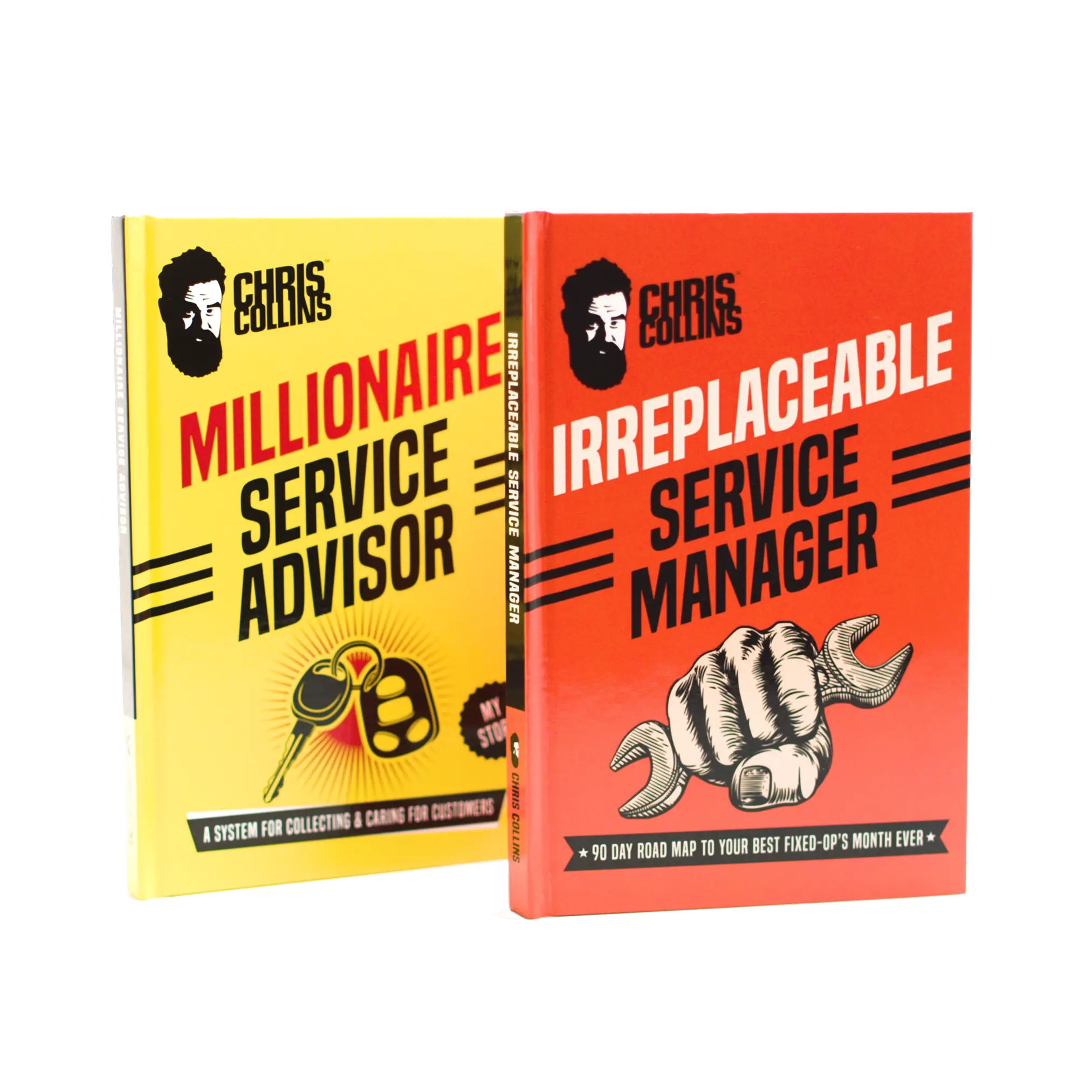
Achieving and exceeding your goals is possible when you have the right systems in place. With Service Drive Revolution OnDemand, you’ll gain access to the proven systems that have made thousands of SERVICE MANAGERS IRREPLACEABLE. Start transforming your department today!
Need help updating your playbook? Let us know how we can support your team’s growth.
Book a 15-minute strategy session with our team. We’ll explore how to unlock your dealership’s real value.