Service comebacks can quietly wear down a dealership’s reputation and profitability. Every time a customer returns with a problem that was supposed to be fixed, trust takes a hit and valuable resources are wasted. Now, these repeat visits often point to bigger issues. What are those? Missed steps in technician performance, lapses in quality control, communication breakdowns, and a decline in customer satisfaction are just some underlying concerns. No dealership wants to see customers leaving frustrated or technicians wasting time on repeat repairs.
The good thing is that addressing service comebacks doesn’t require a major overhaul. Smart processes can already bring results. Tighter quality control, clear communication, and ongoing technician training are proven methods for reducing repeat repairs and creating satisfied customers. You just have to learn how to put everyone on the same page. Doing so, your service department will thrive, and your customer loyalty will grow.
Keep reading for smart strategies that will help your dealership curb service comebacks once and for all. Let’s get started!
Key Takeaways
- Repeat vehicle repairs drain dealership profits, waste technician time, stall production, and damage customer trust.
- Dealerships must log operational errors and calculate return rates to identify recurring workflow failures.
- Strict final inspections, extended road tests, and digital documentation catch mistakes before vehicles leave the shop.
- Prioritizing repair accuracy over speed, managing workloads, and providing modern tools reduce technician burnout.
- Detailed intake interviews, transparent estimates, and proactive follow-ups build strong customer relationships.
True Cost of Service Comebacks
When a vehicle is not repaired correctly the first time and must return to the shop, it creates a “comeback”. These repeat visits do far more than just upset vehicle owners. They drain a dealership’s profits in several hidden ways:
● Wasted Money
Each repeat repair incurs substantial direct and indirect costs, averaging $847 per vehicle. Dealership financial reports regularly show that shop profitability drops when technicians do uncompensated labor. A study by the Automotive Service Association highlights how unbilled hours represent direct cash losses. The shop covers the extra parts and absorbs the diagnostic time that generates zero revenue.
● Stalled Production
Dealership efficiency is severely undermined when technicians are forced to halt billable tasks to re-examine repeat failures, effectively causing service stalls with non-revenue-generating work. These logjams prevent new paying customers from entering the bays, creating facility-wide delays and stalling overall production. By occupying space that should be reserved for profitable repairs, redoing work actively destroys the operational flow and financial health of the service department.
● Ruined Reputation
Unhappy customers leave poor online reviews, lose trust in the dealership, and take their future business elsewhere. Drivers feel stranded when a repair fails. Modern consumer research from the National Automobile Dealers Association shows how poor service experiences drive car buyers away permanently. Negative online feedback discourages potential clients from scheduling service or buying vehicles. Research shows that only 14% of customers buy their next car from the same dealer, but that number jumps to 76% for customers who receive regular service there.
● Employee Burnout
Persistent errors lead to high staff turnover because of the toxic work environment they create. Service advisors are often worn down by constant interactions with irate vehicle owners, while mechanics suffer a blow to their morale when they are forced to rectify the same blunders without additional compensation. Under typical flat-rate pay models, technicians are financially penalized for these repeat repairs, stripping away their motivation.
Tracking and Analyzing Workflow Failures
Dealerships cannot fix what they do not measure. Catching trends requires a system to log every single error that disrupts daily shop operations.
● Defining Mistakes Broadly
Comebacks include mechanical errors, bad communication between staff, and broken parts that arrive late from suppliers. A true operational failure covers any event that delays vehicle delivery. Miscommunication between advisors and technicians contributes heavily to incorrect fixes. Damaged components received from parts delivery vendors also qualify as tracking failures.
● Calculating the Error Rate
Management tracks the percentage of vehicles that return (e.g., 10 out of 100 cars, a 10% rate) to see whether the problem is growing or shrinking. Tracking calculations must happen monthly to establish operational benchmarks. High return metrics signal clear procedural gaps. At the same time, lower percentages are directly associated with higher net profitability for the business.
● Finding the Common Theme
Breaking down data by individual workers or parts of companies can help pinpoint whether a specific person or supplier causes recurring issues. Analysis will reveal specific patterns in the repair bay. For example, one technician may find advanced electrical diagnostics challenging, or a specific parts supplier might be providing components prone to early failure.
Upgrading Quality Control and Inspection Procedures
The most effective way to stop a comeback is to catch the error before the vehicle leaves the dealership property.
● Double-Check Policy
A shop foreman or a second mechanic must inspect completed repairs before the customer picks up the vehicle. Fresh sets of eyes quickly detect loose bolts or overlooked fluid leaks. Senior mechanics should verify if the technical complaint matches the actual work performed. No vehicle leaves the service department without formal validation, simple as that.
● Strict Road Testing Rules
Staff must drive the vehicle long enough to verify the fix. Brake jobs require stop-and-go driving, while transmission fixes require highway speeds. For major issues, managers should drive the vehicle for a few days to ensure it runs perfectly. Short drives down the driveway rarely confirm complex system repairs. Highway velocity reveals hidden vibrations that city driving misses. Extended testing over multiple days ensures the system monitors clear completely.
● Reviewing “No Fault Found” Orders
Customers rarely bring cars in without a reason. If a mechanic cannot find the issue, the shop must call the customer for clarification instead of just returning the vehicle unresolved. Intermittent issues cause significant frustration for drivers. So, it’s better to speak directly with vehicle operators to uncover specific driving conditions needed to replicate problems. Leaving a repair order open prevents premature vehicle release.
● Digital Verification
Using digital inspection sheets with photos proves the work was completed correctly. Technicians must document physical repairs using high-resolution imagery. After that, software systems attach these visual files directly to consumer repair orders. Clear documentation protects the facility against false claims about unperformed maintenance.
Staff Support, Training, and Culture
Shifting focus from speed to quality helps mechanics take pride in their work and avoid careless mistakes.
● Quality Over Quantity
Rushing to beat the clock costs mechanics time and money when they have to redo work for free. Speed-driven environments only breed oversight and technical negligence. For sure, you don’t want that. And so, always prioritize accurate diagnostics to guarantee long-term customer safety. Doing a job right on the initial attempt preserves overall flat-rate technician earnings.
● Managing the Workload
Overworked teams make mistakes. Dealerships can adjust schedules, limit the number of customers waiting, or hire entry-level assistants to handle basic tasks. Overloaded daily schedules cause physical exhaustion among technical staff. Limiting walk-in traffic keeps production volumes reasonable. Assistants handle tire inflation, fluid top-offs, and shop cleaning so master mechanics focus entirely on complex repairs.
● Education and Mentorship
Ongoing training keeps staff updated on modern vehicle technology. Modern vehicle architectures require continuous technician education. The National Institute for Automotive Service Excellence provides credentials that help validate mechanical competency. Pairing unseasoned technicians with senior veterans can further guarantee that practical knowledge transfers naturally on the shop floor.
To build a reliable training framework, many dealership service departments look to industry consultants for guidance. Automotive fixed operations consulting expert Chris “Bulldog” Collins provides service advisor coaching and operational systems that prioritize technical accuracy and proper communication. Adopting such standardized procedures from industry veterans can holistically help dealers align daily operations with strict quality standards.
● Use the Right Tools
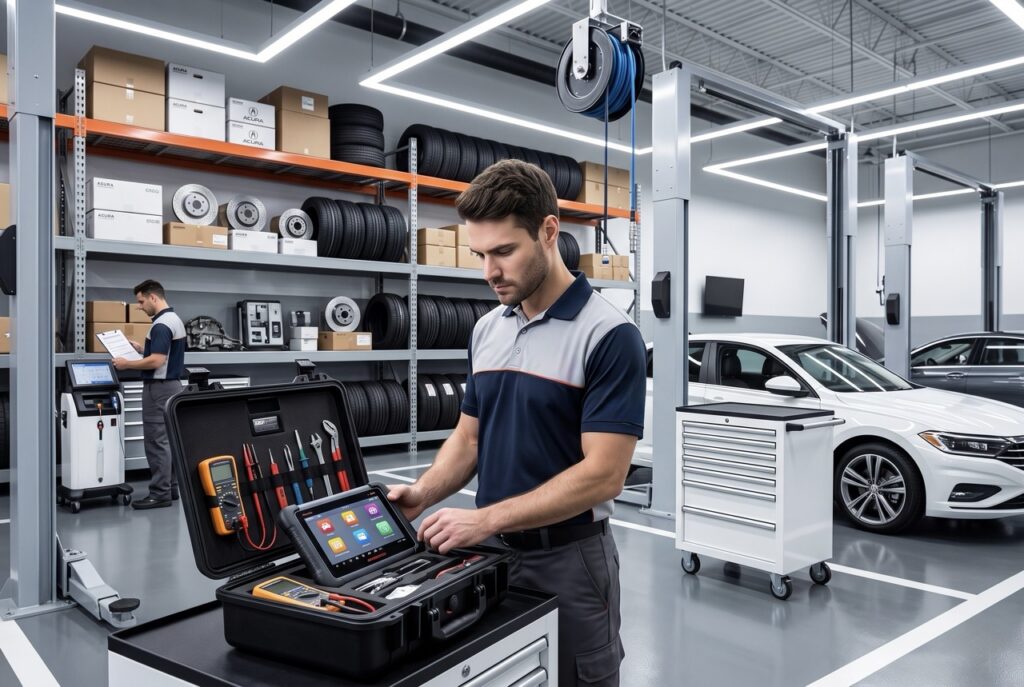
Providing updated scan tools and advanced shop equipment will make diagnostics easier and more accurate. Outdated diagnostic machinery misses hidden fault codes on newer vehicles. So, it’s better to invest in modern oscilloscopes to prevent guesswork during electrical troubleshooting. Technicians require proper physical assets to execute modern calibration procedures accurately.
● Positive Reinforcement
Recognizing and rewarding low comeback rates can motivate teams to uphold superior standards. Providing financial incentives for error-free work throughout the billing cycle, alongside public acknowledgments during shop meetings, helps solidify expectations for high-level performance. Furthermore, cultivating a spirit of healthy competition inspires team members to assist one another in achieving technical precision.
Elevate Communication and the Customer Experience
Excellent communication and a welcoming environment build trust, making customers more understanding if a complex issue arises.
● Detailed Intake Conversations
Rather than recording ambiguous comments such as “the car makes a noise”, service advisors need to collect comprehensive accounts of vehicle symptoms. They must note the exact conditions, including speed, temperature, and the time at which the mechanical problem occurs. Committing errors here ranks among the top 5 sales mistakes that advisors make, turning a simple drop-off into a diagnostic nightmare. By posing specific questions, advisors help pinpoint system failures sooner, and thorough documentation ensures technicians have total clarity before starting the physical diagnosis.
● Setting Clear Expectations
To make sure that customers know what to expect, advisors should outline the repair timeline, associated expenses, and any required follow-up actions. Maintaining transparency about potential parts delays helps avoid unsatisfactory client experiences. Providing precise cost estimates reduces friction during the final payment process. Furthermore, educating owners about necessary break-in protocols helps ensure they properly maintain their vehicle’s new parts.
● Integrating Service Technology
Dealership management software can help staff view vehicle histories instantly. Real-time service apps send notes and photos directly to a customer’s phone to build trust. Amazing, isn’t it? Now, instant record retrieval alerts staff to recurring issues before the vehicle enters the garage. Moreover, digital messaging platforms keep clients updated without requiring long phone conversations. Take note, transparency increases dramatically when car owners view live repair pictures. Dealerships utilizing digital multi-point inspection platforms typically see a 15% to 30% increase in average repair order value.
● Proactive Follow-Ups
Calling vehicle owners 24 to 48 hours after a major repair allows the shop to catch and resolve any lingering issues immediately. Reaching out shows genuine care for consumer safety and vehicle performance. Besides that, early phone contact captures minor complaints before they turn into angry internet reviews.
● Lasting Impression
Providing a vehicle cleaner than when it was dropped off creates a powerful, favorable final impression. Whether it involves an exterior wash or an interior detail, these actions reflect a high standard of professional care. Small details, like wiping grease from the steering wheel or vacuuming the mats, elevate the customer’s view from a standard transaction to a high-end service. Ultimately, a spotless vehicle justifies the premium rates of a professional service department and reinforces the quality of the workmanship.
Frequently Asked Questions (FAQs)
Service comebacks require technicians to repeat the work for free, completely eliminating profit margins on the original repair. They also consume valuable bay space and shop time that could otherwise be used to generate revenue from paying customers.
Technicians can improve accuracy by following step-by-step diagnostic checklists rather than guessing the root cause. Using specialized tools and logging real-time data during test drives also helps prevent misdiagnosis.
Implementing a mandatory peer-review system for complex diagnostics ensures a second pair of eyes verifies the repair plan. Standardizing final quality control inspections before vehicle delivery catches errors before the customer leaves.
Bottom Line
Indeed, reducing service comebacks isn’t just about fixing mistakes. It’s about creating a culture that protects your reputation and your bottom line. When dealerships prioritize comprehensive training, set clear expectations, and address workflow issues upfront, repeat repairs become the exception, not the rule. Every step toward fewer service comebacks means more satisfied customers, less wasted time, and stronger team morale. If these strategies have sparked new ideas for your service department, consider sharing them with your industry peers. Follow us for more!
Achieving and exceeding your goals is possible when you have the right systems in place. With Service Drive Revolution OnDemand, you’ll gain access to the proven systems that have made thousands of SERVICE MANAGERS IRREPLACEABLE. Start transforming your department today!
Need help updating your playbook? Let us know how we can support your team’s growth.
Book a 15-minute strategy session with our team. We’ll explore how to unlock your dealership’s real value.