Keeping cars running safely and reliably is always a top priority for dealers and customers alike. One missed issue can lead to unexpected breakdowns, costly repairs, and frustrated drivers—all of which put your reputation and customer relationships at risk. The moment a vehicle leaves your lot or service bay, you want to know it’s dependable for your customer and worry-free for you.
Multipoint inspection offers a straightforward answer to these concerns. This comprehensive review takes the guesswork out of a car’s condition, breaking complex systems down into clear recommendations. Those dealers who implement a consistent multipoint inspection process not only support vehicle safety but also help identify repair opportunities, boost transparency, and strengthen long-term customer loyalty.
Curious how the multipoint inspection process works and why it matters for both dealers and customers? Read on for a practical look at the full multipoint inspection process, the advantages it offers, and a checklist to keep your team one step ahead.
Key Takeaways
- Multipoint inspections evaluate overall vehicle health using a green, yellow, and red color-coded rating system.
- Technicians systematically examine fluids, engine components, braking systems, suspension, and safety gear.
- Regular checkups increase road safety, lower long-term repair costs, and raise vehicle resale value.
- Dealerships build trust, uncover valid repair needs, and retain customers through clear reporting.
- Drivers can schedule evaluations based on mileage intervals, yearly calendars, or before major trips.
- Inspection costs range from complimentary visual scans to paid, comprehensive diagnostic tests.
What is a Multipoint Inspection (MPI)?
If you want your vehicle to be safe, you need clear insight into the exact condition of its mechanical parts. A comprehensive MPI provides a detailed overview of a car’s health to catch issues before they become road emergencies.
● Complete Health Examination
Much like a physical checkup by a medical professional, an MPI is a thorough review of almost every part of a vehicle that wears out over time. Here, technicians methodically inspect components to determine current wear levels.
● Preventive Care
Technicians utilize a detailed checklist to evaluate the vehicle’s overall safety and performance. This proactive assessment operates independently of any existing mechanical issues or active dashboard warnings. In fact, industry data consistently shows that every dollar spent on scheduled maintenance saves around $1 to $8 in future repair costs.
● Color-Coded Rating System
Service providers simplify automotive data by rating components with a clear traffic-light color system. Take a look at these:
- Green: The component functions perfectly and requires no action at this time.
- Yellow: The part shows normal wear and tear. It remains functional today but will require attention or replacement soon.
- Red: A severe problem exists that demands immediate repair to keep the vehicle safe and reliable.
● MPI vs. State Inspection
A state inspection is a mandatory, pass/fail test that makes sure a car meets minimum legal safety and emissions standards. An MPI goes much deeper, evaluating the actual long-term health of the vehicle’s internal machinery to protect the owner’s investment.
Complete Inspection Process
Automotive service centers follow a strict, structured sequence to make sure that every vehicle receives a consistent evaluation. This workflow keeps operations organized and guarantees transparent reporting for the driver.
● Initial Assessment
The service advisor tells the customer that a technician will run a complimentary or scheduled MPI and provide a final report. This initial step sets clear expectations regarding the time required for the visit.
● Scanning for Code Errors
Technicians check the dashboard and the car’s computer system for any hidden warning codes or illuminated alert lights. From there, diagnostic tools extract data directly from the vehicle log.
● Technician Evaluation
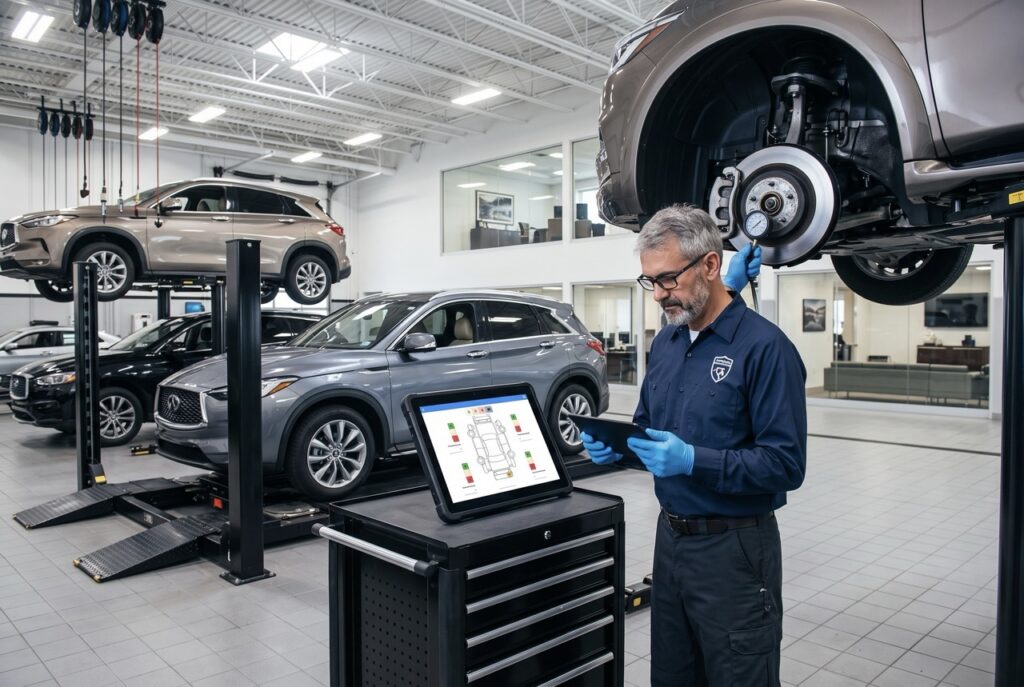
A certified professional systematically works through a checklist—ranging from 20 to over 100 specific points—inspecting the vehicle on the ground and up on a shop lift. Advanced vehicle systems can even utilize automated scanning technology to detect undercarriage flaws.
● Cost Estimations and Parts Prep
Once the technician identifies necessary fixes, the parts department gathers the required components and prepares a price estimate for the service advisor. This ensures that all pricing details are ready before speaking with the vehicle owner.
● Customer Presentation
The service advisor delivers a clear, transparent digital or physical report, often accompanied by photos or videos, so the driver can confidently decide what to fix. Take note of this part, as clear documentation allows owners to prioritize repairs based on the urgency indicated by the color codes.
Essential Technician Checklist
The physical evaluation covers multiple distinct zones of the vehicle to guarantee that no component gets overlooked. More often than not, mechanics review internal systems, safety gear, and structural elements.
● Under the Hood (Engine Compartment)
- Essential Fluids: Technicians check the levels, cleanliness, and condition of the engine oil, coolant, brake fluid, transmission fluid, power steering fluid, and windshield washer fluid. Dirty or low fluids usually indicate immediate maintenance needs. Today, 20% of drivers are behind on oil changes.
- Belts and Hoses: Rubber parts are checked for cracks, fraying, soft spots, swelling, or leaks, and tested for proper belt tension. Maintaining these parts prevents sudden engine overheating.
- Battery Health: Mechanics test the battery’s electrical charge, examine the age of the unit, and clean any corrosion from the terminals. This verification minimizes the risk of sudden starting failures.
- Engine Protection: Inspect the engine air filter for dirt and debris to keep the engine operating efficiently. Clean filters are essential as they ensure proper airflow and fuel economy.
● Braking System and Suspension
- Stopping Power: Measure brake pad thickness and inspect the physical condition of the rotors and brake lines to ensure absolute safety. Consistent monitoring helps protect vehicle occupants during sudden stops.
- Tire Maintenance: The checklist requires measuring tire tread depth, adjusting air pressure (PSI), and identifying uneven wear patterns that may indicate alignment issues. Proper inflation directly improves handling and gas mileage. The National Highway Traffic Safety Administration estimates that tire-related issues cause around 11,000 crashes each year.
- Ride Comfort and Stability: Check the shocks, struts, bushings, ball joints, and control arms to ensure smooth wheel rotation and steady handling. Replacing worn components protects the vehicle’s steering framework.
● Interior, Exterior, and Drivetrain
- Safety Gear: Mechanics verify that the horn, seat belts, airbags, and backup safety cameras function perfectly. Operational safety equipment remains a top priority during every checkup.
- Visibility Items: Exterior lights (headlights, high beams, turn signals, brake lights) and windshield wipers are tested, along with the cabin air filter. Clean cabin filters guarantee fresh air inside the passenger compartment.
- Undercarriage Infrastructure: The exhaust system, muffler, fuel lines, CV joints, and transfer systems between the front and rear axles are inspected for rust, leaks, or damage. Structural integrity under the vehicle prevents exhaust leaks into the cabin.
Key Benefits for Customers
Investing time in regular vehicle physicals delivers clear returns in safety, reliability, and financial management. Proactive car owners experience fewer disruptions and maintain better control over their transportation budgets.
● Enhanced Safety
Regularly auditing steering, brakes, and tires gives drivers peace of mind and helps prevent unexpected breakdowns on daily commutes or long road trips. Reliable components minimize accident risks.
● Long-Term Cost Savings
Catching minor yellow issues early prevents them from turning into catastrophic engine or transmission failures that cost thousands of dollars. You might be surprised how small fixes can protect the overall vehicle budget.
● Maximizing Vehicle Lifespan
Proactive, preventative maintenance helps all interconnected mechanical systems last much longer. Regular attention keeps older cars performing reliably for years.
● Higher Resale Value
A detailed history of regular multipoint inspection reports serves as proof of good care, building trust with buyers and raising the trade-in value. Buyers willingly pay more for well-documented maintenance records.
Value and Growth for Dealerships
Service departments gain operational efficiency and stronger customer connections by implementing a standardized evaluation method. Consistent processes can actually turn regular maintenance visits into sustainable business growth.
● Boosting Transparency
Presenting clear, color-coded digital reports with visual proof removes unwanted surprises of car repairs, earning long-term customer trust. Drivers appreciate it more when they see actual photo evidence of component wear.
● Increasing Repair Opportunities
Systematically inspecting every vehicle uncovers hidden, valid service needs that drivers would otherwise overlook. Note that discovery rates increase when technicians follow a strict checklist. Automotive fixed operations consulting expert Chris “Bulldog” Collins, founder of Chris Collins Inc., emphasizes that standardized processes on the service drive allow advisors and technicians to consistently identify legitimate repair needs, moving dealerships away from reliance on new-car sales and toward sustainable fixed operations revenue.
● Driving Customer Retention
Satisfied drivers who experience clear communication and a reliable vehicle are highly likely to return for future maintenance. Trustworthy interactions form the foundation of brand loyalty.
● Tracking Financial Results
Monitoring daily performance metrics helps dealership management evaluate how effectively the service department implements the MPI process. Data collection allows managers to refine staff training.
When to Schedule an MPI?
Aligning inspections with routine maintenance minimizes visits to the shop while keeping the vehicle secure. Certain standard intervals serve as excellent triggers for a checkup. Here’s when to schedule your next MPI:
● By Mileage
Most auto manufacturers recommend an inspection every 5,000 to 15,000 miles, making it easy to pair with a standard oil change or tire rotation. Regular intervals guarantee steady monitoring.
● By the Calendar
Drivers who work from home or put few miles on the odometer should get an annual checkup to ensure rubber components and fluids have not degraded over time. Time causes component decay even without heavy road use.
● Special Occasions
An extra checkup is smart before embarking on a long road trip, when local seasons change drastically, or when buying or selling a used vehicle. Pre-purchase reviews reveal hidden mechanical flaws to buyers.
What Influences the Price?
Inspection costs vary based on the depth of the review and the business model of the service facility. Thus, understanding these variables will help vehicle owners select the right service option.
● Free Visual Checks
Many dealerships and large chains offer complimentary high-level visual scans to win business or accompany other basic services. These complimentary courtesy checks quickly spotlight visible issues.
● Paid Standalone Diagnostics
More comprehensive inspections cost anywhere from $50 to over $200. This fee covers the technician’s dedicated time, advanced computer diagnostics, and an unbiased, detailed health report compiled by professional inspection services. Fully paid assessments ensure deep system testing without immediate sales pressure.
Frequently Asked Questions (FAQs)
● Why is a multipoint inspection important?
A multipoint inspection catches minor mechanical wear before it escalates into a dangerous or expensive failure. This proactive tracking provides a clear baseline for your vehicle’s health and ensures peace of mind on the road.
● What is included in a multipoint inspection checklist?
Technicians review essential safety and performance components, including fluid levels, brake pads, and tire tread depth. They also test your battery, examine belts and hoses, and check for any hidden fluid leaks.
● How long does a multipoint inspection take?
A standard multipoint inspection typically takes between 15 and 45 minutes to complete. The exact duration depends on the technician’s speed and whether they discover issues that require deeper diagnostics.
Bottom Line
Indeed, a multipoint inspection is more than just a routine. It’s a strategic tool for car dealers looking to build trust and uncover service opportunities. When every vehicle undergoes a thorough multi-point check, you don’t just guarantee each car is safe and dependable. Instead, you prove to your clients that you care about their experience beyond the sale. If these insights have sparked ideas for your own dealership, be sure to share this article with your team or peers. Explore other niche topics here!
Achieving and exceeding your goals is possible when you have the right systems in place. With Service Drive Revolution OnDemand, you’ll gain access to the proven systems that have made thousands of SERVICE MANAGERS IRREPLACEABLE. Start transforming your department today!
Need help updating your playbook? Let us know how we can support your team’s growth.
Book a 15-minute strategy session with our team. We’ll explore how to unlock your dealership’s real value.