We like to think we are rational beings. In the context of purchasing a car, we convince ourselves that we are considering the best fuel consumption, the highest safety ratings, or the most convenient trunk space. We make the spreadsheets and compare the monthly payments. But neuroscience is telling a totally different story. Research has shown that emotional motivation influences 95% of consumer buying behavior, particularly of high-priced products such as cars.
As we move toward 2026, understanding the psychology behind car buying behavior is more critical than ever. The reality is that a car is rarely just a mode of transportation. It is a symbol of identity, freedom, and achievement. Whether we realize it or not, our brains are constantly processing subtle cues, social pressures, and hidden biases that push us toward a signature on the dotted line. Here is a deep dive into the science of why we buy what we buy.
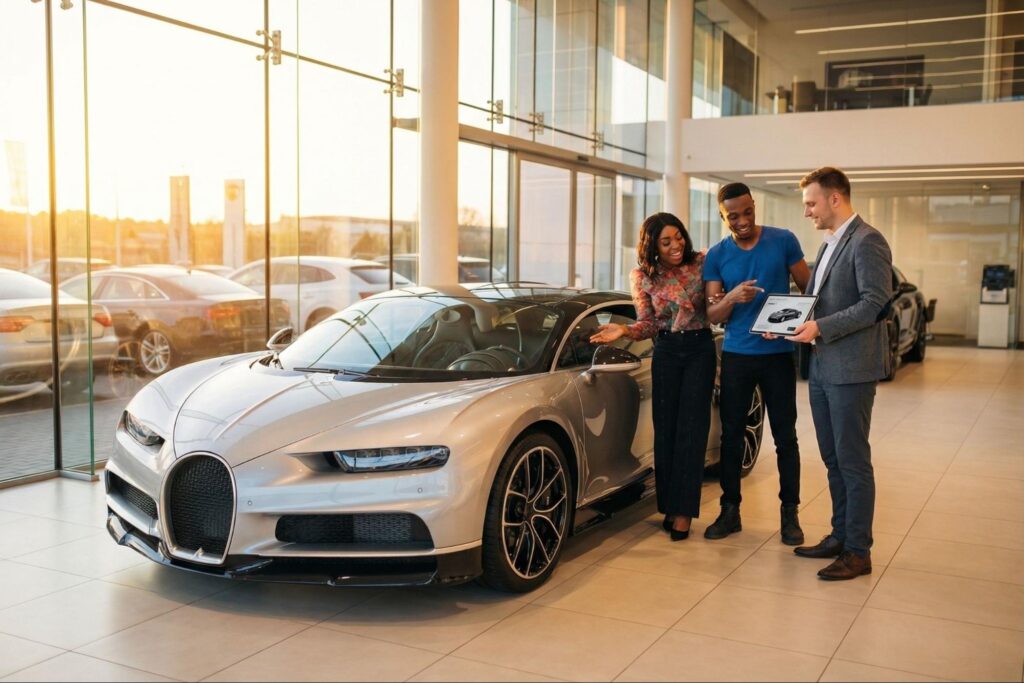
Why We Really Buy Cars?
We often treat vehicles as extensions of ourselves. They are mobile statements about who we are or who we hope to become.
A. Cars as Costumes
Imagine a car as a dress you wear on a daily basis. Automakers know this very well. They sell lifestyles. Trucks portray the appearance of toughness and strength, sending messages to the world that the driver is prepared to tackle anything. Hybrids and EVs signal a commitment to sustainability, ethics, and innovation, appealing heavily to values-based buyers like Gen Z. Meanwhile, luxury cars serve as powerful symbols of achievement, status, and success. Buyers will tend to extend their wallets to match these images since the emotional attachment to that identity overrides the reasoning of the bank account.
B. The “Endowment Effect”
Have you ever wondered why dealerships are so eager to get you behind the wheel? It is not just to check the brakes. It is to trigger a psychological phenomenon known as the endowment effect. As you sit in the driver’s seat, smell the new car, and think about how good your morning coffee will be in the cupholder, your brain starts creating a connection. Driving makes you feel like you own it, even though you have not negotiated the price. As soon as you feel that the car is yours, even on borrowed time, you appreciate it more, and it would be much more difficult to leave the keys behind.
C. Color Psychology
The color you choose is rarely a random decision. It plays a quiet but powerful role in how you perceive the vehicle and yourself. Black is associated with power, elegance, and authority. White is associated with purity and minimalism. Red is the color of passion, speed, and excitement, often triggering impulse buys more effectively than neutral tones. Blue color displays trust and tranquility, whereas silver or grey implies elegance and functionality. These choices reflect our personality and how we want to be perceived on the road.
How Our Brains Decide
Our brains love shortcuts. We rely on cognitive biases—mental habits that help us make decisions quickly, though not always logically.
A. First Impressions Matter (Anchoring Bias)
Our brains use shortcuts to process the overwhelming amount of information involved in a car purchase. One of the most common is the Anchoring Bias. This occurs when the first piece of information we see—usually the sticker price—sets the tone for the entire negotiation. If a car is listed at a high price, that number becomes the “anchor.” If the dealer later offers a discount, it feels like a massive win and creates a baseline of trust, even if the final price is still expensive. We do not perceive value in an objective manner, but in relation to the initial number that we had perceived.
B. Fear of Missing Out (Scarcity Effect)
Dealerships and online platforms are masters at triggering urgency. When you see a pop-up that says “Only 2 left at this price!” or hear a salesperson mention that “another couple is coming to look at this car later,” your brain reacts with fear. This is the Scarcity Effect. We are evolutionarily programmed to fear loss (loss aversion) rather than to desire gain. This mind influence generates faster decisions since we are too scared of the guilt we may experience when we fail to take the moment.
C. Seeing What We Want (Confirmation Bias)
Once we have emotionally committed to a specific brand or model, our brains switch to Confirmation Bias. We start actively searching for reviews and information that justify our decision, and conveniently overlook any that may indicate it is not a good idea. If we want a sports car, we focus on the horsepower and styling, glossing over the poor fuel economy or high maintenance costs. We look for validation that our emotional decision is actually a logical one.
MORE ON AUTOMOTIVE INNOVATION V2X Communication Technology and Smart Vehicles
The Influence of Others
We are social creatures. We rarely make big financial moves in a vacuum. We look to the herd to ensure we aren’t making a mistake.
A. Safety in Numbers
As humans, we often look for Social Proof to reduce our anxiety about making a bad choice. When we see others having positive experiences, it reduces our doubt and creates emotional momentum toward a purchase. We rely on reviews and testimonials to confirm that a dealership or a vehicle is “safe”. If everyone else is driving a crossover, we feel safer buying one too.
B. The “Neighbor Effect”:
The people around us have a massive, often subconscious, influence on what we drive. Seeing a neighbor or coworker pull up in a shiny new SUV can plant a seed of desire for an upgrade. This social pressure affects what is desirable and acceptable to us. If your social circle values rugged trucks, you are less likely to buy a compact sedan. We often upgrade our vehicles to keep up with our peers.
C. Digital Trust
In 2026, the voice of authority has shifted. Buyers now trust strangers on the internet—YouTubers, Reddit threads, and TikTok creators—far more than they trust polished car advertisements. Authenticity is key. Customers can quickly identify marketing that is scripted, so they rely on user-generated content (UGC) and micro-influencers to get the pure truth. An open video evaluation by a literal owner has more strength than a million-dollar commercial.
Also read: Car Marketing: Digital Tools That Improve Auto Sales
Why We Want Control
The modern buyer has changed. We have been trained by Amazon and Netflix to expect speed and ease. The old way of buying cars—spending hours in a cubicle—feels painful.
A. Hating the Hassle
The traditional car-buying model is often fraught with stress. Buyers dread hidden fees, confusing financing terms, and the pressure of negotiation. The lack of transparency erodes trust and makes the process feel adversarial. This anxiety drives buyers to seek alternatives where they can dictate the pace of the transaction.
B. The Digital Shield
To combat this stress, modern buyers use technology as a shield. Over 80% of car buyers now begin their journey online, and nearly half would prefer to complete the entire transaction digitally. By handling credit checks, trade-in valuations, and inventory searches online, buyers regain a sense of control. This “digital shield” allows them to move at their own pace and reduces the anxiety of face-to-face confrontation. A frictionless digital journey is now a requirement, not a luxury.
C. AI Assistance
Artificial Intelligence is further revolutionizing this dynamic. AI tools allow customers to ask questions they might be too embarrassed to ask a salesperson, such as “How does the financing actually work?” or “Is this car good for kids?” AI provides instant, 24/7 answers without judgment, helping buyers narrow down options based on real-world needs rather than generic lists. Data shows that 61% of shoppers would like AI help to find the right vehicle, as it reduces decision fatigue/anxiety and eliminates the frustration of waiting for human assistance.
Speaking of Anxiety and Confusion…
One of the biggest barriers to feeling in control is the language barrier. When service advisors or salespeople use complex industry slang, it alienates the customer. It shifts the conversation from “emotional safety” to “logical confusion.”
To truly connect, automotive professionals must sell to the customer’s emotions—safety, security, and peace of mind—rather than just listing logical facts about parts and labor. When a customer hears technical jargon, they check out mentally.
In this revealing video, Chris Collins conducts a social experiment to prove this point. He asks his video editor, Michael—who has zero automotive expertise—to explain what a CV boot, a TIPM, and a knuckle are. Michael’s hilariously incorrect guesses prove that the average person has no idea what these terms mean. The lesson? Stop using slang. Speak human.
WATCH: Why Technical Jargon Kills the Sale
Used Cars: Condition Over Age
The psychology of buying used cars has flipped. In the past, the year model was king. Today, condition is the new standard.
A. The New Rule
There was a time when the model year was the most important factor in buying a used car. In today’s market, that rule has changed. Condition now outweighs age in importance. Buyers have realized that a well-maintained older vehicle is a smarter buy than a newer model that has been neglected.
Is Your Dealership Losing Money on Fixed Ops?
Overall, dealership sales are down, and people are keeping their cars longer. This means your Service Drive is your biggest opportunity.
Stop Guessing. Start Profiting. Most service managers don’t even know if they are truly profitable. That stops today. Chris Collins’ Signature Coaching Group puts an expert in your shop to implement systems that shatter quotas and skyrocket customer retention. Don’t accept the status quo. Book your 15-Minute Opportunity Analysis here.
B. Risk Aversion
Buying a used car inherently carries risk, and buyers are risk-averse. A vehicle that appears immaculate—with no leaks, strange noises, or worn interiors—signals safety to the brain. It acts as a psychological “green light,” reassuring the buyer that the previous owner cared for the machine. This documentation of care, through service records and physical appearance, translates directly into peace of mind.
C. Visual Cues
We always depend on our visual evidence to verify our hopes in our brains. A clean, spotless engine bay and a fresh interior trigger confirmation bias, tricking us into believing the car runs as good as it looks. Even minor things, such as a clean smell or lack of scratches, contribute to the unconscious notion that we are making a good decision. Great reviews of the owners and reliability ratings are now far more likely to affect decisions than the odometer number.
Bottom Line
To wrap up, understanding car buying behavior isn’t just about trends—it’s about people. It is the way they make decisions, what influences their choices, and why they choose one over the other. Whether it’s pricing, features, or brand loyalty driving those decisions, car buying behavior reveals the real motivations behind the purchase. If you found this article useful, feel free to share it with your friends or colleagues. Your support helps us create valuable content. So, let’s keep the conversation going!
Achieving and exceeding your goals is possible when you have the right systems in place. With Service Drive Revolution OnDemand, you’ll gain access to the proven systems that have made thousands of SERVICE MANAGERS IRREPLACEABLE. Start transforming your department today!
Need help updating your playbook? Let us know how we can support your team’s growth.
Book a 15-minute strategy session with our team. We’ll explore how to unlock your dealership’s real value.