Too many dealerships are seeing profits shrink, not only from selling fewer cars but also from fewer service visits. Customers love the fact that cars last longer with fewer issues, but for dealers, that means less business in both sales and service. Thus, it’s clear that a service department can either lead your dealership to success or drag it down if common operational failures go unchecked.
Now, if you want to turn things around, you need more than just quick fixes. What you actually need is to build strong systems, create a team that’s truly accountable, and develop financial know-how across your service department. This is where real leadership stands out from simple management—and where most dealers see the biggest opportunities. So if that gets you curious, stick around with us. We will show you exactly how Service Drive Revolution Academy can help you cut through industry noise, fix what’s broken, and put your service department on a steady track to growth.

Key Takeaways
- Service departments fail by chasing traffic volume and relying on technology fixes instead of improving daily execution.
- True leadership requires inspiring teams to achieve shared goals rather than just following a corporate franchise manual.
- Blindly copying industry trends, like paying advisors on gross profit or using aggressive sales scripts, ruins customer trust.
- Managers must read financial statements accurately and build healthy workflows to secure long-term operational success.
- Boosting fixed operations provides steady cash flow and protects dealerships when front-end vehicle sales drop.
- Specialized coaching and continuous interactive training help rebuild underperforming automotive service lanes into profitable operations.
Common Mistakes That Break Service Departments
Running a service lane efficiently takes more than keeping bays filled. It requires a complete shift away from deeply ingrained industry habits that quietly erode profitability.
● Chasing Too Much Traffic
Many service managers operate under the assumption that a drop in volume or revenue can be solved simply by adding more cars to the drive. This reflex introduces immediate chaos to the service lane, resulting in misplaced keys, neglected vehicle walkarounds, and accidental lot damage. True financial health comes from slowing down and improving execution with the traffic already present, rather than accelerating a broken process.
● Trap of Software Band-Aids
Dealerships frequently purchase expensive digital inspection tools and electronic tablets, treating technology as a magic pill for operational flaws. Instead of boosting performance, these tools often reduce shop efficiency and lower the average hours billed per repair order. Advisors end up staring down at screens rather than interacting directly with customers, destroying the personal connection required to build trust.
● Inefficiency of Quick Lubes
Setting up fast oil-change lanes staffed by low-skilled workers creates an environment with exceptionally high employee turnover. This structural layout constantly shuffles customers into the wrong lines, inducing decision fatigue and long wait times. Furthermore, these quick lanes operate in isolation and rarely feed into a structured mentorship system that helps entry-level workers advance to become advanced technicians.
● Misunderstanding Employee Motivations
Leaders waste substantial energy attempting to force personal growth onto staff members who have no desire to improve. Recognizing raw potential in an employee is completely empty if that individual lacks the internal drive to succeed. Remember, outstanding performance cannot be forced. People must want to achieve better results for themselves before a coach can help them.
True Leadership vs. Basic Management
Distinguishing between simply maintaining a corporate checklist and executing authentic leadership is what separates stagnant service drives from high-performing operations.
● Limits of Franchise Management
Most service managers merely execute a preset business model handed down directly by automotive manufacturers. Such hyper-focus on basic compliance and standard administrative tasks mimics corporate management rather than genuine leadership. True leadership does not come from a franchise manual or a corporate guidebook.
● Defining Real Leadership
Real leadership means inspiring a team to rally behind a shared mission, even when that mission requires individuals to work directly against their immediate self-priorities. It focuses on creating an organic followership in which employees willingly sacrifice comfort for a shared, long-term objective.
● Actions Speak Louder Than Social Media Posts
Authentic leadership leaves unmistakable evidence behind in the form of tangible team results and elevated profit margins. It does not rely on feel-good concepts, empty catchphrases, or constant professional networking posts on platforms like LinkedIn. When a leader is actively teaching and guiding a team, the financial numbers speak entirely for themselves.
● Addressing the Whole Person
Departmental inefficiencies never happen in a vacuum. Deeply ingrained personal habits—such as perpetual lateness, unorganized workspaces, or a flat-out refusal to take responsibility—show up directly in how an individual manages a business. Bear in mind that a service drive will always reflect the manager’s personal discipline.
Danger of Following Industry Trends Blindly
Blindly copying what other dealer groups do often leads to broken pay plans, frustrated advisors, and major systematic failures.
● Manufacturer Compliance Over Profitability
Automotive manufacturers focus heavily on program adoption, uniform software integration, and strict system compliance. Regional executives rarely prioritize whether these rigid structural demands actually make a dealership money. That being said, dealerships must protect their bottom line rather than alter their systems just to appease corporate checklists.
● Failure of Paying Advisors on Gross Profit
Many dealerships pay service advisors based on gross profit percentages simply because they saw a neighboring dealer group do it. This pay structure creates widespread confusion because advisors do not control the internal variables that dictate gross profit. Overall dispatching methods, technician skill levels, and foundational menu pricing dictate gross margins, not the person writing up the customer.
● Viewing Service Advisors as Salespeople
Training advisors with aggressive sales tactics severely damages long-term customer trust. Trust us as we say that. Advisors function best as clear communicators and matchmakers who simply explain exactly what a vehicle needs to remain safe and reliable. When the focus shifts to overcoming objections through slick sales scripts, customers sense the insincerity and take their vehicles to independent repair shops.
Building Healthy Systems and Financial Literacy
Long-term retention and profit retention require transparent financial metrics and operational systems that support staff.
● Prioritizing Systems Over Training
Standard classroom training fails to stick if the underlying operational math of the business is fundamentally broken. Long-term operational success requires healthy workflows in which advisors are never forced to sell work that the shop cannot physically complete due to a lack of available technician hours.
● Importance of Financial Statements
A large percentage of automotive service departments struggle to break even because their managers cannot read financial reports properly. Understanding where financial leverage appears on a statement eliminates operational mysteries and allows managers to control their effective labor rates. If a manager does not know how to analyze a balance sheet or a profit-and-loss document, they cannot identify which operational levers to pull.
Introducing the Service Drive Revolution Academy
The Service Drive Revolution Academy delivers interactive, community-based training designed specifically for every automotive manager out there looking to run a successful service department. Available via an affordable subscription on the on-demand platform at chriscollinsinc.com, the academy brings members together in a live Zoom environment.
In the broadcast episode What I Learned Fixing Dealerships!, the team outlines how the curriculum alternates between teaching hard financial numbers and core personal development skills. This balance prevents the analysis paralysis that comes from staring at financial statements for too long, while avoiding the fatigue of dealing with human behavior issues.
Members will gain access to a supportive peer network of professionals focused on building stable departments and driving measurable results. Instructors assign practical homework and teach the mindset required to establish operational accountability. The academy also offers unique opportunities for live interaction, where participants can join the broadcast to ask questions and receive direct feedback. Committing to the platform builds a culture of continuous improvement, proving that training is a daily practice rather than a one-time event.
How Chris Collins Inc. Protects & Grows Your Dealership
When macroeconomic shifts impact front-end vehicle sales, the service drive must step up to secure the entire dealership’s financial future.
Maximizing Fixed Operations
With overall new-car sales slowing nationwide and consumers keeping their existing vehicles longer, dealerships must rely heavily on fixed operations to remain stable. Boosting fixed operations, or “Fixed Ops,” directly elevates a dealership’s total value and borrowing capacity. Focusing heavily on the service drive will guarantee a steady cash flow that protects the business during retail downturns.
Tailored Coaching Services
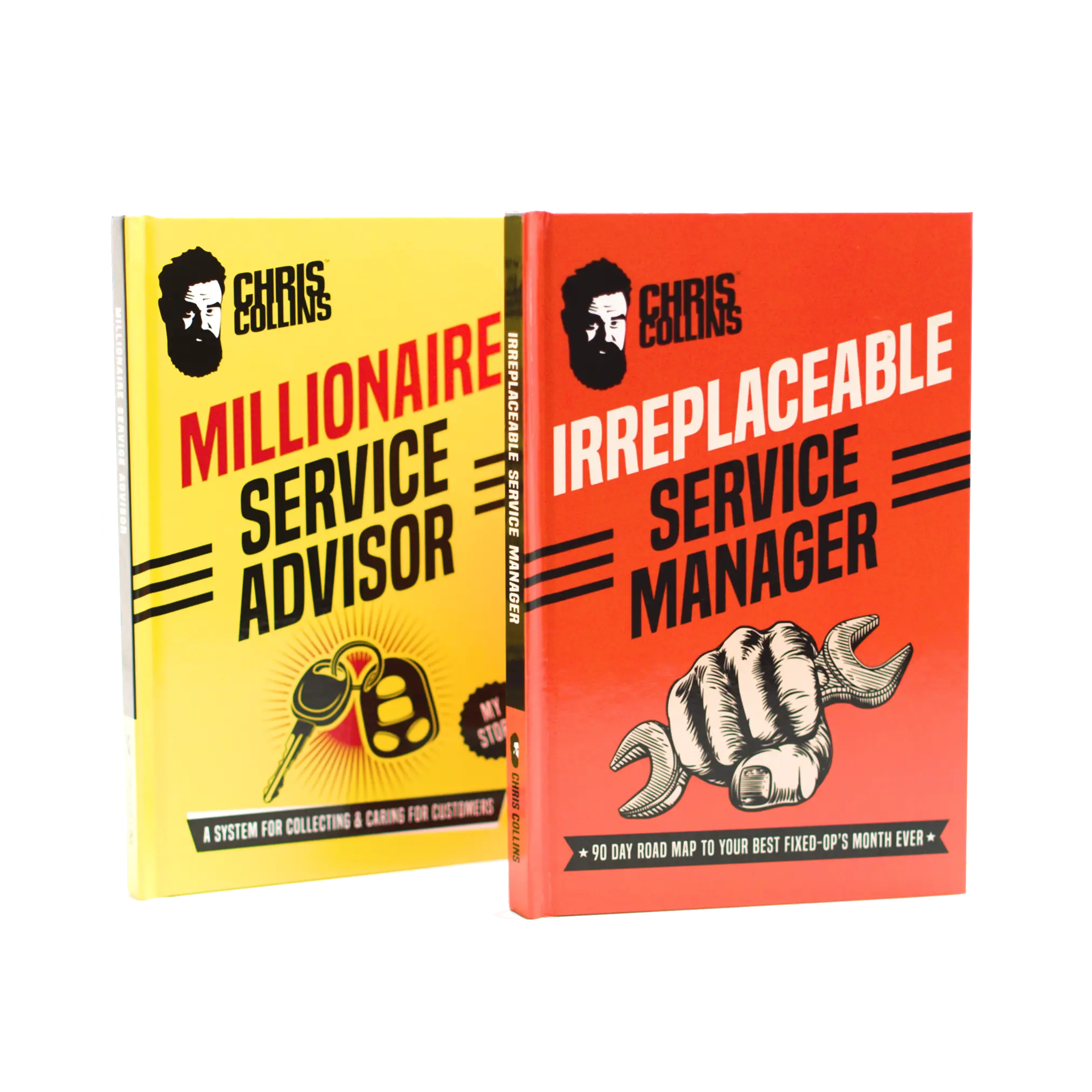
Chris Collins Inc. provides premium on-demand training, exclusive signature coaching groups, and specialized management books to completely overhaul broken service systems. Rather than repeating standard, recycled training courses, these specialized programs establish deep internal accountability and dramatically improve customer retention. One-on-one coaches provide custom game plans designed around the specific layout, staffing, and market dynamics of your location.
Blueprint for Turnarounds
Founded by Chris Collins, the company utilizes a distinct “Bulldog Mentality” to completely rebuild struggling service lanes and maximize technician efficiency. This philosophy focuses on rejecting standard industry habits, mastering financial tools, and executing swift operational changes to turn around underperforming locations in 90 days or less.
Frequently Asked Questions (FAQs)
Siloed communication between sales and service departments creates major bottlenecks in vehicle reconditioning and customer handoffs. Outdated software and manual data entry further slow down daily workflows, draining valuable employee time.
Implementing automated scheduling tools optimizes technician hours and reduces customer wait times. Also, offering continuous technical training makes sure that the team diagnoses and repairs complex vehicle issues quickly and accurately.
Many dealerships carry excessive, slow-moving parts inventory that ties up critical working capital. Others fail to track advisor sales metrics properly, leading to missed opportunities for service recommendations.
Strong leaders establish clear performance standards that keep technicians focused and accountable. They also cultivate a supportive culture that reduces employee turnover and boosts overall shop morale.
Understanding key metrics will allow managers to identify hidden expense leaks across different departments. Such knowledge will empower leaders to make data-driven pricing decisions that directly maximize net profit margins.
Bottom Line
Without a doubt, a high-performing service department is the backbone of any successful dealership. That being said, addressing operational gaps is a MUST. And it starts with strong leadership, not just routine management, moving beyond simply following industry trends. So go ahead and empower your team to deliver consistent results by building effective systems, investing in financial literacy, and ensuring cross-departmental cooperation.
For deeper industry insights, you can rely on the Service Drive Revolution Academy to overhaul your service department’s operations, guiding your dealership toward increased customer loyalty and robust profitability. If you found these insights valuable, please share them with your industry peers. Together, we can raise the bar for success in every service department. Follow for more!
Achieving and exceeding your goals is possible when you have the right systems in place. With Service Drive Revolution OnDemand, you’ll gain access to the proven systems that have made thousands of SERVICE MANAGERS IRREPLACEABLE. Start transforming your department today!
Need help updating your playbook? Let us know how we can support your team’s growth.
Book a 15-minute strategy session with our team. We’ll explore how to unlock your dealership’s real value.